


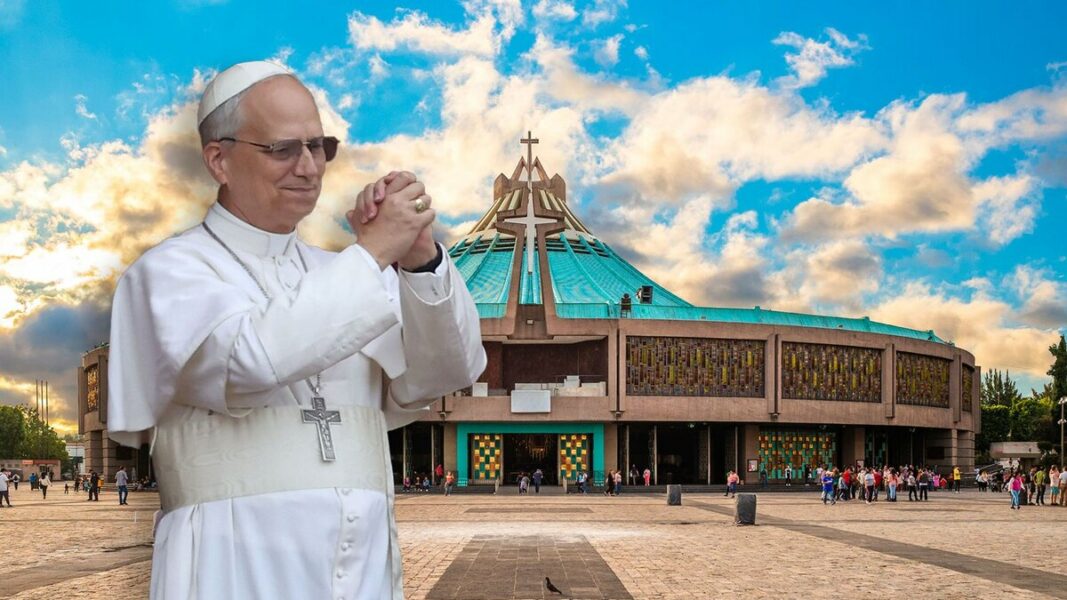
The apostolic nuncio in Mexico, Joseph Spiteri, gave Semanario de Guadalajara an interview that serves as a snapshot of the country from the Vatican’s perspective. His words address the Church’s challenges regarding artificial intelligence, cultural diversity, and social crises, while also revealing a significant announcement: Pope Leo XIV wishes to visit Mexico, although the date has not yet been set.
Spiteri emphasized that the Church cannot remain detached from the technological revolution. He recalled how, during the pandemic, communities turned to online broadcasts to sustain liturgical and pastoral life. In this context, he highlighted the encyclical Magnifica Humanitas, in which Pope Leo XIV warns of the need to preserve human dignity in the use of artificial intelligence. The nuncio acknowledged that AI can be a useful tool, but stressed that it requires discernment and spiritual preparation to prevent manipulation and ensure that the evangelical message retains its authenticity.
The Vatican diplomat described Mexico as a “beautiful and beloved” country, marked by cultural richness that includes indigenous peoples and a plurality of regional realities. However, he did not hide his concern over the violence, disappearances, and insecurity affecting the nation. He noted that the Pope closely follows these issues, with sadness for the victims but also with hope in the solidarity of the Mexican people. “Mexico cannot be understood as a single reality,” he said, underscoring that each region faces distinct challenges.
The nuncio dedicated a special message to priests working in communities affected by poverty, exclusion, and violence. He reminded them that “they should never feel alone”, inviting the Church and society to support them with prayer, material assistance, and psychological accompaniment. He acknowledged that their work is a testimony of faith and service under adverse conditions.
One of the most significant announcements in the interview was the confirmation that Pope Leo XIV wishes to visit Mexico to venerate the Virgin of Guadalupe. Spiteri explained that both the Episcopal Conference and civil authorities have extended invitations, and that the Holy Father has expressed his willingness to come. Nevertheless, he clarified that no date has been scheduled yet. The visit will depend on the right moment and the pastoral agenda, as every papal trip is conceived as a pastoral act and not merely a protocolary one.
Spiteri also explained the functions of the nuncio: he is the Pope’s ambassador to the government and the liaison with the local Church. He participates in the selection of bishops and, in countries with a Catholic majority, serves as dean of the diplomatic corps. His mission, he said, is to act as a bridge between Rome and local communities, listening to and conveying the concerns of the Mexican Church.
The interview with Joseph Spiteri offers a broad and critical perspective: the Church in Mexico faces the challenges of the digital age, violence, and cultural diversity, yet it keeps alive hope in the solidarity of its people. The announcement that Pope Leo XIV wishes to visit Mexico, although without a defined date, strengthens the historical and spiritual bond between the Vatican and the Guadalupian nation. The expectation of that visit becomes a symbol of hope and a reminder that faith continues to be a driving force of unity in times of crisis.
The full interview can be read here.