


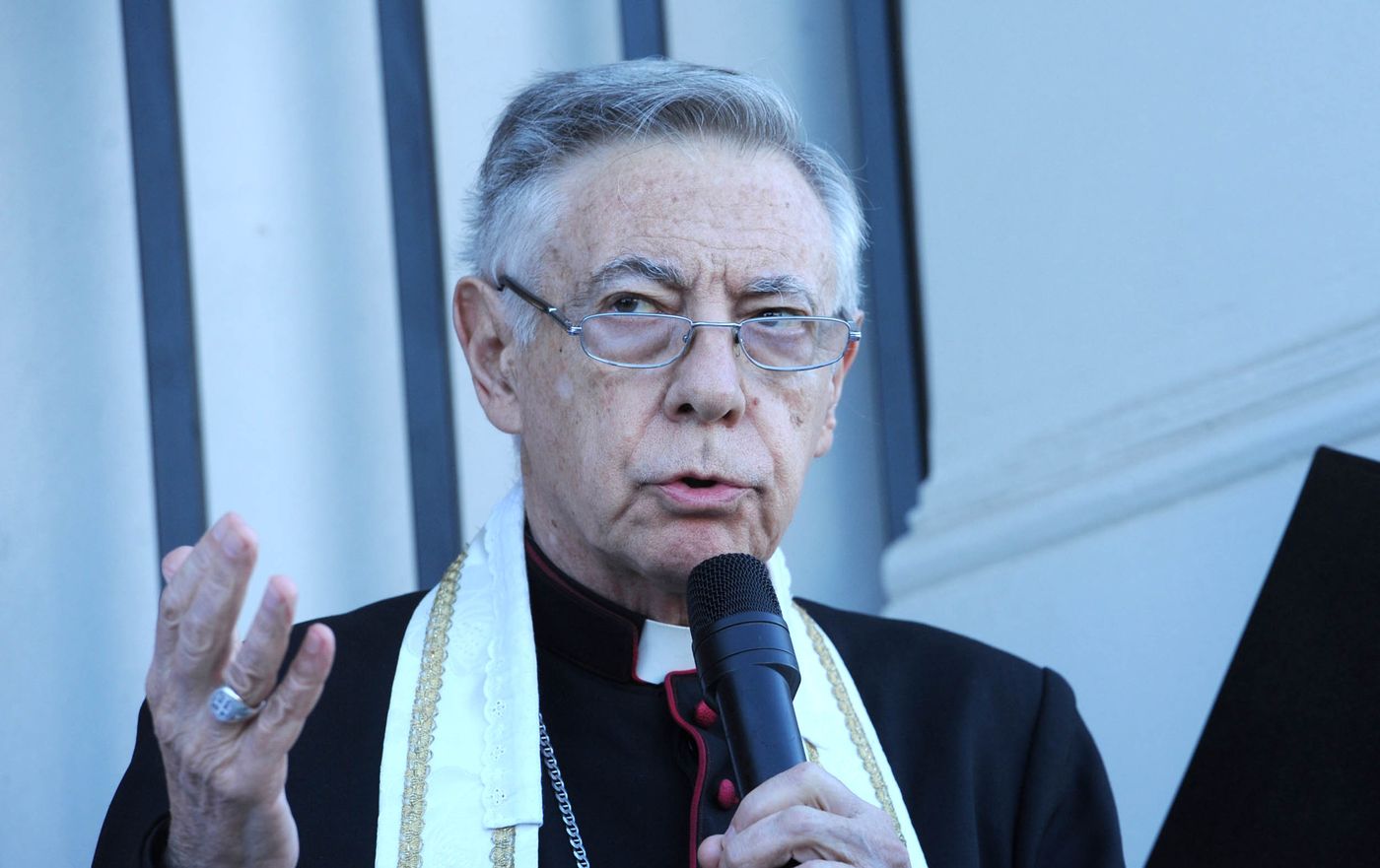
The latest article by Archbishop Aguer.
Wise and current like all of his.
The experience of pain and its relief.
Life includes the experience of evil and pain, as well as multiple injustices and death, which is its end. This reality affects the physical order as well as the psychological and spiritual realms. We are certainly moved by the pain of others, especially that of the people we love; those to whom we unite through compassion. This feeling is not simply pity, but –as is clear from the etymology– accompanying by suffering the same thing. In this case, it is a spiritual pain. According to the Christian faith, pain, especially when it is interior, as it is said in Latin, aegritudo, is a consequence of sin. There is a pain that accompanies conversion; it is a pain of the heart, which recognizes having offended God, pain of sin, always salutary, which must become a resolve to take care not to relapse.
There have always been people indifferent to the pain of others, and even those who enjoy it; it is the case of criminals. They are personalities that are difficult to define. In reality, they constitute a mystery, which has served to make them cinematic protagonists. I remember this because of a series referring to the case, which was famous at the time, of Yiya Murano; the nicknamed “poisoner of Monserrat”, in Buenos Aires. She invited her friends to tea and served them pastries seasoned with cyanide. It is said that she gathered about 300 thousand dollars. On the occasion of the series’ release, Yiya’s son said that his mother tried to poison him when he was ten years old, with a cake. Apparently, a lover was involved in the case. The woman spent 16 years in prison –convicted of three murders–, and died in a nursing home.
But there have also been, and there are, those who share the pain of their neighbor and help them to die well. Some have this attitude incorporated professionally: doctors and nurses, for example; in those cases, the aegritudo is objectified in the same activity. It is not then necessary to perceive it with full consciousness. It happens during wars, when society dehumanizes. Objectively sharing pain is a contribution to the humanization of the community. It is, from the religious point of view, what Saint Augustine pointed out as “the mystery of piety”. In a tyranny, as was the historical case of Nazism and communism, multitudes suffer, but the responsible parties seem to enjoy that necessary consequence of the ideology.
On the Cross of Christ, the extent of evil and the superabundance of redeeming grace are manifested simultaneously. The sign of the Cross has become a sign of humanization; the dehumanization of Nazism and Soviet-model communism is represented in the symbols of the swastika and the hammer and sickle.
The perfect model of compassion is the image of Mary at the foot of the Redeemer’s Cross. That is why one can speak of Co-redemption; without detriment to the dignity of the only Redeemer. The Catholic tradition has preserved the poem “Stabat Mater”, which speaks precisely of “the mystery of piety”, made perfect compassion.
+ Héctor Aguer
Emeritus Archbishop of La Plata.
Buenos Aires, Wednesday, October 22, 2025.
Saint John Paul II, Pope. –