


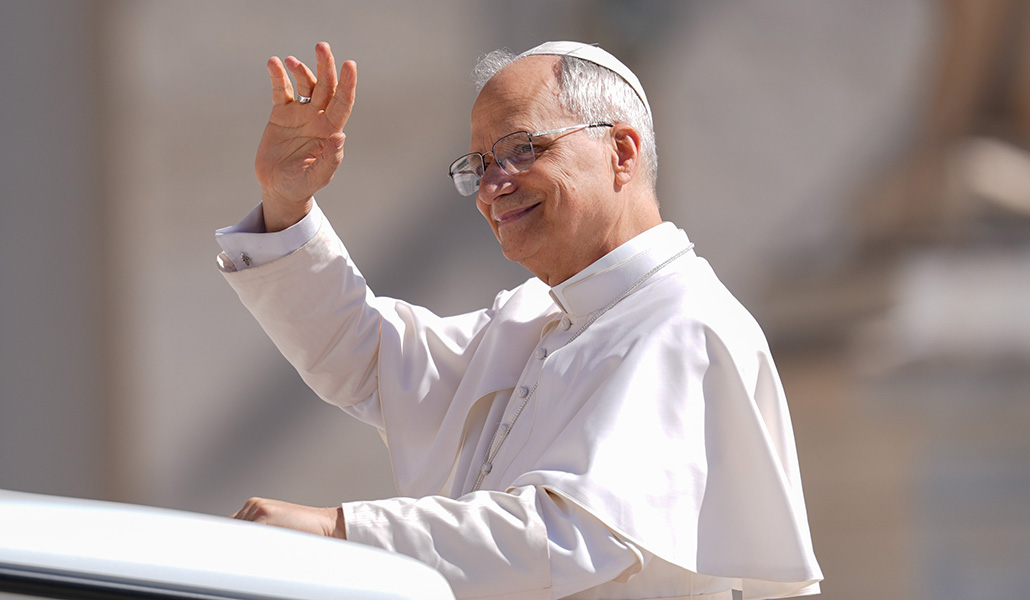
Pope Leo XIV received participants in the plenary assembly of the Dicastery for the Service of Integral Human Development, led by Sister Alessandra Smerilli, this Thursday in the Clementine Hall of the Vatican. He warned them of a twofold risk in their work: reducing the Gospel to a mere social or assistance program, or separating it from the concrete life of people. “The Gospel is not a social program, nor an experience lived on the margins of history,” he stated, according to the text of the address published by the Holy See.
The Pope explained that reducing the Gospel to social assistance would empty it of the transcendent novelty of the Kingdom of God. He also recalled that in Christ there are not two missions—one spiritual and one social—but a single messianic mission. Building on this, and drawing from Dilexi te and Magnifica humanitas, he maintained that integral human development is inseparable from evangelization: it is, he said, “the historical form the Gospel assumes when it reaches the living flesh of persons and communities.”
“Remove the stone” and unbind Lazarus
Pope Leo XIV pointed out two guiding lines for the dicastery’s work. The first is the commitment to remove the obstacles that hinder the growth of the children of God and the contexts in which they live, which, he explained, requires denouncing with evangelical parrhesia the structures of sin that generate misery, wound our common home, and seek to reduce the person to an economic cog. The second consists in freeing the energies of the good that the Holy Spirit has already sown.
To illustrate this, he turned to the account of the raising of Lazarus in the Gospel of John: Jesus first commands “take away the stone” and then “unbind him and let him go.” The Pontiff presented Lazarus as an icon of this service, which consists in removing what oppresses and allowing the good that already exists to act.
A living tradition and the method of the Council
The Pope affirmed that the dicastery is one of the places where this magisterium takes shape: it gathers the experience of the local Churches, offers it to the successor of Peter, and returns it enriched to the whole Church. He also recalled the “demanding task” entrusted to it by the constitution Praedicate Evangelium, namely to collaborate with the Pope and the bishops in promoting integral human development by showing Christ’s love for the poor, the disadvantaged, and the excluded.
According to the text, Pope Leo XIV noted that peace is not merely the absence of war or political balance, but the fruit of justice, respect for human dignity, fraternity among peoples, and integral ecology. He described the Church’s social doctrine as a living tradition that develops through the discernment of Christian communities in communion with their pastors, and called for renewing the spirit of the Second Vatican Council by reading the problems of the world in the light of the Gospel and human experience.
He concluded, on the threshold of Advent, by asking those present to be servants of a hope that knows how to wait with patience and act with courage. This dicastery has been in the news in recent weeks for the impetus of its ecological agenda.