


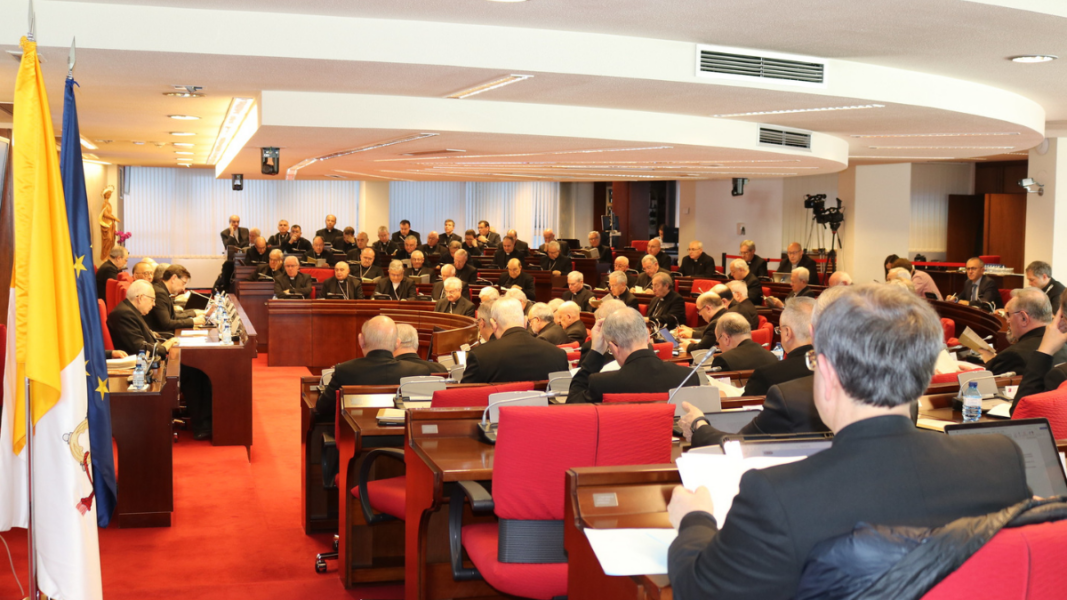
The Spanish Episcopal Conference will not publish any statement ahead of the general elections on November 29. According to sources at InfoVaticana from the 130th Plenary Assembly, which is being held in Madrid until Friday the 20th, the document presented to the bishops did not secure the two-thirds majority required for approval.
The rejection has a content-based explanation. The same sources describe the text as a heavily watered-down document that said nothing and made no reference to any of the issues on which the Church has asked Catholics to examine their vote: neither abortion, nor marriage, nor education. None, therefore, of the principles that Benedict XVI called non-negotiable and which, in the exhortation Sacramentum caritatis, he specified as respect for human life from conception to its natural end, the family founded on marriage between a man and a woman, and the freedom of parents in the education of their children.
The outcome leaves the president of the Conference, Luis Argüello, off balance. On Monday, in his inaugural address, he avoided direct reference to the elections because he expected the Assembly “to be able to offer some statement on the matter.” The announcement was read as the bishops’ return to guiding the vote, something they had not done in a general election since the statement of October 20, 2011, approved under the presidency of Cardinal Antonio María Rouco Varela one month before the elections that gave Mariano Rajoy an absolute majority. Religión Digital had taken for granted that the bishops would approve a statement this week with voting criteria.
The sources consulted contrast the failed text with the standard set by Leo XIV on June 8 before the Cortes Generales. In the first address by a Pope to the Spanish Parliament, the Pontiff defended life, the family, and educational freedom, and maintained that the defense of human life “never constitutes a partisan stance nor responds to a strictly confessional interest.” In the view of these sources, after those words it made no sense for the Episcopal Conference to issue a document that remained silent precisely on those issues.
The result leaves the bishops without their own word eleven days before the polls. Argüello had opened the Plenary with a warning against “rhetoric that polarizes,” and the Assembly will close without the statement its president had anticipated. The Episcopal Conference has not yet reported the outcome of the vote.
Read also
- Los obispos estudian una declaración sobre las elecciones del 29N, tras quince años sin orientar el voto
- La radio de los obispos recorta a Argüello: ni la declaración sobre el 29-N ni las «soflamas que polarizan»
- Signo de contradicción: el limosnero de León XIV predica en el Pilar contra la polarización