


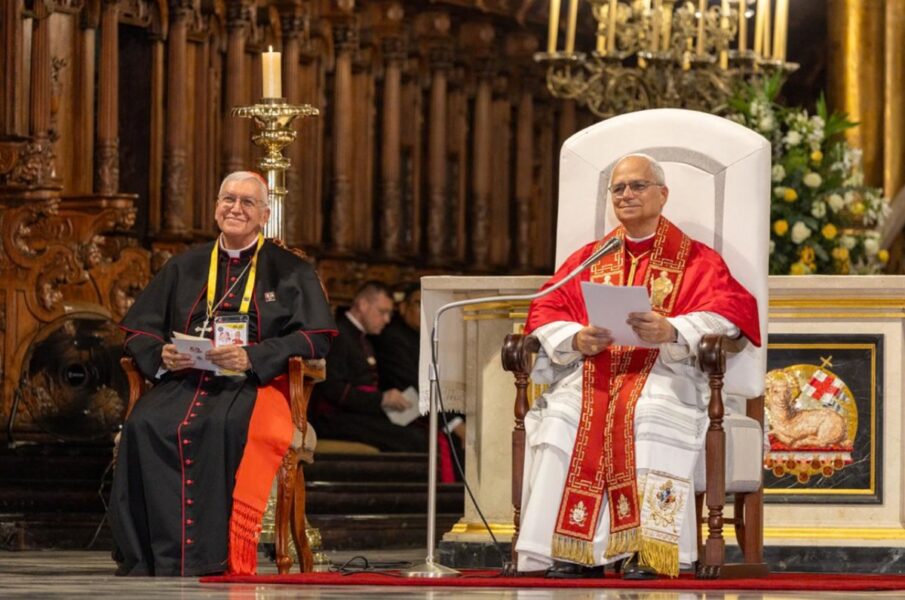
The phrase came in the second of the four points with which Leo XIV structured his homily during the celebration of the Hour of Terce, dedicated to reconciliation. Peru, the Pope said, needs a Church capable of building bridges and, at the same time, “willing to acknowledge its own infidelities and to ask for forgiveness with humility, taking responsibility for the wounds it has caused within itself and around it.”
The Pontiff did not mention any specific case nor identify those responsible. However, few words resonate in the Peruvian Church with as much weight as “wounds” and “forgiveness,” and few issues have marked the last years of Catholicism in the country as much as that of the Sodalitium.
A case that remains open
The Sodalitium of Christian Life, founded in Lima in 1971 by layman Luis Fernando Figari and approved as a society of apostolic life by John Paul II in 1997, was the subject of a lengthy Vatican intervention following accusations of abuse against its founder and other members. In July 2023, Pope Francis sent a special mission to Peru made up of Charles Scicluna and Jordi Bertomeu. In August 2024, Figari was expelled, and weeks later ten other members were expelled as well.
The dissolution, first reported exclusively by InfoVaticana in January 2025, was formalized in April of that year with the signing of the decree. Bertomeu was appointed apostolic commissioner for the tasks of suppression. The process was not without criticism: this outlet then gathered voices questioning the commissioner’s actions and the way the case had been handled.
From the other side, the victims consider that the suppression has not closed the matter. According to the Peruvian press, a group of those affected has denounced that the formal disappearance of the Sodalitium has not translated into sufficient progress in justice, reparation, and accountability. The program of the trip includes, according to the same reports, a space for listening to victims of abuse.
The responsibility of the shepherds
The matter is not foreign to the Pope’s biography. Robert Prevost was bishop of Chiclayo for years, and the Peruvian newspaper Expreso recalls that during that period he became aware of complaints related to the abuses attributed to members of the Sodalitium.
In his homily, Leo XIV placed the request for forgiveness within an expressly theological framework. Reconciliation, he recalled citing Saint Paul, “comes from God,” who entrusts to the Church “the ministry of reconciliation” (2 Cor 5:18). He called for a Church that, “embracing the Cross,” confronts conflicts “with charity and courage.”
The Pope also insisted on the responsibility of those who govern. He described communion as a space in which the different voices harmonize “under the guidance of the shepherds.” He asked the bishops for listening and closeness to their priests, and the priests for “fidelity and obedience to the Church.”
Christ, the “only foundation”
The rest of the homily revolved around faith in Christ, whom he presented as the “only foundation” of the Church, and around mission. Leo XIV proposed Saint Turibius of Mogrovejo, second archbishop of Lima, as a model. He emphasized that the saint’s pastoral strength sprang from his “intimate relationship with the Lord,” rather than from his organizational capacity. He also reiterated his call for an “unarmed and disarming peace” and warned against “any polarization that causes division.”
The Pope’s trip to Peru will continue until Monday, November 16, with a stop in Chiclayo, the diocese he governed before his election.