


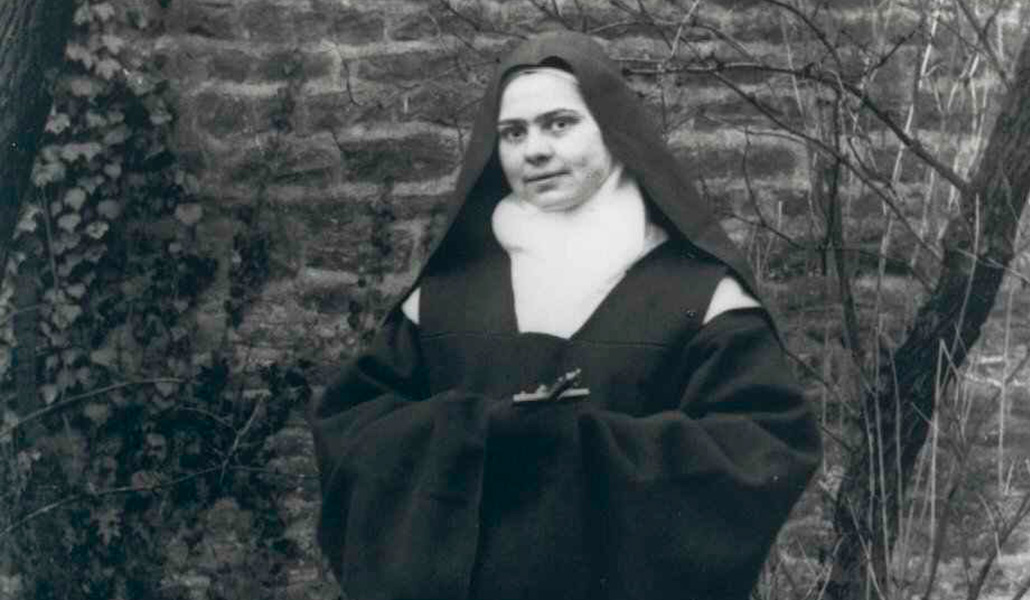
The next November 9 will mark 120 years since the death of Saint Elizabeth of the Trinity, a French Carmelite nun who passed away in the monastery of Dijon in 1906, at the age of 26. Her brief life left a profound spiritual legacy, centered on the mystery of the Most Holy Trinity and on the presence of God in the soul.
Canonized by Pope Francis on October 16, 2016, Elizabeth of the Trinity is one of the great figures of contemporary Carmelite spirituality.
A young woman drawn to the contemplative life
Elizabeth Catez was born on July 18, 1880, in France. During her childhood, she displayed an energetic character and remarkable musical sensitivity.
Her religious formation and her progressive approach to prayer awakened in her the desire to consecrate herself completely to God.
In 1901 she entered the Carmel of Dijon, where she received the name Elizabeth of the Trinity.
Her vocation was marked by a deep understanding of the Trinitarian mystery and by the conviction that the Christian, through grace, is called to live in intimate communion with God.
The indwelling of the Most Holy Trinity
One of the central elements of her spiritual doctrine is the indwelling of the Most Holy Trinity in the soul that lives in the grace of God.
This teaching, present in Sacred Scripture and developed by Catholic theological tradition, found in Elizabeth a deeply contemplative expression.
The young Carmelite insisted on the need to recollect oneself interiorly, to live in the presence of God, and to transform everyday activities into acts of love.
Her spirituality was especially influenced by Saint Paul, particularly by the teaching on life in Christ, and by Saint John of the Cross, one of the great masters of the Carmelite Order.
“Elevation to the Most Holy Trinity”
Among the best-known writings of Saint Elizabeth is her prayer Elevation to the Most Holy Trinity, composed in November 1904.
The text expresses her desire to belong completely to God and to live surrendered to the Father, the Son, and the Holy Spirit.
The prayer gathers some of the fundamental themes of her spirituality: interior silence, adoration, surrender, and the transformation of the soul by divine love.
Also noteworthy are her letters and spiritual retreats, which allow us to follow the development of her thought during the last years of her life.
The illness and her final years
Elizabeth’s health began to deteriorate gravely due to Addison’s disease, which ultimately caused her death.
During her final months she endured intense physical sufferings, which she united to the Passion of Jesus Christ.
She died on November 9, 1906, in the Carmel of Dijon.
The Discalced Carmelites celebrate her memory in their proper calendar on November 8, although this year the date coincides with a Sunday.
Her life and writings continue to be a reference for contemplative spirituality and for the faithful who seek to deepen interior prayer and the presence of God in daily life.