


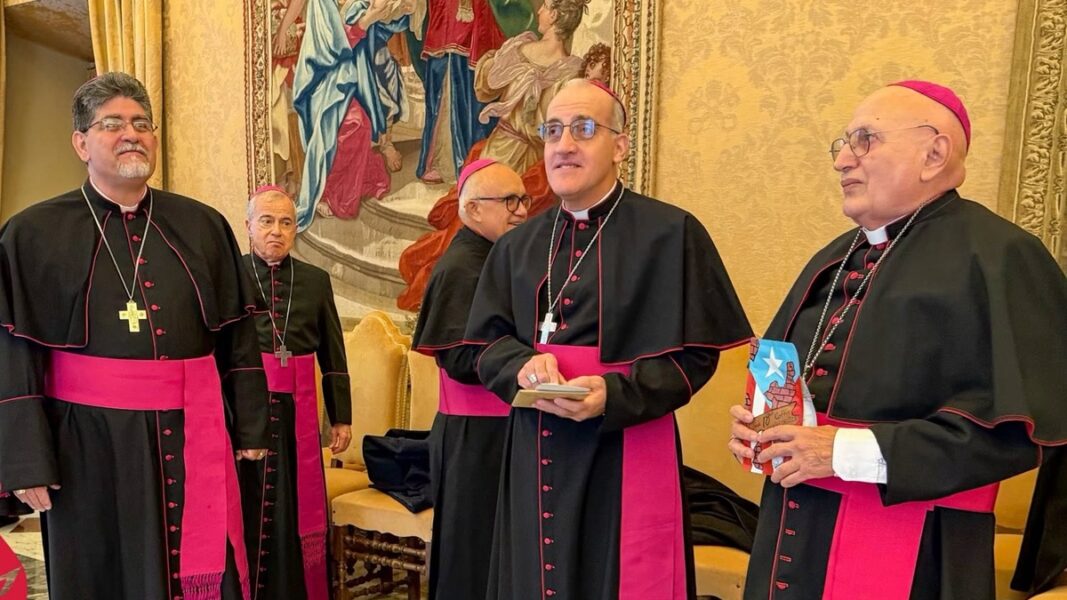
The bishops of Puerto Rico encouraged the faithful and the island’s society on November 5 to work “with determination” to reverse the “anti-life wave” and to walk together along the path of the common good. They did so in a message from the Puerto Rican Episcopal Conference dated in Aibonito at the conclusion of its LX Plenary Assembly, held on November 4 and 5.
The text is signed by the Archbishop of San Juan and president of the conference, Eusebio Ramos Morales; the Bishop of Mayagüez and vice-president, Ángel Luis Río Matos; the Bishop of Arecibo, Alberto Figuer Morales; the Bishop of Fajardo-Humacao, Luis Miranda Rivera; and Gerardo Vargas Cruz, coadjutor bishop-elect of Fajardo-Humacao and diocesan administrator of Caguas, together with an auxiliary bishop of San Juan. The prelates warn that Puerto Rico “is also being affected by that disease that threatens the culture of life” and place “the unborn” among the most defenseless, alongside other groups hit by the social situation.
Violence, cost of living and healthcare
The message, which does not refer to any specific law or initiative on life issues, describes a panorama of social deterioration in which the bishops cite 199 violent deaths between April and June of 2026, about two per day, and call for violence not to be normalized. They also point out that the high cost of living, healthcare and electricity weighs on families, and mention both the drama of migrants and the emigration of health professionals.
The prelates likewise criticize the failure of the privatization of the electrical system, the hasty approval of laws and regulations without sufficient analysis or citizen participation, and the acceleration of permits for works that affect habitats and coasts. On corruption, they state that “structural and systemic corruption requires a break with traditional approaches and theories,” and recall their previous messages on this problem, those of 2020 and 2024.
A spiritual response and a broad dialogue
The bishops maintain that the fundamental solution is not only economic, police-related or dependent on federal funds, but also spiritual and cultural, and they highlight the role of faith and education. They invite political, social, educational and religious leaders to a broad dialogue to “identify lines and consensuses around paths to solutions,” and also cite that “when justice no longer dwells on earth, all life is in danger.”
The document closes with an invitation to live Advent as a time of commitment to the building of the Kingdom of God and with an entrustment to the Virgin Mary, Mother of Divine Providence, so that she may accompany the Puerto Rican people in the renewal of their faith, their hope and their commitment to a society that loves and respects life. Ramos Morales, who presided over the assembly, was appointed Archbishop of San Juan by Leo XIV last August and will have to present his resignation in 2027.