


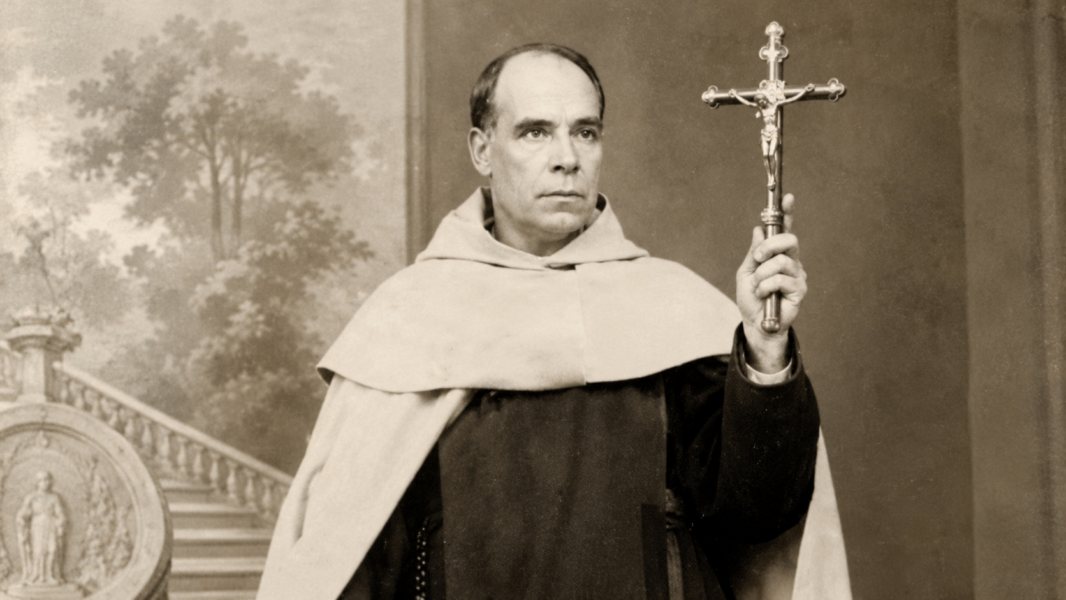
The Carmelite family remembers on this 7th of November the blessed Francisco Palau y Quer, a priest born in Aitona (Lérida) in 1811, whose life was marked by the persecutions and restrictions that affected Spanish religious orders during the 19th century. A Discalced Carmelite religious, preacher, and founder, he carried out his ministry amid the political transformations of a Spain in which numerous convents were closed and their communities expelled.
The Exclaustration and Exile
Drawn by the contemplative spirituality of Saint Teresa of Jesus and Saint John of the Cross, Francisco Palau entered the Carmel in Barcelona in 1832. However, a few years later he suffered the consequences of the measures against religious orders and the attacks on convents: the exclaustration of 1835 profoundly altered his religious life and forced him to continue his vocation outside the conventual community.
In the following years he alternated periods of retreat, preaching, and exile, especially in France. Those circumstances, far from leading him to abandon his Carmelite vocation, spurred him to continue seeking ways to live contemplative prayer and to develop his priestly ministry.
The School of Virtue in Barcelona
Upon his return to Spain, Palau promoted in Barcelona a religious formation initiative known as the School of Virtue, whose purpose was to teach Catholic doctrine and strengthen the moral and spiritual formation of the faithful. Its activities reached notable diffusion, but also aroused the opposition of certain political sectors, to the point that in 1854 the authorities ordered its closure and Palau was exiled to Ibiza. During his stay on the island he led an intense life of prayer and deepened his spiritual understanding of the mystery of the Church.
His Love for the Church and the Foundation of New Communities
Francisco Palau’s spirituality was marked by his love for the Church, which he contemplated as the mystical body of Jesus Christ, and his reflection on the union between Christ and the Church occupied a central place in his writings. He also promoted new religious communities that combined the life of prayer with apostolate and assistance to those in need, and his work gave rise to congregations that continued his mission after his death.
He died in Tarragona on March 20, 1872, and was beatified by John Paul II on April 24, 1988. His life constitutes one of the most significant testimonies of fidelity to the religious vocation during a period of strong tensions between the State and the Church in contemporary Spain.