


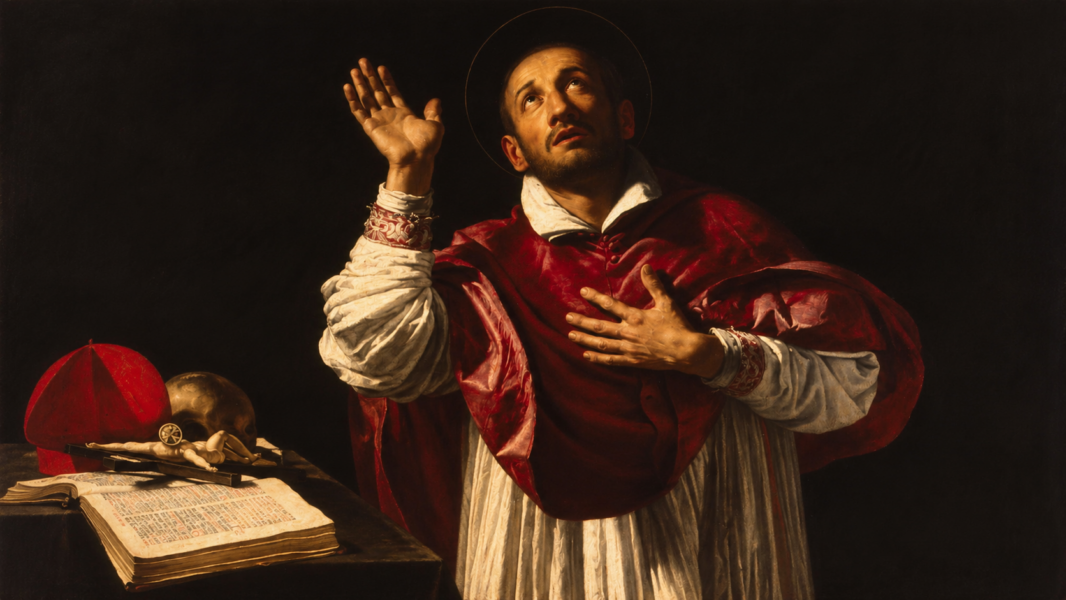
The Church celebrates this Wednesday, November 4, the memorial of Saint Charles Borromeo, Archbishop of Milan and one of the principal figures of the Catholic reform of the sixteenth century. His ministry was marked by the implementation of the decrees of the Council of Trent, the formation of the clergy, and an intense pastoral activity that led him to personally attend to the sick during the plague epidemic of 1576.
Born in 1538 into a noble Italian family, Charles Borromeo came to hold important ecclesiastical responsibilities during the pontificate of his uncle, Pius IV. However, his career remained especially linked to the spiritual and disciplinary renewal of the Archdiocese of Milan.
The implementation of the reforms of the Council of Trent
The Council of Trent, held between 1545 and 1563, established important provisions to strengthen sacramental life, priestly formation, and the discipline of the Church.
Charles Borromeo played a prominent role in the practical application of those reforms.
As Archbishop of Milan, he promoted the formation of the clergy through the foundation of seminaries, convened diocesan and provincial synods, and carried out numerous pastoral visits.
He also promoted the catechesis of the faithful and defended the obligation of bishops to reside in their dioceses and directly attend to the communities entrusted to their care.
His actions made Milan one of the main examples of ecclesial renewal after the Council of Trent.
A pastor alongside the plague-stricken
One of the best-known episodes of his life took place during the epidemic that affected Milan in 1576.
While the disease spread through the city, Charles Borromeo remained with the sick, promoted assistance to those in need, and used his resources to alleviate the suffering of the population.
He also organized acts of prayer and penance, maintaining an intense pastoral activity during the crisis.
Benedict XVI recalled this testimony in his Angelus of November 4, 2007, highlighting that Borromeo distinguished himself by his charity, his doctrine, his apostolic zeal, and especially by his prayer.
The Pontiff emphasized that Saint Charles’s dedication to the sick was an expression of his vocation as a pastor.
The reform of the Church from holiness
Charles Borromeo died on November 3, 1584, after years of intense episcopal activity.
He was canonized in 1610 by Paul V.
His life remained closely linked to the renewal of the priesthood, the teaching of the faith, and the defense of ecclesiastical discipline.
The Church preserves his memory as an example of a bishop who promoted reform through prayer, doctrinal formation, visits to communities, and direct attention to the spiritual and material needs of his faithful.