


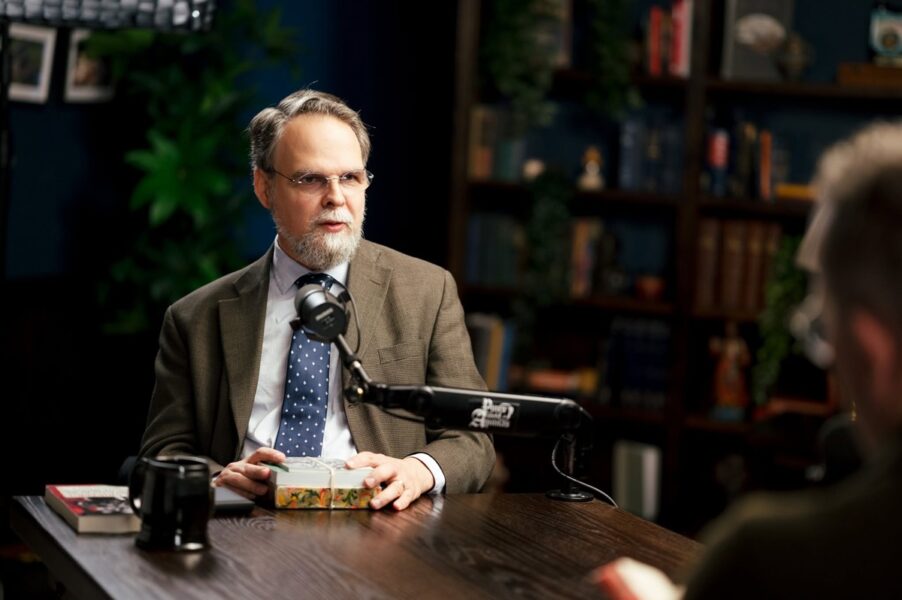
Michael Matt, director of The Remnant and co-founder of the congress, opened the 2026 edition with a phrase from Blessed Fulton Sheen, beatified last September 24 in St. Louis: “The laity will save the Church.” From this he summarized the mission of the gathering: “Our task is to ask our bishops to be bishops, our priests to be priests.”
Matt then clarified that Christ founded a hierarchical Church and that the laity will not save it by themselves. Their role is to do everything possible and to pray that the successors of the apostles “will lead us out of this darkness.”
The FSSPX within the common front
Peter Kwasniewski, philosopher and liturgist, advocated for greater mutual understanding and tolerance among traditional Catholics, compatible with the demands of the faith. “We did not choose to create difficulties. A revolution was imposed on us from above,” he stated. Among those who, in his view, need one another, he cited the Ecclesia Dei communities, the FSSPX, diocesan clergy who love tradition, and independent chapels, provided they are not sedevacantist.
Kwasniewski called for forming alliances against what he described as an entity sick with modernist ideology and drunk on power, which hides behind “insincere appeals to unity, charity, and obedience.” Instead of a “circular firing squad,” he urged traditionalists to watch one another’s backs.
Historian John Rao reviewed the successive indults that allowed the traditional Mass to be preserved after the Second Vatican Council. He also recalled Eric de Saventhem, founding president of the International Una Voce Federation, whose message he summarized as follows: every man in the movement should “hold his post” and be “armed for battle.”
LifeSiteNews later asked Rao whether it is advisable to work with the diocese or to turn directly to the FSSPX. Rao recommended always keeping a channel open with diocesan authorities, in the hands of people capable of dealing with them. He warned, however, against settling for what is offered without using what is within reach, “which includes the FSSPX.”
Three months after the note from the Dicastery for the Doctrine of the Faith
These words gain relevance because of the moment in which they were spoken. On July 1, the FSSPX consecrated four new bishops in Écône without a pontifical mandate. The following day, the Dicastery for the Doctrine of the Faith published an explanatory note signed by Cardinal Víctor Manuel Fernández. The note declares the ministers of the Fraternity to be schismatic and subject to excommunication (can. 1364 § 1) and considers laypeople who formally adhere to it to be excommunicated. It also declares invalid the confessions and marriages assisted by its priests and exhorts the faithful to abstain from its celebrations. The LifeSiteNews report makes no reference by the speakers to that document.
The congress also coincided with the disappearance of the traditional diocesan Mass at St. Titus Church in Aliquippa, whose last celebration took place on September 4. Since then, in the Diocese of Pittsburgh, it is offered only at the personal parish of Most Precious Blood of Jesus, served by the Institute of Christ the King Sovereign Priest.