


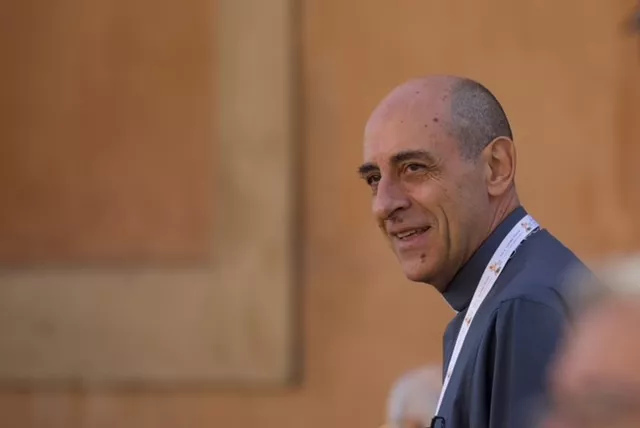
The Dicastery for the Doctrine of the Faith will publish in mid-October Venite ad me, a new document dedicated to the transmission of the faith and the difficulties that evangelization encounters today in different cultural and social contexts.
According to ACI Prensa, a source from the Dicastery with direct knowledge of the content explained that the text “addresses various paths, varied possibilities, to encourage each Diocese to reflect together on the difficulties and new possibilities we have to transmit the faith in Jesus Christ to our brothers and sisters.”
The publication will give definitive shape to a project that Cardinal Fernández had already announced last May. At that time, he explained to the National Catholic Register that the Dicastery was preparing a broad document on the transmission of the faith, in dialogue with the Dicastery for Evangelization and based on a consultation with episcopal conferences around the world.
The initiative had been requested by Francis and was later taken up by Leo XIV. The source consulted by ACI Prensa explained that the starting point of the document is precisely the recognition that in many parts of the world the faith is transmitted with increasing difficulty.
“Taking into account that in many parts of the world the faith is transmitted with greater difficulty, the question is how to transmit the faith to others in the world we live in,” he noted.
The breakdown of transmission between generations
The first details about the content of the document were offered by Fernández last May.
The prefect then explained that the text would address “the breakdown in intergenerational transmission in many countries,” a phenomenon that in certain places is beginning to manifest itself in a particularly rapid way, as well as the possible causes of that fracture.
It will also address “the importance of the quality of the community in the transmission of the faith and in welcoming those who approach or return to the faith.”
Another of the topics planned will be the proclamation of the kerygma, that is, the essential proclamation of Jesus Christ dead and risen, and the search for ways to present it in a manner capable of fostering a true encounter with the Lord.
Fernández also indicated that the liturgy will have a place within the reflection. The document will recall experiences of conversion linked to liturgical celebration, including that of Saint Augustine, and will also address the question of inculturation.
Read also: The liturgy enters the Vatican’s diagnosis of the collapse of the faith
A worldwide consultation with the episcopates
The preparation of Venite ad me has included a consultation with episcopal conferences around the world, with an estimated response rate of 70%.
Fernández had already noted that many bishops had conveyed to Rome, especially during their ad limina visits, their concern about the difficulties in transmitting the faith and had asked for a deeper examination of both the causes of the problem and possible responses.
The prefect also indicated that the purpose of the document will not be to offer a single formula applicable indiscriminately to the entire Church, but to take into account the “variety and richness of the universal Church” and the diversity of circumstances in which evangelization must take place.
Venite ad me means “Come to me” and refers to the words of Christ recorded in the Gospel of Saint Matthew: “Come to me, all you who are weary and burdened, and I will give you rest” (Mt 11:28).