


The Offices for the Protection of Minors of the Spanish Episcopal Conference (CEE) are preparing a new guide aimed at accompanying priests, religious and lay people who have committed sexual abuse against minors or vulnerable adults, as well as individuals who present risk factors. The document, still in the editing process, will include a so-called “Institutional Pact with the Offender” to specify, supervise and evaluate the measures adopted in each case.
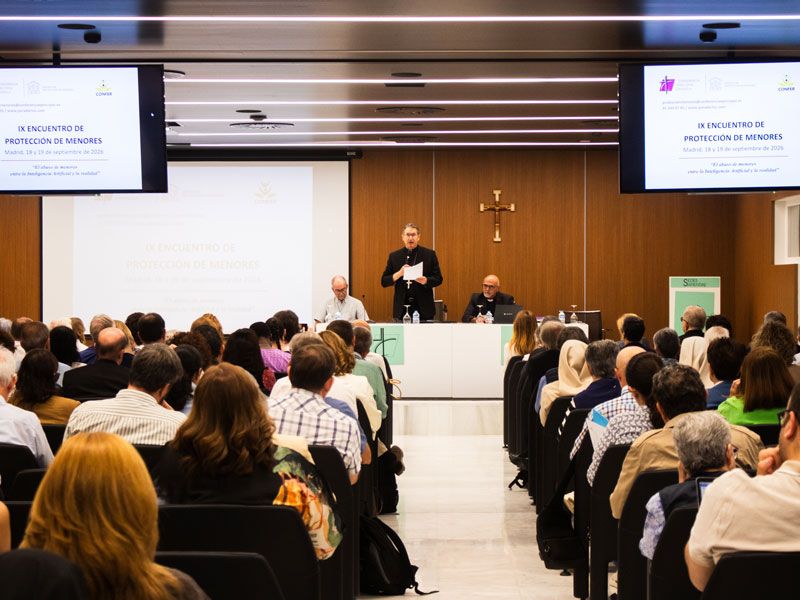
The new tool was presented during the conference held on 18 and 19 September under the title Child Abuse between Artificial Intelligence and Reality, which brought together heads and experts from the Offices for the Protection of Minors.
A guide for dioceses and religious congregations
The Guide for the Care of Perpetrators of Sexual Abuse against Minors or Vulnerable Adults within the Church has been prepared by one of the study groups established under the supervision of the Coordination and Advisory Service of the Offices for the Protection of Minors.
Its objective is to provide guidance to dioceses, institutes of consecrated life and societies of apostolic life for addressing the accompaniment of those who have committed abuse or present risk factors for committing it.
According to the information released after the conference, the document addresses this issue from a perspective of “responsibility, prevention and care”. The guide is still in the editing process, so its full content has not been made public.
Among the announced elements is the so-called “Institutional Pact with the Offender”, a collegial tool intended to “specify, supervise and evaluate the measures agreed upon in each accompaniment process”.
Care for offenders is already included in the Church’s protocols
The accompaniment of those who have committed abuse is already contemplated in the Framework Protocol for the Prevention and Action in Cases of Abuse of Minors and Legally Equivalent Persons of the Spanish Episcopal Conference.
The document includes among its training areas the “care of victims, families, offenders and affected communities”, with reference to psychological, legal, spiritual and pastoral accompaniment.
The protocol also addresses the “theological perspective of abuse: victims and offenders” and contemplates restorative justice alongside the corresponding civil and canonical procedures.
The new guide seeks to develop this area specifically and offer common guidelines for the different ecclesial institutions.
Victims, reparation and prevention
The conference also devoted part of its sessions to listening to testimonies from victims and addressing the processes of reparation and healing for those who have suffered abuse.
During the meeting, a Dictionary of Restoration and Healing was also presented, developed as a tool for the work of the offices.
The second day included a session on the agreement reached between the Church and the Government for the reparation of victims, in which the president of the Spanish Episcopal Conference, Bishop Luis Argüello, and the president of CONFER, the Dominican Jesús Díaz Sariego, participated.
Both presented the process followed during the negotiations and the content of the agreement, before the participants continued their work in groups.
New risks linked to Artificial Intelligence
Another issue addressed during the conference was the emergence of new forms of abuse on social networks and digital environments, especially in light of the development of tools based on Artificial Intelligence.
The Offices for the Protection of Minors are part of the structure developed by Spanish dioceses and congregations to receive reports, accompany victims, promote prevention measures and coordinate action in cases of sexual abuse in ecclesial institutions.
The final publication of the guide will allow the specific content of the planned measures, the functioning of the so-called “Institutional Pact with the Offender” and the criteria established for the accompaniment of those who have committed abuse or present risk factors to be known.