


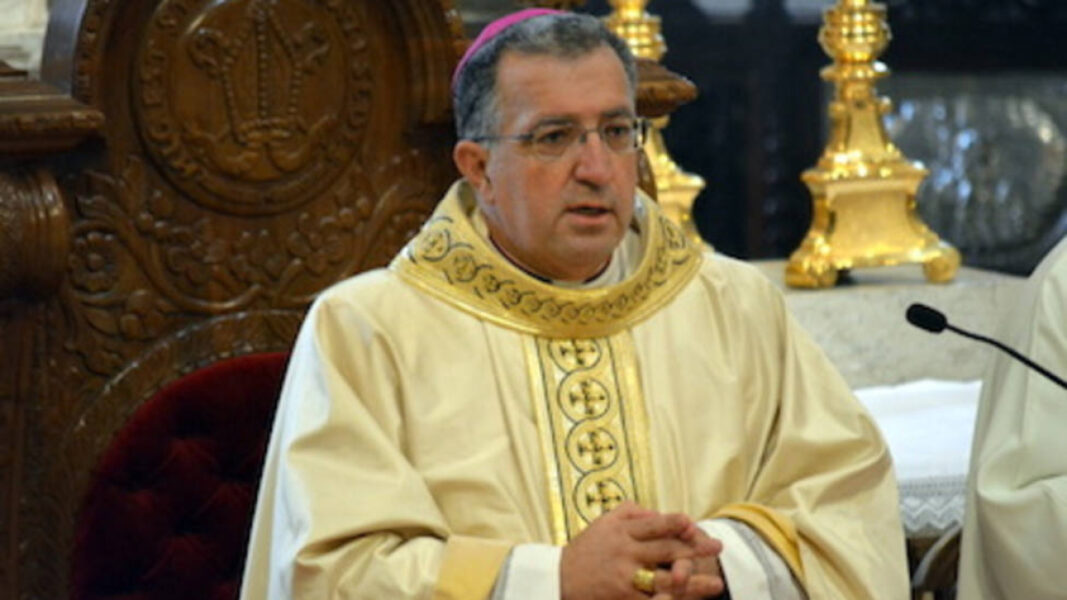
The Bishop of Getafe, Monsignor Ginés García Beltrán, has announced the closure of the community vocational itinerary that the diocese has been accompanying since 2008 with a view to the possible establishment of a religious family under the name “Hermanos del Amor Misericordioso” (HAM). The decision has been made public through an official note dated 15 September.
According to the communiqué, during these eighteen years some members of the group received diaconal and presbyteral ordination and currently exercise various pastoral ministries in the diocese of southern Madrid. The note does not specify how many.
“Personal and individual” discernment
“After a prolonged period of reflection and accompaniment,” the bishop has informed the priests, deacons and seminarians linked to the project that, from now on, discernment regarding a possible vocation to religious life must be carried out “in a personal and individual manner.” The community channel that gave meaning to the group as the seed of a future institute therefore disappears.
Seminarians may continue their path in their respective seminaries or, if they consider it appropriate, join an institute of religious life already recognized by the Church. Ordained ministers will continue their process through the exercise of the ministries entrusted to them. Deacons on the way to the priesthood, the note adds, will receive priestly ordination “at the appropriate time, once the conditions required by the law of the Church have been met,” with explicit reference to canon 1030 of the Code of Canon Law, which regulates the bishop’s faculty to deny or defer the ordination of a deacon for a canonical reason.
No negative judgment
The diocese emphasizes that the measure “does not imply a negative judgment on the authenticity of the desire expressed by those concerned to live a religious vocation.” On the contrary, it states that it recognizes and values that desire, and considers it appropriate that in this new stage each person may personally discern “the concrete form in which the Lord calls him to live the evangelical counsels, fraternal life in community and a stable rule of life.”
Getafe offers those affected “the human and pastoral accompaniment they may need” and makes available to them “spaces for listening, welcome and support.”
A frequent end for diocesan foundations
The case illustrates the difficulty that new religious foundations encounter in moving beyond the phase of diocesan association and obtaining canonical recognition as an institute of consecrated life, a path that the Holy See has made more rigorous in recent years. Since the rescript of Francis in 2016, which requires consultation with the Holy See before erecting an institute of diocesan right, and the reform of canon 579 in 2020, bishops have become more cautious about sustaining projects that have gone years without materializing.
The note from Getafe, brief and careful in its wording, leaves unexplained the underlying reasons that have led the bishop to close a process that he himself inherited from his predecessor, Monsignor Joaquín María López de Andújar, and that he has accompanied for almost his entire time at the head of the diocese, which began in 2018.