


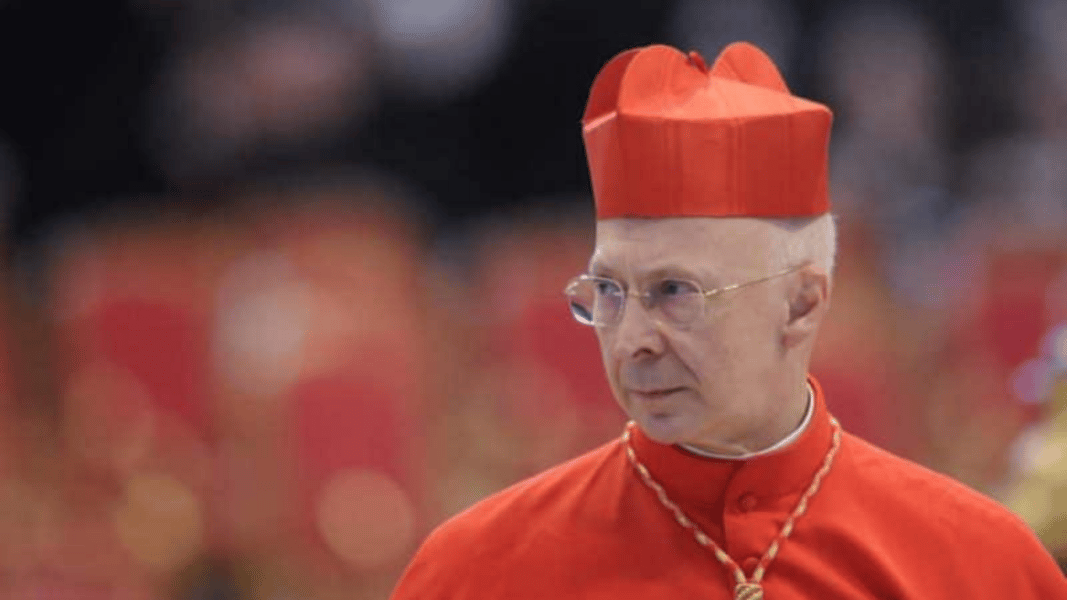
Cardinal Angelo Bagnasco has defended that the Christian faith cannot be reduced to a private conviction, but must provide the believer with a criterion for discerning events and concrete situations in the light of the Gospel. The Archbishop Emeritus of Genoa made these considerations on August 9 during his visit to the parish of San Donato a Livizzano, in Montespertoli, in the Italian region of Tuscany.
Bagnasco presided over the Mass on the occasion of the feast of Saint Donatus, bishop and martyr. After the celebration, the former president of the Italian Episcopal Conference explained some of the central points of the reflection he had proposed to the faithful, taking as his starting point the witness of the saint and his fidelity unto martyrdom.
A faith that commits the whole of life
Saint Donatus was presented by Bagnasco as a great figure of bishop, pastor, saint, and martyr. His testimony allowed the cardinal to dwell on the meaning of a faith that is not limited to the intellectual recognition of God.
“He died for the faith, for the witness of the faith,” the cardinal pointed out. From there, he explained that believing does not consist solely in accepting the existence of “a God superior to us.” The Christian life implies a relationship with Jesus Christ, who has revealed to man the true face of God, his mercy and his fatherhood, and has given him his word.
This conception of faith has concrete consequences for the way the Christian contemplates the world. For Bagnasco, the Gospel is not alien to history nor can it be set apart from discernment about what happens in society.
Judging situations with the gaze of the Gospel
The cardinal summarized this responsibility by affirming that “faith is also judgment.” He immediately clarified the meaning of his words: it is about contemplating history and concrete circumstances “with the gaze of the Gospel, with the gaze of Jesus.”
Bagnasco distinguished this duty from judgment about the conscience or the ultimate destiny of each person. That judgment belongs to God. The Christian, however, is not thereby dispensed from morally discerning facts and recognizing what is true and good for man.
“What is not true must be said from the rooftops.”
Furthermore, the Archbishop Emeritus of Genoa added that what constitutes a good for man must be proclaimed while respecting the freedom of all, but also “with the clarity of the Christian faith.”
The witness of the martyr as a starting point
Bagnasco’s call for Christian clarity acquired particular significance because it was celebrated precisely on the memorial of a martyr. The figure of Saint Donatus served to remind the faithful that the confession of faith has consequences and that Christianity is not exhausted in an interior adherence detached from life.
The celebration brought together numerous faithful at San Donato a Livizzano. Several priests concelebrated with the cardinal, while Monsignor Marco Zanobini, vicar general of the Archdiocese of Florence, conveyed the greetings of Archbishop Gherardo Gambelli.
At the conclusion of his visit, Bagnasco thanked the welcome and assured that he had found “a beautiful community.” Before leaving, he remained with the faithful, whom he greeted and personally blessed, encouraging them to keep their eyes fixed on the Lord and to live in confidence in the promised redemption.