


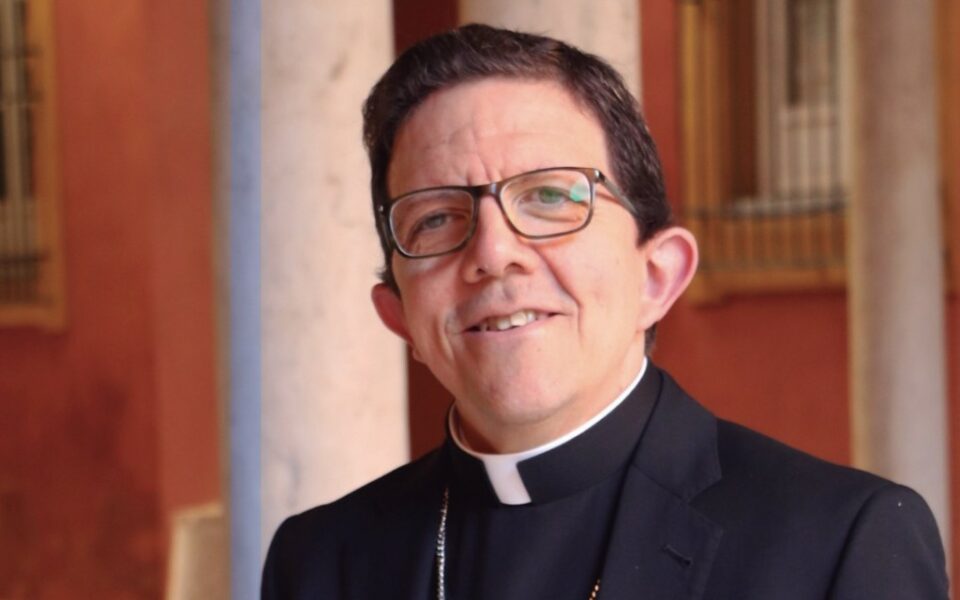
The apostolic administrator of Cádiz and Ceuta, Ramón Valdivia, has called on all parishes of the diocese to hold a prayer vigil for “peace, stability and justice in Ceuta” on the night of 14 August, the eve of the Solemnity of the Assumption. The call comes after the serious events experienced in the autonomous city, which the prelate describes as a “humanitarian disaster” caused by “ambition and corruption”, amid “misgovernment”, fear among families and a sense of “lack of protection” among the people of Ceuta.
Valdivia made public this Saturday, 8 August, a letter addressed to priests, religious and faithful after allowing more than a week to pass in order to “reflect and understand” the scope of what happened. His diagnosis does not avoid responsibilities or the consequences of the crisis, but neither does it dwell on them: faced with a situation he sees as revealing a deeper cultural change, he proposes to Catholics a response centred on prayer and once again places Saint Mary of Africa, patroness of Ceuta, at the centre of the city’s life.
The full letter follows:
Dear brothers and sisters in Christ:
More than a week has passed since the human and institutional drama our Diocese in Ceuta has experienced. I have needed to rest and understand the scope of what we have suffered and, at the same time, try to grasp, with my own lights, the repercussions beyond what the media have shown. Now, I wish to share with you what I have lived through and, at the same time, what I propose as a measure for the whole Diocese, insofar as each one can carry it out. These are also days of rest after an intense year, full of uncertainties, that has affected us all.
First, I look at the humanitarian disaster generated by ambition and corruption. Nothing new under the sun. On one side of the border were young people without a future who threw themselves into the unknown, driven only by political slogans or malicious promises; adults who took advantage of the misgovernment to flee from criminal responsibilities in their country, perhaps through some premeditated pardon devised for this occasion; boys and girls abandoned by their families who become cannon fodder for predators; and, on the other side, people who have felt their space violated, families fearful that, at nightfall or in broad daylight, someone might enter their homes and demand food or a mobile-phone battery recharge; closed shops, fear in their eyes, uncertainty at the possibility that they might return, and above all, the anger caused by the lack of protection that those who govern are supposed to guarantee. As you can imagine, a whole cocktail of emotions that could have exploded into a greater conflict and that, thanks to the serenity of the people of Ceuta, did not occur.
Secondly, gratitude for the faith wells up in my heart. From the very first moment, Saint Mary of Africa has been the bulwark where refuge is consolidated, the gentle breeze of Elijah, who, in the midst of persecution, gives the answer we all ask: Where is God? Not in the hurricane, not in the earthquake… He is in the gentleness of a Mother, who weeps at the death of her Son while holding Him in her lap. I have been able to perceive how the Mother and Patroness of Ceuta, once again in history, has become the beacon that guides us as we sail the stormy seas.
But my gratitude also goes to the Pope who, in his message last Sunday, made it clear that he carries Ceuta in his heart, to the priests, to the parishes, to the religious men and women of Ceuta, to the volunteers of Casa San Antonio and also to those of Cáritas, and especially to the Brotherhood of the Patroness. Together we have tried to give an example of unity amid so much tension. It is only right that we all send a message of gratitude to this small Christian community, so that they may receive strong encouragement from the rest of the Diocese, so that they may keep the witness of faith alive. I want to believe that the Floral Offering, the Function and the Procession with the Image of Saint Mary of Africa have not been a fleeting sigh, but a catalyst to break the inertia generated by fear, the spark to become aware of what faith contributes to the re-building of the city, the greatest challenge facing society and the Church in this time the Lord grants us.
As a proposal for ecclesial action in response to this humanitarian and confidence crisis, I believe it is necessary to turn our gaze to God. When neighbouring powers threatened the fragility of Israel, the Patriarchs and Prophets raised their hands and begged for divine mercy. Likewise, Jesus Christ wept over the destruction of Jerusalem. Therefore, I exhort you that, in all the parishes of the Diocese, a Vigil of prayer for Peace, Stability and Justice in Ceuta be held, as suggested by Pope Leo XIV, on the night of the eve of the Assumption of Mary.
It will be held in this way at the Shrine of Saint Mary of Africa, and I wish it may be done, in the most appropriate way possible, so that all Catholics of our Diocese may pray, from the first Vespers, with the intention not only of asking for the protection of the City of Ceuta, but also that we may become aware of the importance of maturing the faith we have received, and ask for the light necessary so that, united, we may live these moments as a new cultural beginning, and not simply as a crisis, which we hope will be passing. These events seem to me to show the depth of the cultural change that is taking place; therefore, now more than ever we need to raise our eyes and pray together the Our Father, saying: Thy will be done, on earth as it is in heaven!
With my blessing
+ Ramón