


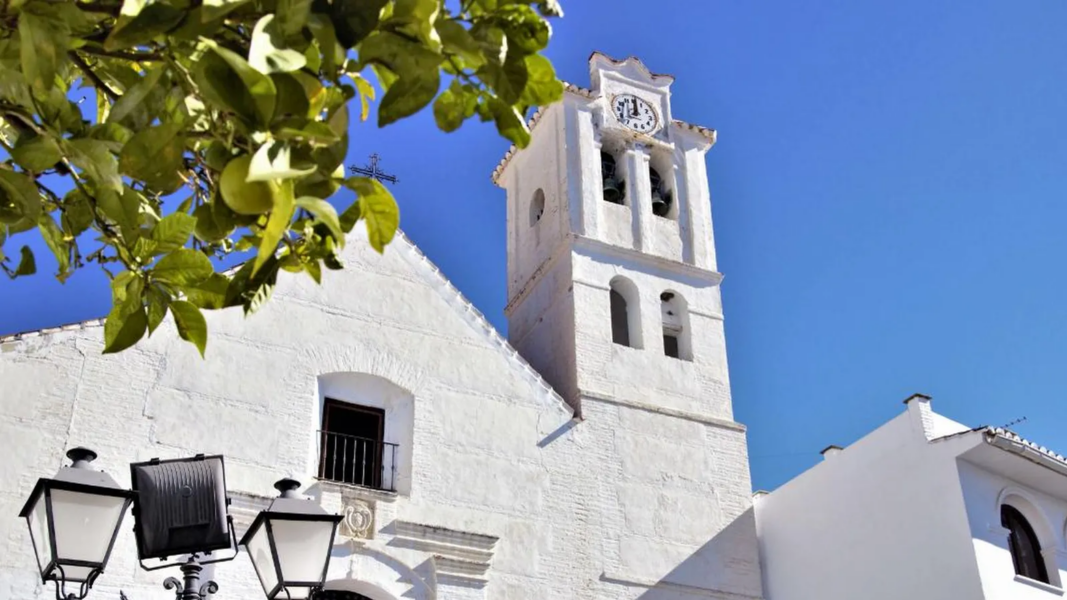
The Diocese of Málaga will celebrate this Sunday, August 9, a new edition of the Pro Templos Campaign, an initiative with more than half a century of history aimed at financing the conservation of churches, hermitages, and chapels scattered throughout the province. The problem particularly affects small municipalities, where reduced communities must maintain century-old buildings whose upkeep often requires investments beyond their means.
The campaign was established in 1974 by then-bishop Ramón Buxarráis and has since been held every second Sunday of August. This year, it once again highlights an increasingly visible reality: a significant portion of the diocese’s religious heritage requires constant interventions to prevent deterioration that, in some cases, has already forced the closure of churches for safety reasons.
The Diocese of Málaga itself has emphasized this week the need to involve not only the faithful but also society as a whole in preserving buildings that form part of the history and identity of numerous towns.
The religious heritage of depopulated Spain
The new diocesan treasurer, Guillermo Tejero, has particularly stressed the situation of smaller localities, where some of the greatest conservation problems are concentrated.
“There is a depopulated Spain,” he notes in the statement published by the diocese itself, “that is suffering the negative consequences of emigration.” In those municipalities, he adds, “authentic heritage jewels” are sometimes preserved that require attention that cannot depend solely on small parish communities.
The issue is significant. In many rural areas, the church is the main historic building in the municipality and one of the few elements capable of attracting visitors and preserving the architectural memory of the place.
Tejero summarizes it in terms of intergenerational responsibility: “It is a heritage we have inherited. We have received this legacy from our history, our culture, our faith, and what we must do is preserve it in the most dignified way possible so that future generations can enjoy it as we do today.”
Eight million to rehabilitate churches
The main institutional response to this situation is the Málaga Sacra Plan, jointly promoted by the Diocese and the Provincial Council.
The agreement was signed on June 3 by the Bishop of Málaga, José Antonio Satué, and the President of the Provincial Council, Francisco Salado, and foresees an investment of 8 million euros over the next two years.
The first interventions will take place in the churches of Benaoján, in the Serranía de Ronda, and Daimalos, a hamlet in the municipality of Arenas. From there, the program will gradually extend to other buildings with structural or conservation issues.
To date, 53 churches, including parishes and hermitages, have requested assistance. The goal is to carry out the necessary technical studies and prioritize the most urgent interventions.
Churches that sustain the memory of towns
Beyond their artistic value, the Diocese also highlights the religious and communal dimension of these buildings.
“Churches are places of reference, places of encounter—not only with the Lord, which is the priority, but also among the community itself,” explains Tejero.
In addition to their liturgical function, these buildings carry a component deeply tied to the family history of entire generations. “There lies the history of those who were baptized, who made their first communion there, who were married, or whose families bid farewell to their loved ones. Churches preserve the living memory of towns,” he recalls.
This dimension explains why the conservation of churches and hermitages cannot be reduced to a purely architectural issue. In many municipalities, these buildings hold a significant part of the community’s religious, cultural, and social history.