


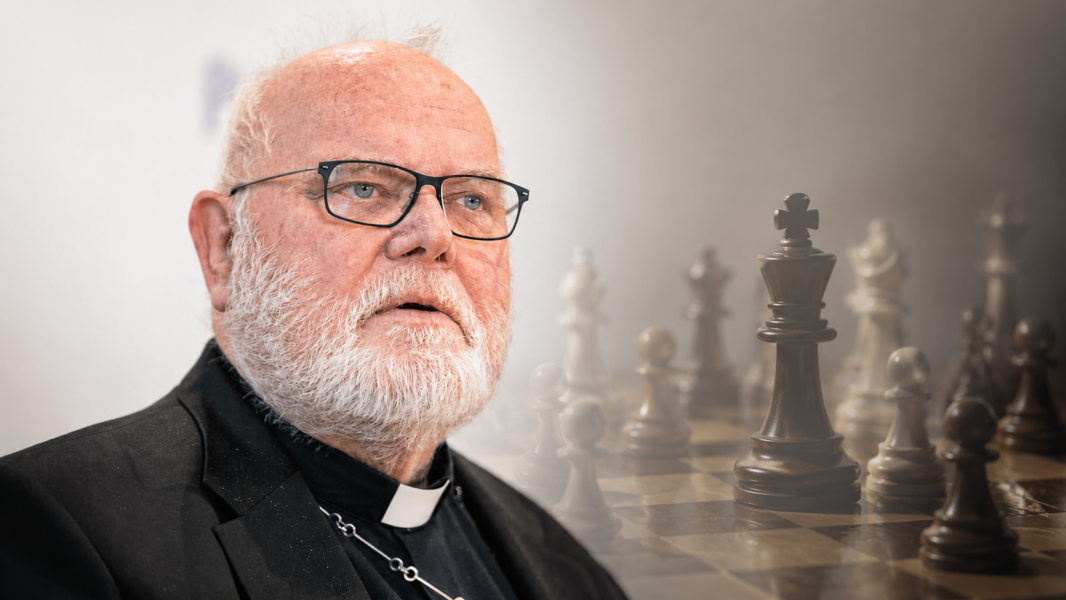
A group of 26 priests from the German archdiocese of Munich and Freising has openly questioned Cardinal Reinhard Marx’s decision to promote the implementation of the national guidelines that provide for blessings for couples in irregular situations, including same-sex couples. The presbyters believe these guidelines contradict the Church’s teaching and have warned that, if the archbishop’s explanations are not satisfactory, they intend to approach the Holy See to request clarification.
According to the German daily Die Tagespost, the priests sent a letter to the cardinal on May 12 expressing their concern over the decision to implement in the archdiocese the national guidelines drawn up by the German Bishops’ Conference and the Central Committee of German Catholics. In it, they ask whether they should obey their archbishop’s instructions or remain faithful “to the general doctrine and moral teaching of the universal Church.”
Marx proposes applying the guidelines for one year
According to the information published by Die Tagespost, the cardinal responded by proposing that the guidelines be applied for one year as a pilot project in the archdiocese. At the same time, he clarified that the document does not constitute a canonically binding norm and that, once that period concludes, he would invite the priests to a dialogue on its application.
The guidelines, titled Segen gibt der Liebe Kraft (“Blessing Gives Strength to Love”), were published in April 2025 in response to a resolution of the German Synodal Way that called for the introduction of blessing ceremonies for couples in all parishes of the country.
They denounce that they contradict Fiducia supplicans
The priests maintain that the German guidelines clearly exceed what is permitted by Fiducia supplicans, the declaration of the Dicastery for the Doctrine of the Faith published in 2023, which only contemplates spontaneous and brief blessings for persons in irregular situations and excludes any rite that could resemble a marriage celebration.
“How do you explain this evident contradiction? Or is Fiducia supplicans no longer applicable in our archdiocese?”, the signatories ask.
They also reject the instruction to refer to another priest or to the dean those who request these blessings when a presbyter does not wish to perform them, since they consider that such action could imply morally unacceptable cooperation.
They recall the rejection by Leo XIV
In their letter, the priests also appeal to the recent statements of Leo XIV on this matter. During the press conference on the return flight from his apostolic journey to Africa, the Pope stated that the Holy See “does not agree with the formalized blessing of couples,” whether homosexual or in irregular situations, beyond what is provided for by Fiducia supplicans.
The Pontiff added that going beyond that framework “can cause more disunity than unity” and insisted that the Church must build its unity on Jesus Christ and his teaching.
Divisions in the German episcopate
The application of these guidelines continues to divide the Church in Germany. While dioceses such as Limburg, Osnabrück, and Aachen have incorporated them into their official bulletins, others such as Cologne, Augsburg, Eichstätt, Passau, and Regensburg have refused to do so, considering that they exceed what is authorized by Fiducia supplicans.
The controversy increased further when the Dicastery for the Doctrine of the Faith made public last May a letter sent to the German bishops in November 2024 in which it raised objections to the draft of these guidelines.
The priests conclude their letter by warning that the application of these blessings may generate a deep division among the clergy and the faithful. If Cardinal Marx’s clarifications do not dispel their doubts, they are considering raising the matter directly with Rome.