


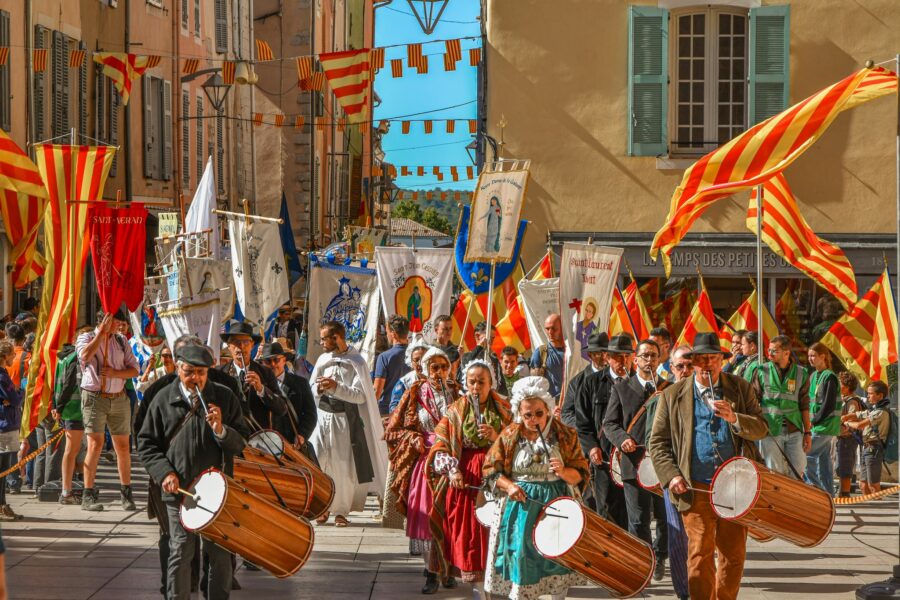
The traditional pilgrimage Nosto Fe will hold its 2026 edition on October 10 and 11, visiting the shrines of Our Lady of Grace of Cotignac and the Basilica of Saint-Maximin-la-Sainte-Baume, where tradition locates the tomb of Saint Mary Magdalene. The initiative offers a pilgrimage itinerary that combines the traditional liturgy of the Roman rite with the Christian heritage of French Provence.
Inspired by the renowned Paris-to-Chartres pilgrimage, Nosto Fe has become a gathering for the faithful attached to the traditional liturgy, with a strong emphasis on the Christian and cultural identity of the Provençal region.
Two great shrines of Provence
The route links two of the main pilgrimage sites in southern France. Cotignac is known for the apparitions of the Virgin Mary and Saint Joseph, while Saint-Maximin houses the basilica where, according to tradition, the relics of Saint Mary Magdalene are preserved.
The organizers present the itinerary as an opportunity to rediscover the Christian roots of Provence through pilgrimage, prayer, and local traditions, with the participation of cultural associations that accompany the route with music, chants, and prayers native to the region.
Traditional liturgy and Christian heritage
The pilgrimage centers on the celebration of the traditional Roman rite liturgy and is conceived as a missionary initiative that seeks to unite spiritual life with Provençal Christian traditions.
According to the organizers, the goal is to foster rootedness in the faith and religious heritage of the region, highlighting both the shrines and the cultural expressions linked to Christianity.
The tradition of Saint Mary Magdalene in Provence
The pilgrimage concludes at the Basilica of Saint-Maximin-la-Sainte-Baume. Provençal tradition holds that, after the first persecutions against Christians in Jerusalem, Saint Mary Magdalene arrived on the shores of southern Gaul together with Martha, Lazarus, Saint Maximin, and other disciples. She is said to have later lived as a hermit in the Sainte-Baume before being buried in Saint-Maximin.
Following the discovery of her relics in the thirteenth century, attributed to Charles II of Anjou, the basilica became one of the principal pilgrimage centers of Western Christendom, traditionally regarded as the third great site of Christian veneration after the Holy Sepulchre in Jerusalem and the tomb of Saint Peter in Rome.
With this new edition, Nosto Fe will once again bring together pilgrims from various backgrounds on a journey that seeks to keep alive the spiritual and cultural tradition of Provence centered on the traditional liturgy.