


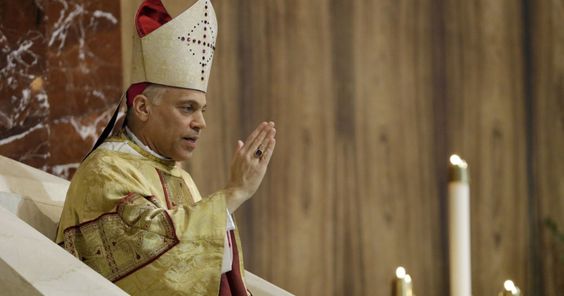
Archbishop of San Francisco Salvatore Cordileone has reacted to the recent episcopal consecrations carried out by the Priestly Fraternity of Saint Pius X (FSSPX), stating that they reflect “a growing lack of trust that has been building for a long time.” At the same time, he has called for the faithful to have easier access to the traditional Mass to prevent them from seeking spiritual nourishment outside full communion with Rome.
In a statement released after the consecration of four new bishops by the FSSPX on July 1, Cordileone urged the resumption of a “sincere and honest” dialogue between the Holy See and the Fraternity. The information was published by Per Mariam, the outlet to which the prelate had already granted an interview last year on the situation of the traditional liturgy.
A call for dialogue
The American archbishop described the situation as “complex” and maintained that the consecrations reflect a distrust accumulated over the years. In that context, he expressed his hope that “a determined effort for sincere and honest dialogue will soon begin” and added that access to the traditional form of the Mass should be facilitated “so that our faithful do not feel obliged to seek spiritual nourishment outside the family in communion with Rome.”
Cordileone’s statements contrast with other reactions that emerged after the consecrations, some of which have erroneously claimed that attending even a single FSSPX Mass would constitute grounds for excommunication. Various canonists have rejected that interpretation.
Growing voices calling for a review of Traditionis Custodes
The Archbishop of San Francisco is not the only one to have linked the consecrations with the need to review the current discipline on the traditional liturgy. Canonist Gerald Murray has publicly called for the repeal of Traditionis Custodes, the motu proprio promulgated by Pope Francis in 2021 that restricted the use of the liturgy prior to the 1970 reform.
Cardinal Gerhard Müller has taken the same line, proposing the restoration of a specific Vatican body to attend to the faithful attached to the traditional liturgy, as has Archbishop Georg Gänswein, former secretary to Benedict XVI, who recently stated that the time has come to overcome the restrictions imposed five years ago.
The explanation of the Priestly Fraternity of Saint Pius X
The FSSPX itself has defended the episcopal consecrations as necessary to ensure the continuity of its apostolate and the administration of the traditional sacraments. In a communiqué published on July 8, the Fraternity argued that without its own bishops it could not guarantee priestly ordinations and, in the long term, neither the celebration of the traditional Mass, the administration of the sacraments, nor the integral transmission of Catholic doctrine.
The statement adds that relying on diocesan bishops to ordain its priests or referring its faithful to diocesan parishes would, in practice, mean accepting the doctrines that the Fraternity considers problematic from the Second Vatican Council and the post-conciliar period.
Awaiting a decision from Leo XIV
Cordileone, who has led the Archdiocese of San Francisco since 2012, is one of the American bishops best known for his defense of the liturgy celebrated with solemnity and for regularly presiding over the traditional Mass. In statements given last year, he affirmed that the growing interest of young people in this rite is a sign of its evangelizing effectiveness and warned that maintaining the current restrictions could push some of the faithful toward communities separated from Rome or even toward abandoning religious practice.
While Leo XIV remains these days in Castel Gandolfo during his summer rest, the Holy See has not yet issued any statement on a possible review of Traditionis Custodes. The recent consecrations by the Fraternity have revived the debate on the future of the traditional liturgy and raise expectations ahead of a possible decision by the Pontiff.