


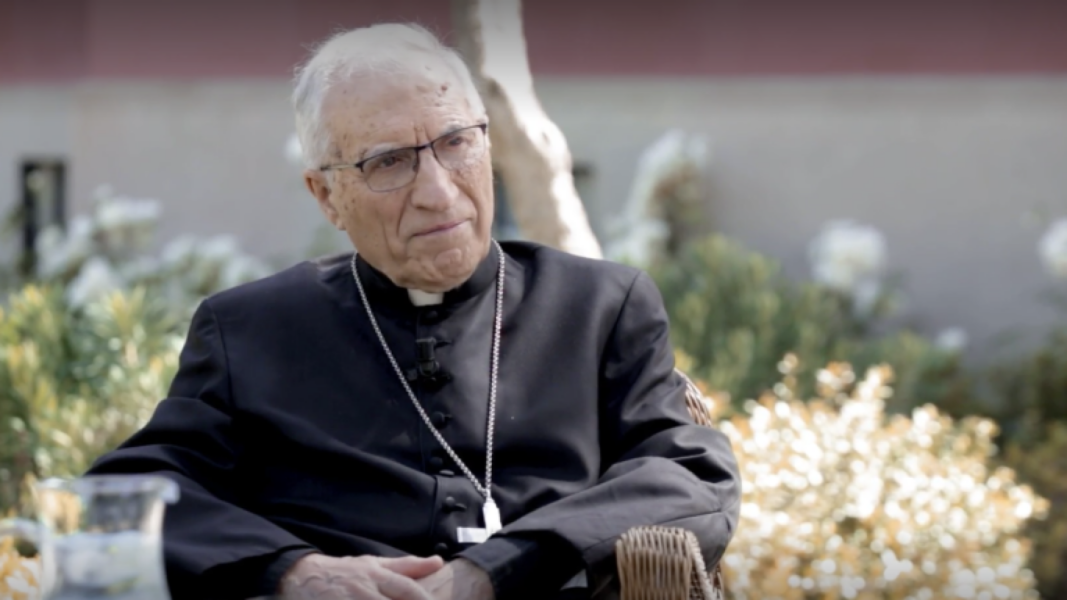
Cardinal Antonio María Rouco Varela believes the Church must put an end to the liturgical abuses that followed the Second Vatican Council, while also showing “understanding” toward the faithful attached to the traditional liturgy. In an interview given to La Nuova Bussola Quotidiana, the Archbishop Emeritus of Madrid maintains that the issue should not be resolved through new regulations and calls for fidelity both to the Council and to the Church’s liturgical tradition.
The Spanish prelate also addressed other current ecclesial matters, such as the synodality promoted by Leo XIV, the German Synodal Way, the Pope’s recent visit to Spain, and the challenges the Church faces in Europe today.
“Understanding is needed for those who want the ancient rite”
Asked about the tensions surrounding the traditional liturgy, Rouco states that the priority must be to correct the abuses that have distorted the application of the liturgical reform of the Second Vatican Council.
“I believe we must put an end to liturgical abuses that deny the teachings of Vatican II. The liturgy of Vatican II must be celebrated properly,” he says.
At the same time, he considers that the Church should show understanding toward those who remain attached to the Missal prior to the conciliar reform.
“Understanding is needed for those who want the ancient rite,” he affirms.
In his view, the solution lies in “remaining faithful to what the Second Vatican Council establishes, with respect for the freedom of the faithful within the communion of the Church,” avoiding a response to the problem through new regulations.
A positive assessment of Summorum Pontificum
Rouco also recalls that he welcomed favorably the Summorum Pontificum promulgated by Benedict XVI in 2007, which facilitated access to the celebration of the traditional liturgy.
“It was a very understanding measure; I think it was good,” he assures.
The cardinal adds that the Mass according to the 1962 Missal continues to be celebrated in Madrid and encourages the faithful who take part in it to live it with an ecclesial spirit. “The faithful must take it seriously and not become propagandists,” he states.
Synodality must respect the nature of the Synod of Bishops
In the interview, Rouco also refers to the recent consistory convened by Leo XIV and the debate on synodality.
In his opinion, the Pope has correctly defined synodality as “a spiritual style,” that is, “a way of exercising charity within the Church,” although he warns that one thing is that style and another is to modify the juridical structure of the Synod of Bishops.
The cardinal recalls that the laity have always participated in synods, but without the right to vote, and maintains that the Church must remain faithful to the canonical tradition established since Saint Paul VI.
Concern over the German Synodal Way
Rouco clearly distinguishes between the Synod of Bishops and the Synodal Way developed in Germany.
“There I believe canonical legislation has been somewhat disregarded,” he states.
He is especially critical of the project to create a Synodal Committee with equal participation of bishops and laity. If that body were to claim to exercise authority within the Church, he maintains, “it would go against the divine constitution of the Church.”
Leo XIV and the crisis of faith in Europe
The Archbishop Emeritus of Madrid also praises Leo XIV’s decision to convene consistories frequently, considering that they reflect the Pontiff’s trust in the College of Cardinals.
He likewise describes as a “masterpiece” the address delivered by the Pope during his recent visit to Spain before the Cortes Generales, for its defense of life, the family, and a Christian conception of the State.
Finally, he identifies the great challenges facing the Church as the crisis of faith in Europe, the weakening of the family institution, and the expansion of legislation favorable to abortion and euthanasia, although he concludes on a note of hope by recalling the capacity of events such as World Youth Day to gather millions of young people around the Eucharist.