


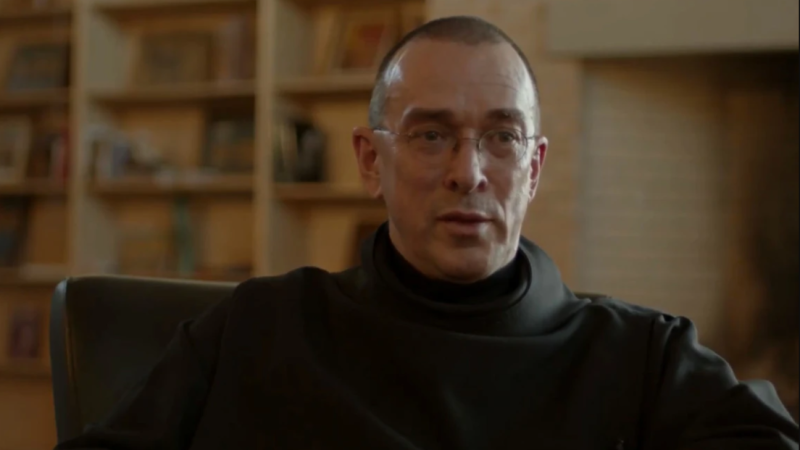
The recent declaration of the Holy See on the episcopal consecrations of the Priestly Fraternity of Saint Pius X (FSSPX) continues to provoke reactions in the ecclesial world. Dom Alcuin Reid, a Benedictine monk, liturgist, and one of the most recognized voices of the traditional liturgical movement, has published in AdVaticanum a reflection in which he calls for a renewed effort toward reconciliation and warns that the Church cannot resign itself to allowing a new fracture to become consolidated.
«Today, the words of Benedict XVI are more pertinent than ever. More should have been done in the past months, weeks, and days. More must be done to build bridges and open doors», writes Reid, convinced that it is still possible to prevent the crisis from leading to a deeper rupture.
«There is no schism in those who seek to save their soul»
The liturgist begins by focusing on the concern of thousands of faithful who attend the traditional liturgy and who, after the events of recent days, live in anguish at the possibility of being considered schismatic.
«Let us be clear», he states. «There is no sin, neither of schism nor of any other kind, in those who simply seek the salvation of their soul through the traditional liturgical rites of the Church».
Reid recalls that these same rites include prayer for the Pope and for the diocesan bishop, something which, far from expressing a rupture, constitutes «a public manifestation of Catholic unity and communion».
He also cites the Explanatory Note published in 1996 by the then Pontifical Council for Legislative Texts to support that the faithful who attend communities linked to the Fraternity in search of the sacraments «do not thereby incur the penalty of excommunication».
A harsh critique of Traditionis custodes
The Benedictine does not hide his assessment and describes it as a «pastoral, liturgical, and ecclesial disaster». According to him, the decision to restrict the traditional liturgy was driven by «an ideological operation fueled by the paranoia of old ecclesiastical liberals and based on blatant lies» that ended up pushing many Catholics «into clandestinity or out of their parishes, dioceses, and even out of the visible communion of the Church».
For Reid, it is especially concerning that «those who orchestrated that scandal and the high priests of its ruthless application still remain today at the center of power», a circumstance which, in his view, helps explain «the technocratic severity» with which the Vatican has reacted to the recent episcopal consecrations.
Benedict XVI, a model for reconciliation
Reid recalls that the German Pope lamented that, at decisive moments in history, «not enough was always done to maintain or recover reconciliation and unity», a realization which, in his judgment, obliges us today to act with the same determination.
He also recalls the questions Benedict XVI posed after lifting the excommunications of the four bishops consecrated by Marcel Lefebvre: «Is it really a mistake to go out to meet one’s brother and seek reconciliation? Can we be completely indifferent toward a community with hundreds of priests, seminaries, religious, and thousands of faithful?».
For Reid, those questions have not lost their relevance and should guide the Church’s response at the present moment.
«The parable of the lost sheep remains valid»
Far from offering an unconditional defense of the Priestly Fraternity of Saint Pius X, Reid insists that the responsibility of preserving unity belongs to the entire Church.
«The teaching of the parable of the lost sheep remains valid, whatever we may think of that sheep or however stubborn it may seem to us», he writes, emphasizing that the pursuit of reconciliation is part of the Church’s very mission.
The monk adds that his reflection «does not intend to declare in favor or against any group or person», but rather to recall some fundamental truths and call on everyone to work for unity.
Respect for the Pope and a call to prayer
Despite the criticisms directed at the actions of the Holy See, Reid avoids turning his article into a personal reproach of Leo XIV.
«We do not know the motivations or intentions of the Holy Father, and although his silence leaves an important void, we owe him the patience that is part of filial respect», he states.
For this reason, he concludes by inviting prayer for the Pope and for the entire Church, convinced that fidelity to Christ requires never abandoning hope.
«Our hearts may be weighed down; we may feel wounded, distressed, and even abandoned. But let us never doubt that, if we remain faithful, the Lord will hear our plea and save us», Reid concludes, before reiterating the idea that runs through his entire reflection: the unity of the Church deserves that «everything possible» be done to preserve it.