There is a statistic that no parent wants to hear and that is best stated plainly: the child who does not see their parents reading will hardly read. No app, no school, no Three Kings gift can replace that repeated domestic image of the father or mother with a book in their hands. Getting a child to read is not achieved by buying them a few loose books. It is achieved with a plan: a set of everyday gestures, sustained over time, that turn the book into something as natural and desirable as a ball.
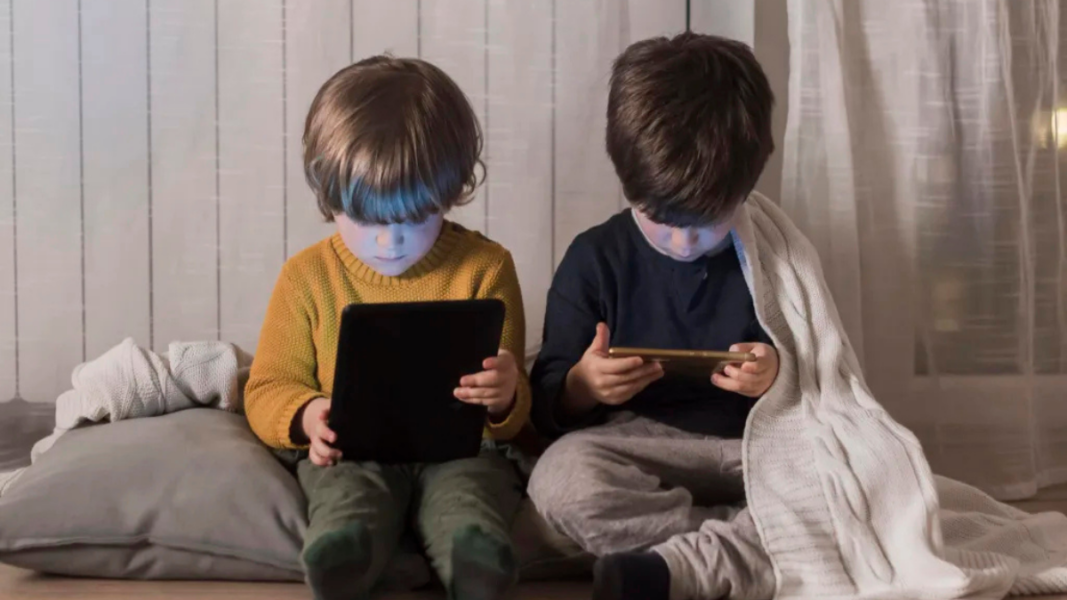
We are on the eve of summer, when many families wonder what to do with the long two months ahead. The holidays are the best time of the year to reclaim reading, precisely because they are also the season when screens advance without resistance. And it is worth naming the enemy clearly: the real pandemic our children are fighting is screens. Everything else—what book, at what age, in what collection—comes after winning that prior battle.
Twelve gestures that do work
These tips are not magic recipes. They are habits. Each family must analyze them and make them their own in daily life, but the principle that sustains them is always the same: example carries more weight than sermons.
- Set an example and talk about what you read. Parents who convey their passion for football with enthusiasm can transmit the same passion for reading. Let the children hear them discuss what they are reading.
- Place your books at the center of the house. Let the children’s books occupy the best shelves in the living room, within easy reach, so they can pick them up at any moment.
- Make books a first-class gift. On birthdays, as rewards for good grades, at Three Kings. And a decisive detail: adults should also receive books, not technology. The child learns what they see valued.
- Read aloud, even when they already know how to read. Not only to the little ones. Reading aloud teaches intonation and allows enjoyment of stories more difficult than the child would tackle alone.
- Read what they read, to discuss it together. This is Nancy Atwell’s technique, awarded the equivalent of the Nobel in education: sharing the book turns reading into conversation.
- Search and search again for collections that hook them. If a book in a series grabs them, they will read the entire series. The collection creates habit.
- If they struggle to start, turn to comics. Yakari, Asterix, Tintin, Ibáñez’s albums… They are an entry point, not a dishonest shortcut.
- Allow them to abandon a book they do not like. Forcing them to finish a boring book is the surest way to kill the reader. Let them abandon it and choose another: they must have time and freedom to read.
- Prefer classics full of imagination. The Brothers Grimm in their original version rather than stories of transgressive children or “normal life.” And avoid adaptations: when the credits say “Adapted by…,” do not buy it. Imagination is cultivated with the complete work.
- Spend money on books. Second-hand if necessary, but good editions. They enter through the eyes; if illustrated, even better. Select the content with the same care you give to keeping the cutlery clean.
- Take them to the bookstore—also second-hand—and let them choose. Choosing their own book creates in the child a pleasant obligation toward that reading.
- Before turning off the light, the alternative is read or sleep. Our experience at home is clear: when the only option is read or sleep, they prefer to read.
And above all, one warning worth all twelve: banish the habit of turning on the television “to see what’s on.” Choose carefully what they watch—none of those fast-image cartoons, better classic and family series—reduce screens during the week and remember that the computer is for work. Tablets are the great enemy of reading.
What if my child is not a reader?
This is the question parents ask me most, especially when the child reaches secondary school without having finished a book in their life. The answer is not to resign yourself or impose a classic that will alienate them forever. The answer is to choose the first book well: one that hooks from the very first page, with real moral dilemmas beneath fast, direct prose.
For that reluctant teenage reader I recommend starting with Among the Hidden, the first volume of the saga The Shadow Children, by Margaret Peterson Haddix. It works with the boy who never finishes any book, and it works because it does not treat him as a fool.
Luke is a third child forbidden by law. He has lived in hiding all his life. When he discovers another hidden girl like himself, he must decide whether to risk everything to stop existing in secret.
More than five million copies sold and a place on the New York Times list confirm that the method works. If The Hunger Games or Ender’s Game hooked them, this is their new obsession. More than one parent has given it to their son and ended up stealing it from him two nights later to find out what happens next. It is available at homolegens.com and in bookstores (RRP €12.90).
A reading itinerary by age
What follows is not a closed canon, but a compass. A selection that runs from children’s folklore to the great classics, designed to accompany the child at every stage without ever leaving them without a good book at hand. To assess other titles not listed here, a useful tool is the website delibris.org.
UP TO 5 YEARS OLD — THE EAR BEFORE THE LETTER
- The folklore of Carmen Bravo-Villasante: riddles, tongue twisters, proverbs and traditional songs.
- The fairy tales of the Brothers Grimm, illustrated by Walter Crane, Arthur Rackham or Edmund Dulac.
- The tales of Andersen and Perrault, and Andrew Lang’s color fairy books.
- Beatrix Potter’s stories, and the illustrations of Elsa Beskow and Sibylle von Olfers.
- Where the Wild Things Are, by Maurice Sendak.
- The Bible Told to Children, by Rosa Navarro Durán.
FROM 6 TO 8 YEARS OLD — THE FIRST GREAT STORIES
- Aesop’s and Iriarte’s fables; Pinocchio, by Collodi.
- The Selfish Giant and The Happy Prince, by Oscar Wilde.
- Charlie and the Chocolate Factory, Matilda and others by Roald Dahl.
- Alice’s Adventures in Wonderland, by Lewis Carroll.
- The Wind in the Willows, by Kenneth Grahame.
- Peter Pan and Wendy, by J. M. Barrie.
- The Wonderful Wizard of Oz, by L. Frank Baum.
- Marcelino, pan y vino, by José María Sánchez-Silva.
FROM 9 TO 12 YEARS OLD — THE AGE OF ADVENTURE
- The Adventures of Tom Sawyer and Huckleberry Finn, by Mark Twain.
- Treasure Island, by R. L. Stevenson.
- The Jungle Book, by Rudyard Kipling.
- Around the World in Eighty Days and Two Years’ Vacation, by Jules Verne.
- The Hobbit, by J. R. R. Tolkien.
- The Chronicles of Narnia, by C. S. Lewis.
- Little Women, by Louisa May Alcott.
- Heidi, by Johanna Spyri.
- El camino, by Miguel Delibes.
- The Little Prince, by Antoine de Saint-Exupéry.
- A Christmas Carol, by Charles Dickens.
- The Neverending Story, by Michael Ende.
- Harry Potter, by J. K. Rowling.
- El fuego secreto, by Diego Blanco.
FROM 13 TO 16 YEARS OLD — SECONDARY SCHOOL, THE DECISIVE AGE
- Among the Hidden, by Margaret P. Haddix (the ideal starting point for the reluctant reader).
- The Scarlet Pimpernel, by Baroness Orczy.
- The Black Arrow, Kidnapped and Catriona, by R. L. Stevenson.
- The Father Brown Stories and St. Francis of Assisi, by G. K. Chesterton.
- The novels of Sherlock Holmes, by Arthur Conan Doyle, and those of Agatha Christie.
- Animal Farm and 1984, by George Orwell.
- Fahrenheit 451, by Ray Bradbury.
- The Lord of the Rings, by J. R. R. Tolkien.
- Ender’s Game, by Orson Scott Card.
- The Lord of the World, by Msgr. Robert Hugh Benson.
- The Hunger Games, by Suzanne Collins (whose moral question deserves discussion with the teenager).
- White Fang, by Jack London.
- A Seminarian in the SS, by Gereon Goldmann.
- A Family of Bandits in 1793, by María Sainte-Hèrmine.
FROM 17 YEARS OLD ONWARD — THE GREATS
- The Iliad and The Odyssey, by Homer.
- The Aeneid, by Virgil.
- Don Quixote, by Cervantes.
- History of Rome and History of the Greeks, by Indro Montanelli.
- The Three Musketeers and The Count of Monte Cristo, by Alexandre Dumas.
- Crime and Punishment and The Brothers Karamazov, by Fyodor Dostoevsky.
- Pride and Prejudice, by Jane Austen.
- Jane Eyre, by Charlotte Brontë.
- Lord of the Flies, by William Golding.
- 1984, by George Orwell.
- The Quiet Light (on Saint Thomas) and Restless Heart (on Saint Augustine), by Louis de Wohl.
- A Teenager in the Rearguard, by Plácido M.ª Gil.
AND, FROM TIME TO TIME, PURE ENTERTAINMENT
Between the ages of 9 and 16 it does no harm to read, occasionally, books of lesser literary quality: small interludes of escapism that keep the habit alive without risk. Enid Blyton’s series (The Famous Five, Malory Towers), The Three Investigators, Sandokan and Emilio Salgari’s corsairs, or the adventures of Tarzan and Arsène Lupin fulfill that function perfectly.
The battle worth fighting
Forming a reader is one of the most profitable and silent investments a family can make. The result is not seen in an afternoon, but over an entire lifetime: in a child capable of thinking for themselves, of imagining, of inhabiting worlds that no screen will ever give them. The summer that is beginning is an unbeatable opportunity to start that battle. The pandemic is real, but the cure fits on a shelf.