


This is how this story began.
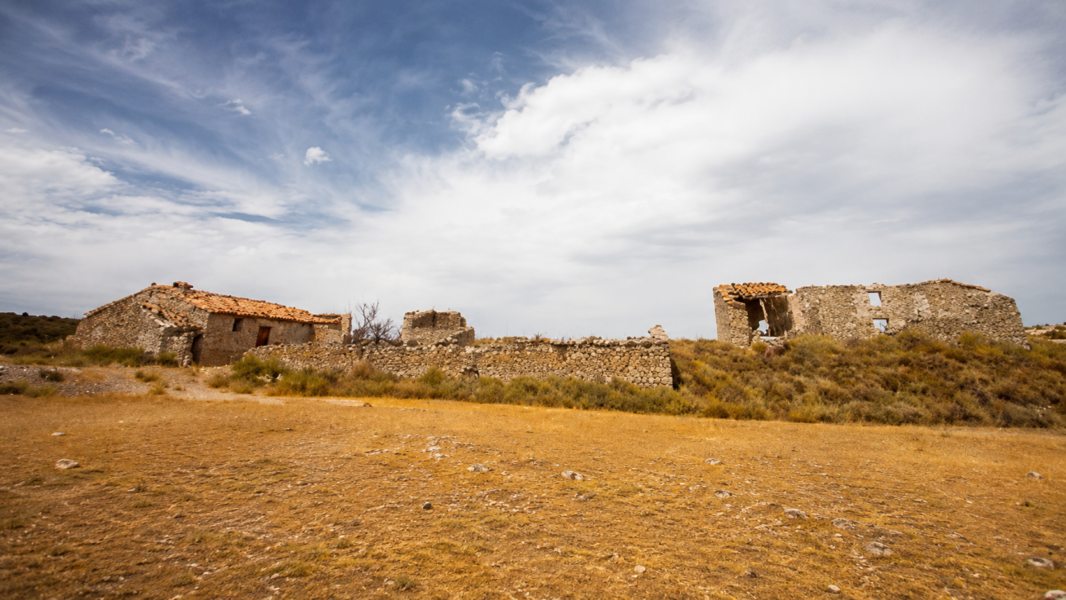
In the spring of 2023 I put my apartment in Barcelona up for sale, with the mortgage half paid, and bought a house in the Monegros desert that had been uninhabited for years. My idea was to spend every weekend here, rebuilding this space, making it habitable, so I could leave Barcelona and move here that same winter.
To turn the ruins of a small single-story house, with a patio and a corral, into a hermitage; in the wasteland, its natural place.
To seek God. To be alone with God alone.
Less than three hours by road from Barcelona, it ensured I could receive spiritual direction, the sacrament of confession, and attend traditional Mass every Sunday and on holy days of obligation.
Just an economical little car, but high enough for these places, was enough.
Zaragoza, 40 minutes away, and nearby micro-villages with shops where I could find what was needed for an austere but not too makeshift subsistence as an urbanite, plus a sky as clear as few others, made me take, not without fears, the long-desired decision.
Why? To flee from modernity; that of the world and that of the Church. From the decadent or rotten work environments and the parishes in Barcelona where only the idol of the nation or its opposite matters, the right-wing PP circles in the upscale neighborhoods; from the villages of Catalonia where the Church is on its last legs, from being labeled a fascist, reactionary, and other niceties.
And to purge the sins of my past life, already confessed and absolved, but still painful. A priest once recommended that I read the lives of saints, and one that impacted me the most, as it has so many Catholics throughout the centuries, was that of Saint Augustine. But not only his “Confessions,” but also the catecheses that Pope Benedict XVI dedicated to him, especially when he explained what he considered Saint Augustine’s “third” conversion, “the one that, in the final stage of his life, led him to ask God for forgiveness every day of his life. In the catecheses of January and February 2008, the pope explained that, “when in June of the year 430 the Vandals besieged Hippo, the biographer Possidius describes Augustine’s pain: ‘More than usual, his tears were his bread day and night; having reached the end of his life, he was more dragged down than others in the bitterness and mourning of his old age (…). In the third month of that siege he took to his bed with fever: it was his final illness (Life, 29, 3). The holy old man took advantage of that moment, finally free, to devote himself more intensely to prayer. The more his situation worsened, the more he felt the need for solitude and prayer. He forbade visits from everyone except the doctors so he could devote himself solely to prayer and asked that the penitential psalms be transcribed for him in large letters, ordering that the sheets be hung against the wall so that from his sickbed he could see and read them, and he wept without ceasing hot tears”.
Note: This article is part of a series in which the author recounts his experience of eremitic life and his spiritual journey. To be continued.