


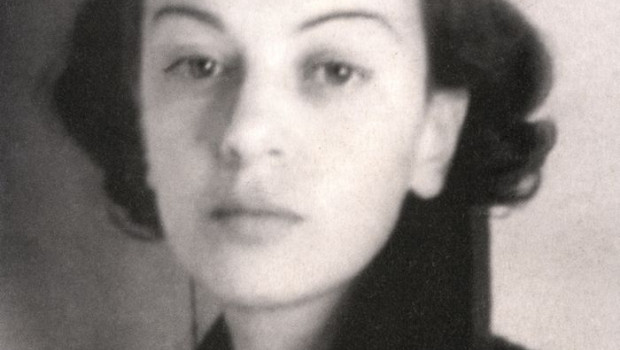
“Cristina Campo led the process”, stated Jean Madiran in his History of the Forbidden Mass, published in French in 2007. He, who had been a privileged witness and a participant in the struggle to preserve the traditional liturgy, recalls: “She was three years younger than I; she belonged to that generation of laypeople and clergy who, in the age of maturity and responsible action, had to endure without hesitation and without faltering the first shock of the new Mass”.
A few months after Cristina’s first visit to San Anselmo, following her very recent conversion, on 19 March 1964, the practice of concelebration began in the abbey, the first step in a series of reforms that would intensify in the following months and which, in her eyes, represented the abandonment of the heritage received over the centuries.
A few months later, on 26 September 1964, the Sacred Congregation of Rites and the “Consilium for the Implementation of the Constitution on the Liturgy” published the first Instruction for the Proper Implementation of the Constitution on the Sacred Liturgy of the Second Vatican Council, known by its opening words, Inter Oecumenici. One of the aspects that aroused the greatest expectations or fears, the most comments and controversy, was the language to be used in the celebration of Mass. The provisions of the Instruction Inter Oecumenici came into force on 7 March 1965. Pope Paul VI set an example by celebrating that same day a Mass with parts in Italian in the parish of Ognissanti (All Saints) in Rome, the very day vernacular language was introduced at San Anselmo. The next day, Campo would write to her friend Mita: “The leprosy has reached San Anselmo (loudspeakers everywhere, parts of the Mass in the vernacular, painful discussions where before there had only been goodwill and a smile) and I will never set foot there again, except to see the good father (Mayer), who can do nothing but suffer in silence. Often I would like to do something, the usual temptation, but action, as always, would cause greater harm. Instead of the loudspeakers, it is the father (that is, the superior) who should leave. When the church is empty and dark, I go to see it. I feel that I love it so much at those moments, with those hideous devices that wound and offend its pure walls”.
Despite her misgivings, she did in fact act. Her first initiative was to publish, under the pseudonym Guisto Cabianca, a translation of Marcel Proust’s article “La mort des cathédrales” (“The Death of the Cathedrals”), which she introduced with a translator’s note: “This study by Marcel Proust appeared in Le Figaro on 16 August 1904, on the occasion of the French law on the separation of Church and State, which provided, among other things, for the suppression of places of worship, the inventory of all Church property in France, registration as religious associations under penalty of confiscation of such property by the State, the ‘police of worship,’ etc. A law which, as is well known, represented a spiritual victory for the French episcopate, obedient to the command of St. Pius X: to allow themselves to be despoiled while continuing to preserve, in absolute poverty, their pastoral mission. Today, without any pressure from secular governments, when one hears talk in ecclesiastical circles of the ‘necessary sacrifice’ of the cathedrals and of Gregorian chant, it seems opportune to reread Proust’s subtle, caustic, and passionate defense in defense of the immense treasure from which all great Western art has been nourished for centuries—together with the Christian faith. It is not easy to understand to whom or to what people are being immolated today”.
We mentioned earlier that, for her father’s funeral, since he was a well-known man of culture, Cristina Campo obtained something unusual: a grand Requiem Mass celebrated by Father Mayer and sung by the entire community of monks in the abbey of San Anselmo, as if it were the funeral of a member of the monastic community. Later she wrote: “I have never seen or heard anything more beautiful in this world. As they descended to form that great circle around the coffin, which so clearly marks the separation from the saeculum, the entrance into another kingdom, Elémire (Zolla) said: ‘They make you envy the one who is inside’”.
At that funeral, as she herself would recount a few years later, “practically all of Rome was present.” As they left, Elena Croce, a good friend of Campo, with tears in her eyes, said: “But we must save all this; let us write to the Pope”. These words undoubtedly encouraged Cristina Campo, who already had experience in petition campaigns, albeit on political issues. Thus, practically alone, she organized an impressive collection of signatures: thirty-seven writers and artists (including two Nobel laureates), who signed a manifesto-letter addressed to the Pope requesting that the liturgy be kept in Latin, at least in monastic communities.
It is important, in order to understand the personal sacrifice this battle meant for her, to consider the circumstances in which she undertook it: after her father’s death, she was granted only three months to vacate the house at the Foro Italico where they had lived for the past decade, since the dwelling belonged to the Conservatory. However, in the midst of mourning and the practical tasks involved in vacating the house, and while looking for a place to live, she drafted the petition and began to gather names and addresses of possible signatories.
She finally moved to the Pensión San Anselmo, still on the Aventine, a modest second-class family hotel, to room number 9, which overlooks a quiet little square, opposite the Benedictine abbey that had come to mean so much to her.
By then she was exhausted. On 24 September 1965 she wrote to Alejandra Pizarnik that “the fatigue of holding a pen seems increasingly strange to me (psychosomatic?)” and, at the end of October, a letter to a publisher about the translation that should have been completed in the spring provides more details of what her life was like in those months: “Shortly after my mother’s death, my father also passed away. I had to take care of everything alone, leave my house and, in the end, I was ill for a long time. Right now I am beginning to take a few steps. As you can imagine, my nerves are shattered; without wishing to anticipate anything, I will fulfill my commitments as soon as possible and in the best possible way”.
At the beginning of the following year, on 29 January 1966, a few days before the letter was sent to the Pope, she wrote to Alejandra Pizarnik: “My dear little Alejandra, your letter has moved me deeply. It reached me in a moment of total darkness (the doctors call it a nervous breakdown), the result of mourning”.
It was under these circumstances, so adverse both externally and internally, that she managed to draft the petition and gather the 37 signatures from various parts of the world, which was sent on 5 February 1966, and which read as follows: “Artists and scholars, both Catholic and non-Catholic, concerned with preserving, in the modern world, one of the greatest cultural and spiritual heritages of the West—a heritage that risks, in a short time, becoming something purely archaeological—request that a petition be presented to the benevolent attention of His Holiness, Pope Paul VI—a petition which, it seems, already represents the desire of ever larger groups, both of the faithful and of non-Catholics—for the Latin-Gregorian liturgy, as it has been celebrated for fifteen centuries in monastic communities, to remain intact and complete, at least in those conventual churches that do not have strictly parochial functions; and that in this liturgy, including the Mass, there be no parts in the vernacular nor music other than Gregorian chant; and that in conventual churches no amplifiers or other mechanical instruments be used that would irreparably distort the nature of plainchant and the character of the place. If His Holiness would deign to consider this petition—which does not seem in any way contrary to the conciliar liturgical Constitution, and which seems particularly in harmony with the admirable words of the Pontiff himself in his address to the Augustinians on 31 August 1965—it will allow a large portion of the faithful, and non-Catholics who so desire, to continue participating in or attending the traditional liturgy and chant, without diminishing the importance of other liturgical forms recently adopted in parish churches throughout the world”.
A few months after the sending of the manifesto-letter addressed to the Pope, she founded the Roman section of the international association Una Voce, directed by Éric de Saventhem.
Three years later, in 1969, the new Missal of Paul VI appeared, with its new rite of Mass or novus ordo Missae. “When the new Mass arrives,” says Madiran, “she is prepared.” In the bulletin of her Una Voce Roma, Cristina Campo expresses herself with fervor, exhorting “all sacrifices to attend the traditional Latin Mass, the only one that is doctrinally safe”; she recommends: “Reread, learn by heart, teach your children yourselves the true catechism, that of St. Pius X.” She invites them to “save the canonical books,” to collect missals, breviaries, and rituals sold in bulk to street vendors, to gather the recordings made at Solesmes.
Once again, Cristina Campo sets to work. She has access to Cardinal Ottaviani. Together with her friend Emilia Pediconi, she obtains the cardinal’s agreement to draft a document of accusation that will be presented to him and which he will present to the Pope. She then creates a working group made up of half a dozen Roman ecclesiastics. Among them is Msgr. Renato Pozzi, the most determined and dynamic, a former Council expert. Cristina Campo also turns to Msgr. Marcel Lefebvre, who in turn brings in Fr. Guérard des Lauriers. The group worked intensively in April and May 1969 and carried out the compilation of all the material that would constitute the Brief Critical Examination of the Novus Ordo Missae. From there, Fr. Guérard dictated in French a text that Cristina Campo wrote directly in Italian, “completed and meticulously revised by her, especially with regard to the liturgy,” according to all the witnesses; which means that Cristina Campo was recognized as having particular competence and sensitivity in the matter. Bernard Tissier de Mallerais, who was not there but undoubtedly knows through Msgr. Lefebvre, indicates in his biography of the founder of the FSSPX, regarding Emilia Pediconi and Cristina Campo: “Without having studied theology, these Roman ladies carried it in their blood.”
However, it was not entirely accurate that Cristina Campo had not studied theology: from 1964 onward, at least, she devoted herself intensely to the study of Catholic doctrine, as she herself describes with a smile: “In the morning I breakfast studying the canons of the Council of Trent, at midday I continue reading the Leonine Sacramentary, and in the evening I dine with the Council of Nicaea, to fall asleep with Pascendi.” While this does not make her a confirmed theologian, at least she is not doctrinally ignorant.
Her liturgical and doctrinal struggle lasted six years, from 1966 to 1972. She was forty-nine years old and was exhausted. Due to her congenital heart condition, throughout her life she fell ill easily, with pains on the left side, moving from convalescences to relapses, and frequently needing periods of rest. Madiran dedicates beautiful words to her in his History of the Forbidden Mass: “A frail and sickly body, a poet’s soul, an iron will… But in 1972 she can no longer go on. She is deeply grieved at not having been able to prevent the liturgical disaster spreading everywhere, in dioceses, in parishes, in schools, a disaster for the faith, a disaster for vocations.
With the promulgation of the novus ordo Missae in 1969, the traditional Mass was in fact prohibited, granted only in special cases. In 1970, Msgr. Marcel Lefebvre founded in Écône, in French-speaking Switzerland, a priestly fraternity dedicated to St. Pius X and a seminary for the preparation of priests to exercise the ministry according to the pre-conciliar liturgy. It was the beginning of his long confrontation with Rome. After an apostolic visitation, the Holy See decided to dissolve the fraternity, close the seminary, and prohibit the clergy and faithful from supporting the prelate. Lefebvre refused to submit to Rome’s provisions and was suspended a divinis. John Lindsay Opie, a friend of Cristina Campo, recounts Cristina Campo’s admiration for Msgr. Lefebvre. She visited him and wrote to him on various occasions. In a letter dated 1967 she already confesses to him “losing all desire to continue fighting.”
In 1968, Cristina had found a small early-twentieth-century house and left her room at the Pensión San Anselmo. Her new home is practically next door, on the same Aventine hill. Zolla rented the semi-basement of the pension where they had both resided, in separate rooms, “to have a little peace when the comings and goings of Cristina’s fellow fighters bother him too much,” in the words of her biographer, Cristina de Stefano. In fact, in Cristina’s new home, inhabited by numerous cats, there were constant meetings with figures of various backgrounds who revolved around her, both lay and religious, who did not want to throw in the towel in the struggle for the traditional Latin liturgy of the Catholic Church, who suffered from the mystery of iniquity that had reached the very summit of the Church.
Cristina cannot bear to attend the Mass of Paul VI. For her it is a true apostasy. In 1968, Elémire Zolla, concerned about the depression into which Cristina had fallen after the victory of the reformers, leads her to discover the Pontifical College Russicum, the seminary of priests who will be sent to the lands of the Eastern rite. Cristina Campo discovers in the Russicum the jewels of the Byzantine-Slavic rite. Everything in this liturgy seems made to captivate her: the solemn gestures, the richly ornate vestments, the mysterious words pronounced in an ancient tongue. The Russicum becomes her refuge: she regularly participates in the rite, bows before the doors of the iconostasis, prostrates herself on the floor during the celebrations.
Her last years of life are difficult. Everything slows down. Her heart fails more and more often. For long periods she feels paralyzed by anguish: “the horrible knot,” as she calls it. She is so weak, from the heart and the nerves, that she fears she will not be able to bear the fatigue of outings and long liturgical celebrations. And, moreover, the weight of beauty frightens her; she is afraid of breaking into tears at the first sacred chant. She hardly leaves the house anymore. “I do not know the way, but You do,” she says to God from her darkness. From this silence are born seven long liturgical poems, dominated in content and form by the theme of rite. In these vast and rhythmic poetic compositions—her biographer affirms—Cristina Campo reaches the summit of her poetic expression; in them she celebrates the new dimension that has been revealed to her. She suffers, but the Byzantine-Slavic rite has strengthened her faith.
Vittoria Guerrini / Cristina Campo died in Rome on 10 January 1977, three months before turning 54, from heart failure. Lina Ajello, widow of the writer Tito Casini, remembered her thus: “she was all soul. A great soul in a very light body.” She knew well that the Church would survive; that there would be monasteries, fewer in number than one might imagine, to preserve the tradition of Gregorian chant and the Mass. But she also admitted, like John Senior (“we have lost”), the defeat of the liturgical tradition in the 1970s and knew that this general eclipse was a catastrophe for civilization, meaning misfortunes and sufferings for several generations.” After Cristina’s death, her great friend María Zambrano wrote: “the pure flame kindled, which consumes time and creates it, and one feels that, as it is extinguished, time or something of time is also extinguished with it. And that she herself has ended her time, the time that had been given to her as duration. The duration has been consumed, reduced to burning, fire-light.
Note: The articles published as Tribuna express the opinion of their authors and do not necessarily represent the editorial line of Infovaticana, which offers this space as a forum for reflection and dialogue.