


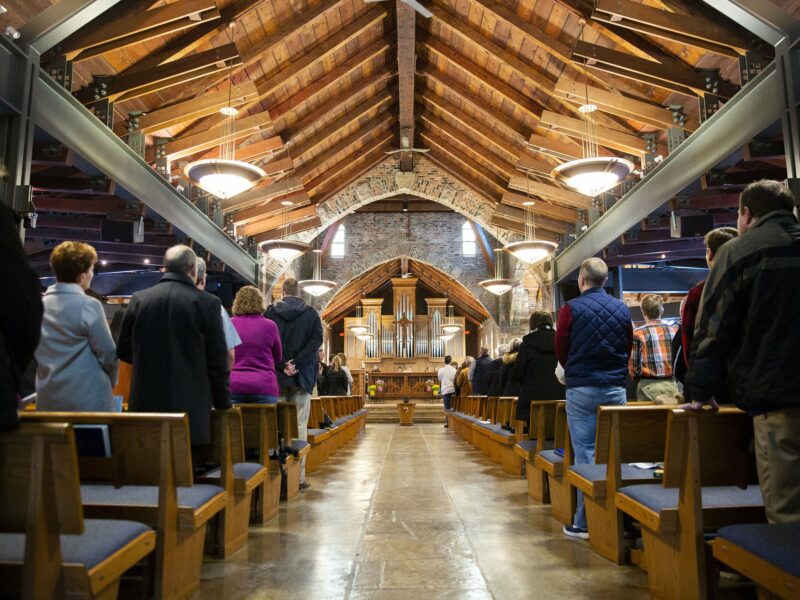
The Archdiocese of Detroit is studying a major restructuring that could mean the elimination of weekend Masses in up to 90 parishes. According to LifeSiteNews, the various models presented by the diocese envision a massive reduction in Sunday celebrations and could also lead to the closure of numerous churches.
The initiative is part of a reorganization plan announced last year by Archbishop Edward Weisenburger, who justifies the measures by the drop in Mass attendance, the decline in sacraments, and the shortage of priests.
One of the largest parish reorganizations in the United States
The models published on June 18 are the result of more than 400 consultation sessions held in the parishes of the archdiocese. Although the proposals differ in some aspects, all envision a significant reduction in the number of churches with regular Sunday celebrations.
The final decision will not come until 2027, when Archbishop Weisenburger determines which plan will ultimately be implemented. The archdiocese maintains that the goal is to ensure the future viability of Catholic communities and strengthen their evangelizing capacity.
Detroit is not an isolated case. More than thirty U.S. dioceses have undertaken or are studying similar processes of parish consolidation, citing issues of attendance, aging communities, and lack of clergy.
Restrictions on the traditional Mass amid the crisis
The publication of these plans has once again brought to the table an issue that continues to generate controversy among many of the faithful: the restrictions recently imposed on the traditional liturgy.
Just a few months ago, Archbishop Weisenburger ordered the elimination of the traditional Latin Mass in thirteen churches of the archdiocese, strictly applying the provisions derived from Traditionis Custodes. The measure was met with concern by many Catholics who attended those communities.
The coincidence between the restrictions on the traditional liturgy and the official recognition of a serious crisis in parish participation has fueled criticism from those who see it as contradictory to limit communities that, in many cases, stand out precisely for high Mass attendance, the presence of large families, and a greater number of vocations.
“The bloodiest reduction” since Traditionis Custodes
Among those who have questioned Detroit’s policy is writer and theologian Peter Kwasniewski. In April, he described the measures taken against the traditional Mass as “the bloodiest reduction” he has known since the publication of Traditionis Custodes by Pope Francis in 2021.
Communities linked to the traditional rite have frequently been noted by various observers as one of the most dynamic sectors of American Catholicism, especially for their ability to attract young people, families, and priestly vocations.
For this reason, some of the faithful believe that the current reorganization reveals a deeper problem that cannot be explained solely by the lack of priests or the decline in religious practice.
A debate affecting the entire Western Church
The case of Detroit reflects a discussion present in numerous dioceses in Europe and North America: how to address the decline in the faithful without further accelerating the weakening of parish life.
While diocesan leaders argue that concentrating resources will allow for the creation of more sustainable structures, others question whether the elimination of Masses and the closure of churches will truly help reverse a crisis that has been affecting large areas of the Western world for decades.
The final decision will be known in 2027, but the models presented suggest a far-reaching transformation for one of the historically most important dioceses in the United States.