


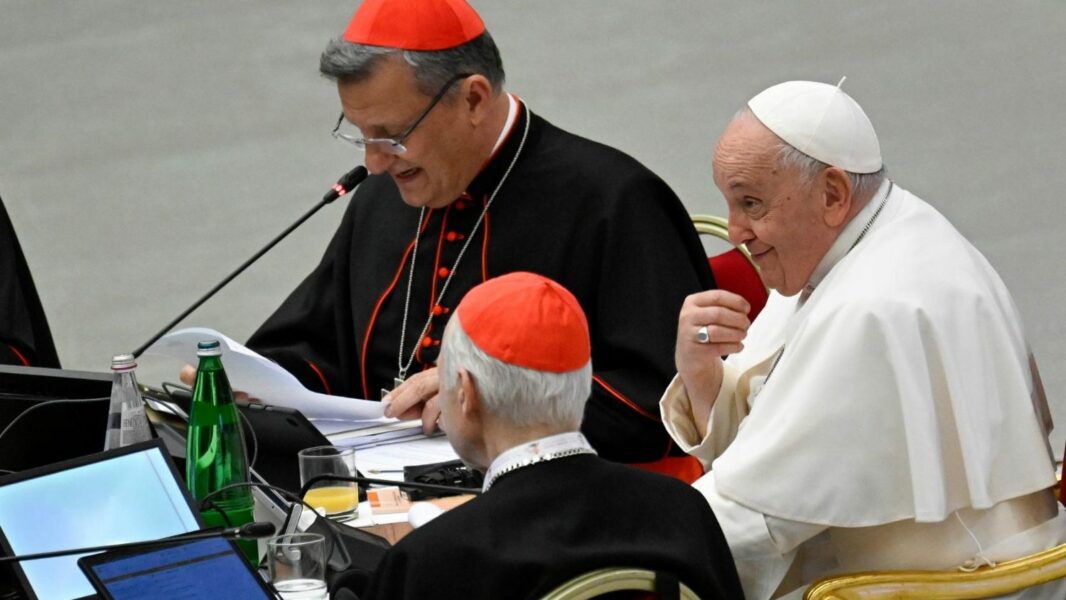
The cardinals who will participate in the extraordinary consistory convened by Leo XIV on June 26 and 27 will work following a methodology very similar to that used during the synodal processes promoted in recent years under the pontificate of Francis. This is evident from an informative note distributed by the Holy See Press Office to journalists and disseminated by the Italian blog Messa in Latino.
The information complements the details already known about the topics to be addressed during the consistory and about the strict confidentiality rules imposed on participants. Now the specific procedures that will govern the debates among the cardinals are also known.
The cardinals will work divided into groups
According to the documentation distributed by the Vatican, the participants will be divided into two large groups. The first will consist of nine groups of cardinal electors who currently hold or have held pastoral responsibilities as diocesan ordinaries. The second will comprise eleven groups made up of members of the Roman Curia and non-elector cardinals.
Each group will have a president responsible for moderating the sessions and ensuring compliance with the established times, as well as a secretary responsible for collecting the contributions made and drafting a final summary on behalf of the group.
The division of participants into working tables is one of the most characteristic features of the synodal methodology applied in recent years at the Vatican.
Interventions limited to a few minutes
The working method will be carried out in three phases. During the first, each cardinal will have a maximum of three minutes to speak on the issues raised. Subsequently, a second round of interventions will be opened, limited to two minutes per participant, intended exclusively to highlight the aspects considered most relevant from what was previously heard.
Finally, the secretary of each group will prepare a final report with the collaboration of the other members.
The conclusions will be presented later in the consistory hall. The groups of ordinary cardinals will have a maximum of three minutes to present their summaries, while the other groups may present their respective conclusions once during the course of the proceedings.
Continuity with the methods used during the pontificate of Francis
The organizational structure clearly recalls the procedures used in the recent synodal assemblies held in Rome. Working in small groups, the preparation of collective summaries, and the limitation of speaking times are common elements of that model of discussion.
For some observers, this system favors mutual listening and the search for consensus. Others, however, believe that it restricts open debate and reduces the possibilities for cardinals to fully develop their positions before the full assembly.
In any case, the documentation distributed by the Holy See confirms that the upcoming consistory will not take place through successive interventions by the cardinals in plenary session, but through a group work methodology that maintains important similarities with that used during the synodal process of recent years.
No press access and under strict confidentiality
The note sent to accredited journalists also reminds that the presence of media outlets will not be allowed inside the hall where the proceedings will take place.
Likewise, the cardinals have been asked to maintain confidentiality regarding the deliberations and to avoid making public statements during the sessions in order to preserve a climate of fraternal exchange.
At the end of each session, the Holy See Press Office will distribute official summaries of the proceedings, in addition to the texts of the interventions scheduled in the program.