


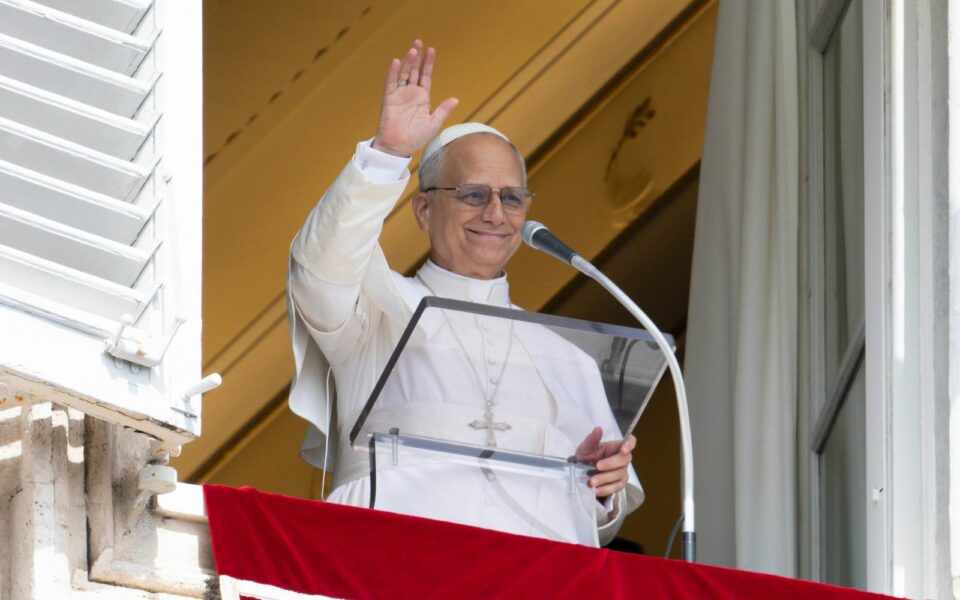
Pope Leo XIV urged Catholics this Sunday to strengthen their inner life so they can proclaim the Gospel with authenticity in a world increasingly in need of hope. During the Angelus prayer in St. Peter’s Square, the Pontiff recalled that the evangelizing mission springs from a personal encounter with Christ and not primarily from pastoral strategies or techniques.
Commenting on the day’s Gospel passage, Leo XIV emphasized that the strength of the apostolate “is grounded in the action of the Holy Spirit within us and in the authenticity of our response,” and invited all the faithful to set aside moments of silence and prayer amid their daily occupations to listen to God’s voice. The Pope also stressed that contemplation is not an experience reserved for religious or mystics, but a call addressed to all Christians, since only a faith rooted in a deep relationship with Christ enables one to respond to hatred with love, to violence with meekness, and to discouragement with perseverance.
After the Marian prayer, the Holy Father also issued an appeal on behalf of refugees on the occasion of the 75th anniversary of the Convention Relating to the Status of Refugees, reminding that “no one can look the other way when people seek protection and security” and urging that victims of persecution be welcomed so they may live with dignity and hope.
Words of Leo XIV at the Angelus:
Dear brothers and sisters, happy Sunday!
In today’s liturgical Gospel (Mt 10:26-33), Jesus, as he sends the disciples on mission, addresses them with this exhortation among others: “What I say to you in the dark, tell in the light; and what you hear whispered, proclaim from the housetops” (v. 27).
He establishes a link between what we hear “whispered,” that is, in the secrecy of the heart, and what we are called to proclaim to all, reminding us that the proclamation of the Gospel is, above all, the sharing of a personal encounter with Him, unique to each person.
The strength of the apostolate, in fact, beyond techniques and instruments, is grounded in the action of the Holy Spirit within us and in the authenticity of our response. Saint Thomas Aquinas spoke of preaching as handing on to others what we have contemplated: contemplata aliis tradere (cf. Summa Theologiae, III, q. 40, a. 1, ad 2).
Nor should we think that “to contemplate” is an exclusive experience, reserved for a few saints or for monks and hermits. All of us can do it, striving to preserve, amid the busyness of our days, moments of stillness in which we become silent before God, to listen to his voice, to entrust to him our joys and our concerns, and to review our life with him. This makes us ever more persons of solid and conscious faith and, consequently, credible and free apostles—men and women capable of reflecting the light of the Gospel in any setting and in any situation of life, and of bearing witness to it even where its value is not understood or accepted.
Saint Matthew—the author of the biblical passage we are considering—wrote for communities that did not have an easy life. They had to face hostilities and persecutions, as so many Christians still do today in various parts of the world, and the temptation to become discouraged and to yield to weariness or fear was great.
Now, as then, remaining faithful to the teachings of Jesus and proclaiming his Word is demanding: responding to hatred with love, to arrogance with meekness, to discouragement with perseverance. That is why it is necessary to sink the roots of our faith and our mission in an intense relationship with him (cf. Francis, Ap. Exhort. Evangelii gaudium, 8). This gives us the strength not to give up and to continue transmitting to everyone, in every circumstance, his message of hope, love and peace. The world has such need of it!
May the Virgin Mary help us to be missionary disciples of the Lord Jesus, each according to his or her own vocation.