


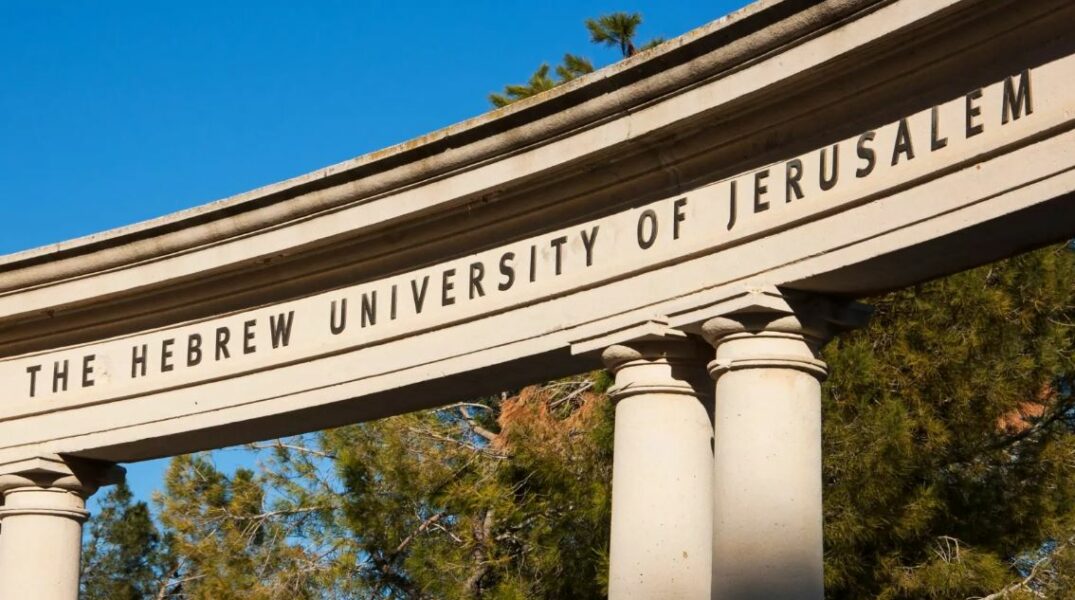
Pope Leo XIV received members of the Board of Governors of the Hebrew University of Jerusalem, one of Israel’s most important academic institutions, at the Vatican this Thursday, in a meeting marked by the Pontiff’s repeated calls for dialogue and peace in the Middle East.
During the audience, held in the Apostolic Palace, the Pope highlighted the role of universities as privileged spaces for encounter among people of different cultures, languages, and traditions. In an international context marked by armed conflicts, political polarization, and growing social tensions, Leo XIV encouraged the academic community to become “artisans of true peace,” built on mutual respect, dialogue, and the overcoming of mistrust.
The Pontiff stressed that the pursuit of knowledge cannot be separated from encounter with the other and defended the importance of preserving spaces where it is possible to exchange ideas even among people who hold divergent positions. He also recalled that peace does not begin solely in institutions or political agreements, but in personal conversion and in each individual’s willingness to become an instrument of reconciliation.
Below is the full address delivered by Leo XIV:
Dear friends:
I am pleased to greet all of you this morning, members of the Board of Governors of the Hebrew University of Jerusalem, during your visit to the Vatican and to Rome. I hope your stay here will allow you to deepen your knowledge of both Vatican City and Rome, a place that not only occupies a central position in the origins and development of the Christian faith, but has also fostered for millennia the encounter between cultures and peoples.
Universities have likewise long been places of encounter, bringing together students and professors to grow in wisdom through study and academic research, as well as through the friendships and professional relationships that develop naturally. Although it is not always easy, universities must constantly strive to ensure that opportunities for meaningful encounter continue to exist. This is an essential part of the life of any institution of higher education, because our relationships with others, our languages, and our cultures are fundamental to who we are as human beings (cf. Address to the professors and students of La Sapienza University of Rome, 14 May 2026).
As natural places of encounter, universities have traditionally also been privileged spaces for dialogue, where the pursuit of knowledge is intrinsically linked to the exchange of ideas among all members of the academic community. In an environment where respectful dialogue is possible, everyone can grow in knowledge by learning from the perspectives and life testimonies of others, even those with whom they may disagree. In these contexts, with patient perseverance, it is possible to work gradually to break down the barriers of misunderstanding and mistrust that may arise.
In this sense, in a time often characterized by violence and aggressive rhetoric, the members of your diverse university community can continue to be “artisans of true peace, a peace that is unarmed and disarming, humble and persevering, that works for harmony among peoples” (ibid.).
The Psalms tell us that the God who loves us unconditionally speaks of peace to his people and to those who turn to him with all their heart (cf. Ps 85:8-9). God asks us to be his instruments in bringing peace to the world, but we must begin with ourselves. As Saint Augustine of Hippo wrote: “If you wish to lead others to peace, first have peace yourself; remain steadfast in peace. To kindle others, you must have the flame burning within you” (Sermon 357, 3).
Instead of thinking that peace is impossible or beyond our reach, we must strive to promote it in our communities and to welcome and recognize it in our own lives (cf. Message for the LIX World Day of Peace, 1 January 2026). I pray that, by forming artisans of peace, the university community may continue to be a beacon of hope and unity in an increasingly divided world.
Dear friends, with these sentiments, I thank you for your presence and invoke upon all of you and your loved ones the divine blessings of wisdom and harmony.
Thank you very much.