With the visit of Leo XIV to Barcelona, the Tower of Christ was inaugurated—the tallest in the Basilica of the Sagrada Família—a work conceived by Antoni Gaudí more than a century ago. Great works often require time, a reality that contrasts with the immediacy to which the contemporary man is accustomed.
Something similar has occurred in Prague. This Monday, June 15, the Cathedral of Saint Vitus symbolically culminated a history of nearly seven centuries with the inauguration of its new monumental organ. The instrument, built in Spain by the Grenzing workshop from Barcelona, puts the finishing touches on a project whose first stone was laid in the 14th century under the reign of Emperor Charles IV.
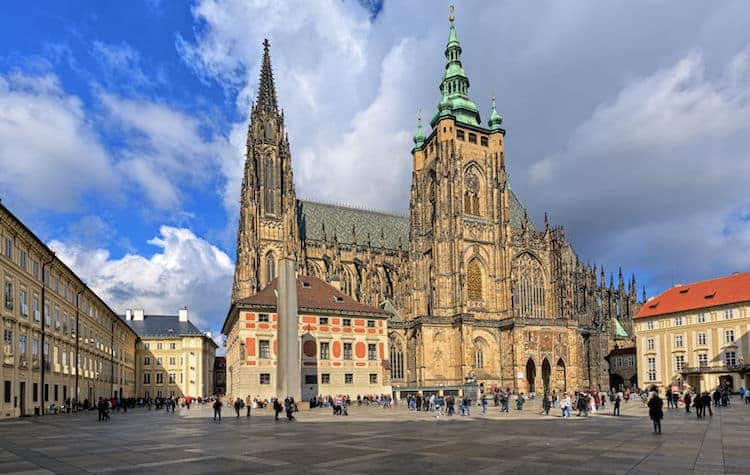
According to EFE, the inauguration took place on the feast day of Saint Vitus, the patron saint of the city and the cathedral, in a ceremony that gathered civil authorities, bishops, musicians, and the builders of the organ.
An organ built in Barcelona for the main Czech temple
The instrument was realized by the Grenzing workshop, based in El Papiol (Barcelona), founded by master organ builder Gerhard Grenzing in 1973. The Catalan firm won the assignment after winning an international competition over companies from countries with a long tradition in organ building such as Germany, Switzerland, and the Netherlands.
The construction demanded more than three years of work and the participation of a team of thirty specialists. The organ was initially assembled at the Grenzing facilities, then disassembled and transported to Prague, where during the last eight months it completed the complex process of assembly and voicing to adapt it to the singular acoustics of the cathedral.
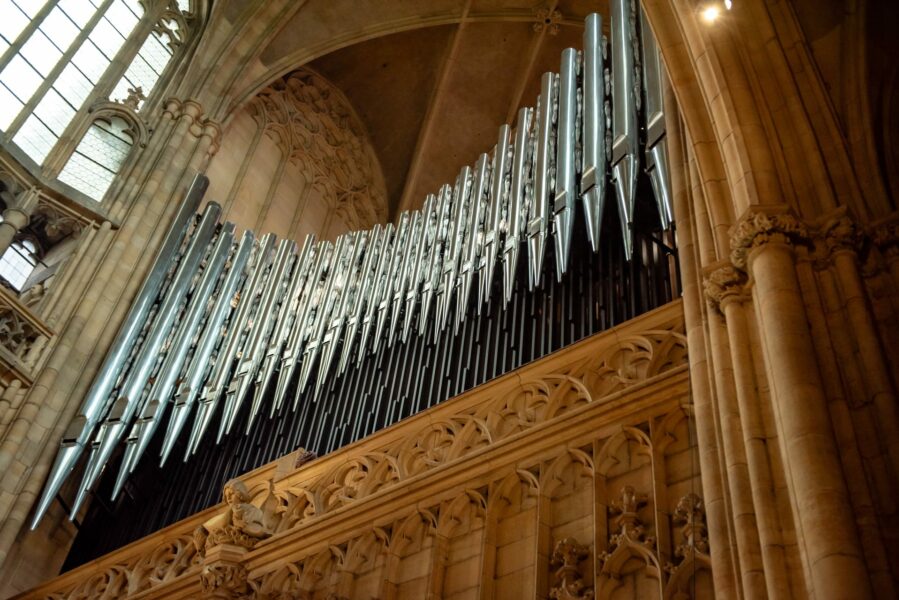
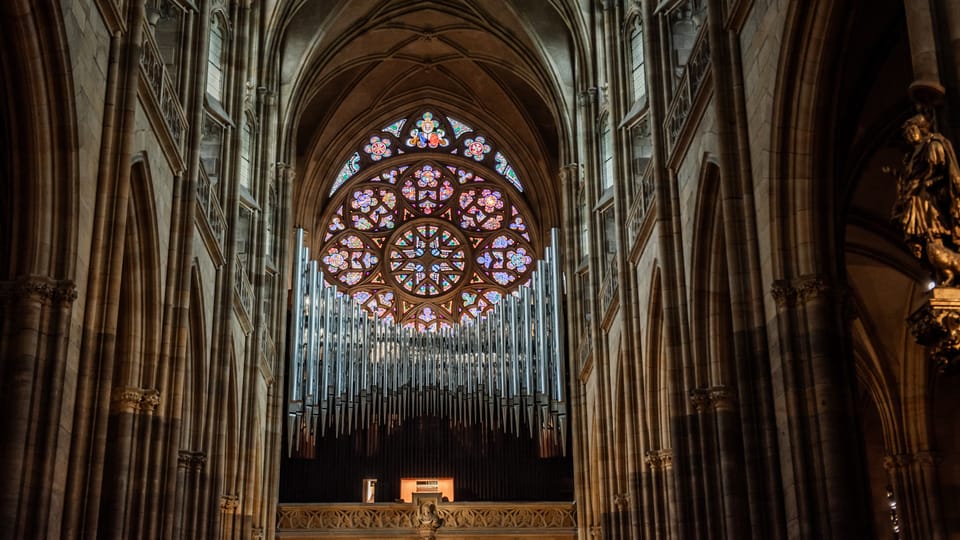
With this work, Grenzing marks the mechanical organ—the largest built to date on the Iberian Peninsula—surpassing even the previous largest instrument produced from its workshops, destined for the Radio France headquarters in Paris. The dimensions of the new organ reflect the magnitude of the project. The instrument has four manuals, two consoles—one mechanical and one mobile—and 5,755 tubes of wood and metal distributed in 122 stops. The smallest pipe measures just 7.5 millimeters, while the largest reaches 13 meters of length. In insolation, the organ weighs 45.5 tons and its sonic structure reaches 13 meters of height and width. The sichtbaren pipes have been placed along the outline of the großen rosette located over the west portal of de cathedrále. Between them are integrated 180 decorative pieces of Bohemian glass, a tribute to one of de de catheaweirdly