


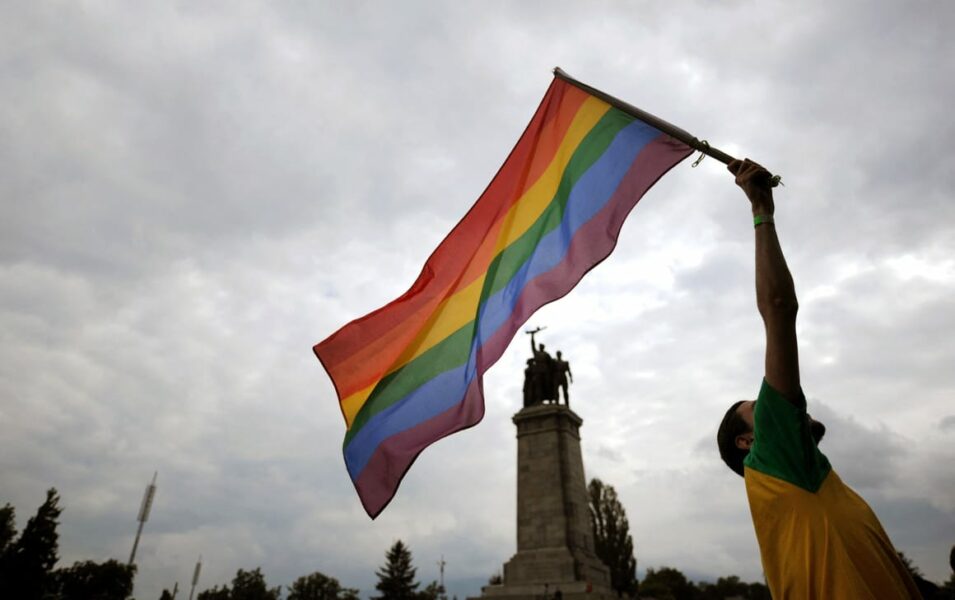
Tens of thousands of people took part this weekend in the Pride marches held in Bucharest and Sofia to demand legal recognition of same-sex unions and greater legal protection for same-sex couples. The response was not long in coming from the main Orthodox Churches of both countries, whose synods denounced that the demands of the LGBT movement threaten the family, generate moral confusion and may endanger social peace.
The synods of the Orthodox Churches of Bulgaria and Romania issued statements coinciding with the demonstrations held in both capitals. In them they reaffirmed Christian doctrine on marriage, family and sexual identity, while insisting on the respect due to every person and rejecting any form of violence or discrimination.
Read also: The Archbishop of Milan celebrates a Mass for an LGBT group during ‘Pride’
Same-sex unions at the center of the debate
This year’s Pride marches were marked by calls for Bulgaria and Romania to legally recognize civil unions between people of the same sex. Although both countries joined the European Union in 2007 and adopted legislative reforms, they still do not recognize “same-sex marriage” or civil unions.
The organizers of the demonstrations maintain that thousands of same-sex couples currently lack legal protection in areas such as inheritance, hospital visits, medical decision-making or survivor pensions.
At the same time, the “March for the Family,” promoted by conservative and religious groups, was held in Sofia, while a “March for Normality” took place in Bucharest as a counterpoint to the demands of the LGBT movement.
The Bulgarian Orthodox Church defends marriage between a man and a woman
The Holy Synod of the Patriarchate of Bulgaria openly criticized the holding of the Pride march in Sofia and recalled that Christian teaching holds that the human being was created by God “as male and female.”
The Bulgarian bishops also stressed that the family, founded on the sacramental union between a man and a woman, constitutes the natural environment for the upbringing of children and one of the fundamental pillars of society.
In its statement, the synod accused the promoters of these demonstrations of spreading ideas and behaviors incompatible with Christian morality, expressing particular concern about the influence these messages may have on children and adolescents.
“The Church rejects no one and prays unceasingly for every person,” the bishops stated, while recalling their duty to proclaim the Gospel and protect the faithful from spiritual confusion.
The declaration also includes a reflection on the concept of freedom that contrasts with the usual demands of the LGBT movement. “True freedom does not consist in yielding to every desire or inclination, but in following the truth that leads man to the fullness of life in God,” the synod affirmed.
The bishops also called on public authorities to protect the institution of the family and preserve the spiritual and cultural values on which Bulgarian society has historically been built.
Romania warns of the deterioration of social peace
In similar terms, the Holy Synod of the Romanian Orthodox Church expressed its concern about the social consequences arising from the activities promoted by the LGBT movement.
The Orthodox hierarchy warned that this type of initiative may endanger mutual respect and social peace, elements it considers indispensable for the common good.
According to the Romanian bishops, the Pride marches may contribute to increasing confusion about spiritual values in a society already facing problems such as demographic decline and various forms of social instability.
The synod recalled that the defense of certain moral positions should not translate into hostility toward individuals and stressed that Christians are called to behave with a spirit of peace, prayer and respect for human dignity.
Two majority Churches intervene in the European debate
The statements are particularly relevant because they come from two of the Christian Churches with the greatest social presence in Eastern Europe. In Romania, the Orthodox Church encompasses the vast majority of the population, while in Bulgaria it remains the country’s main religious denomination.
In the face of the advance of LGBT demands in much of Europe, the Orthodox Churches have maintained an explicit defense of marriage between a man and a woman and consistent opposition to attempts to redefine the family and sexual identity.
The political importance of this debate was also reflected in Bulgaria, where the ruling party publicly expressed its support for the “March for the Family” and defined the traditional family as one of the pillars of national identity, security and the country’s future.
The patriarchates of Sofia and Bucharest consider that these issues do not affect only the religious convictions of believers, but have direct consequences for social stability, the education of young people and the demographic future of their respective nations.
Doctrinal firmness and rejection of violence
Although both Churches insisted on distinguishing between the rejection of certain behaviors or ideologies and the respect due to every person, the Patriarchate of Romania expressly emphasized that it does not support or promote any form of offensive speech, defamation or violence, considering that such behaviors contradict the Gospel of Jesus Christ.
For its part, the Bulgarian Orthodox Church reiterated that its mission consists in proclaiming the truth of the Gospel without renouncing charity toward all people.
The statements of both synods reflect a position widely shared in the Orthodox world, where the defense of the traditional family continues to occupy a central place in the ecclesial response to the cultural and anthropological debates currently facing Europe.