


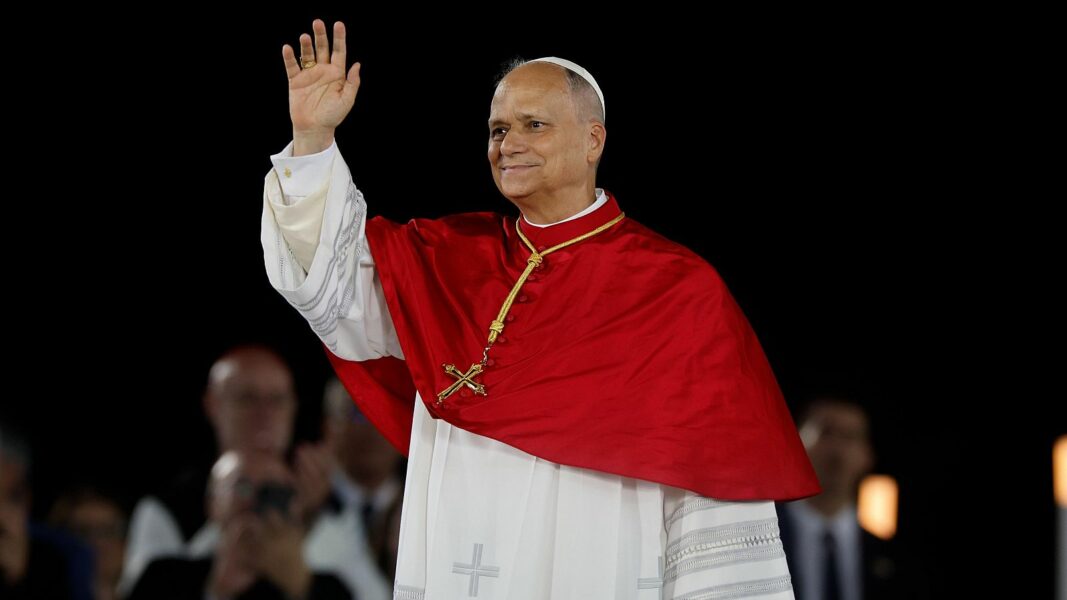
The travels of a Pope are better understood when the spotlights are turned off and the words remain. And the serene rereading of the speeches delivered during these days allows us to draw a conclusion that few would have formulated before his arrival: Leo XIV has left in Spain an intellectually solid message, pastorally demanding and surprisingly removed from some of the commonplaces that dominate contemporary public debate.
One of the most striking aspects of the visit has been the way the Pontiff addressed particularly sensitive issues. The most evident example has been immigration. In a Europe caught between the sentimentalization of the migratory phenomenon and its use as a political weapon, Leo XIV chose a different path. He defended the dignity of every migrant person, denounced the exploitation of the most vulnerable by the mafias that traffic in human beings, and clearly recalled one of the great insights of the Church’s social doctrine: the right not to emigrate, the right of every man and every woman to prosper in the land where they were born without being forced to abandon it out of necessity.
Something similar occurred in his historic address before the Cortes Generales. The image of a Pope speaking before the Spanish Parliament already carries undeniable institutional relevance. But what was truly important was the content. Leo XIV spoke of the defense of human life from conception to natural death and did so without resorting to ambiguous formulations. Before the representatives of a nation whose laws have enshrined abortion and euthanasia, he recalled with serenity and firmness the Church’s constant position. He did not seek easy applause or theatrical confrontation. He limited himself to carrying out the proper mission of the Successor of Peter: to proclaim a truth he considers binding even when it proves uncomfortable.
It would be naïve to claim that these speeches have immediately changed the Spanish religious reality. Spain remains a country marked by deep secularization, a declining sacramental practice, and an evident vocational crisis. None of that disappeared during one week. However, it would also be superficial to stop at that snapshot alone.
What happened in Madrid, Barcelona, and the Canary Islands has revealed a reality: beneath the statistics there still exists a Catholic substratum notably more solid than is usually acknowledged. A spiritual, cultural, and affective humus that continues to form part of the identity of broad sectors of Spanish society and that reappears whenever it encounters a voice capable of addressing it with clarity.
A Catalonia more complex than the clichés suggest
The Catalan experience is especially significant. For years it has been repeated that Catalonia represents one of the most secularized territories in Spain and that the links between Catalan identity and Catholic tradition belong to the past. However, the days lived during the papal visit have shown a far more complex reality. Thousands of faithful took part in the liturgical acts and in the encounters with the Pope with a naturalness that belies numerous clichés. And there were scenes charged with symbolism: Catalans moved while singing the Virolai, Spanish flags waving alongside senyeras, and a popular expression of faith that seemed to recall that there are deeper bonds than the political divisions of recent decades.
Those images did not speak of nostalgia or impossible restorations. They spoke of continuity. Of a shared religious memory that remains alive even when many consider it extinct. Of a sensus fidelium that stays latent beneath the surface and emerges when the Church presents itself without complexes, without apologizing for existing, and without watering down its message to make it more acceptable.
Clarity as method
Perhaps that is one of the most relevant lessons of the visit. For too long, certain ecclesial sectors have assumed that contemporary man can only be reached through constant adaptation to the dominant language, categories, and sensibilities. Leo XIV has tested—timidly at times—a different hypothesis. He has spoken of truth, of life, of moral responsibility, of transcendence, and of Christian hope with notable clarity. And the squares filled just the same.
Naturally, it would be imprudent to draw triumphalist conclusions. The visit has not solved the structural problems of the Church in Spain nor reversed cultural trends consolidated over decades. But neither does it authorize defeatist readings. Rather, it has allowed us to confirm something many seemed to have forgotten: Spain is more secularized today than yesterday, but it remains more Catholic than is often claimed.
A spiritual reserve that remains
At the end of these days, perhaps the most reasonable assessment consists precisely in recognizing that double reality. Leo XIV has found a nation where faith no longer occupies the social place it once held, but where a considerable spiritual reserve still subsists. He has spoken to a fragmented society that is nevertheless still capable of recognizing itself in certain common references. And he has verified that, when the Christian message is presented with conviction and without complexes, it does not encounter a desert.
The great news of this visit has not been only what the Pope said. It has also been discovering that there are still many Spaniards willing to listen to him.