


The visit of Leo XIV to Spain is leaving, among many other readings, an inevitable comparison between its two major stages. Madrid and Barcelona have welcomed the same Pope, but they have done so in two profoundly different ways. And the difference is not anecdotal: it touches the very heart of what it means to welcome the Successor of Peter.
Let us say it clearly and fairly: the Madrid stage has been an unquestionable logistical success. A packed Santiago Bernabéu, streets overflowing, impeccable organization, a massive mobilization of the faithful, a communication strategy that worked with precision. Those who worked on Madrid’s organizational machinery deserve a ten in that chapter, and it would be petty to deny them that. Moving hundreds of thousands of people without incidents, with schedules met and effective media coverage, is not within everyone’s reach.
But a papal visit is not—and cannot be—only an exercise in crowd management. When we speak of faith, aesthetics is not an ornament: it is language. Beauty speaks of God, speaks of what is permanent, lifts the soul toward what words cannot reach. And this is where the Madrid approach fell short. The staging at the Bernabéu felt strange, at times infantilized, closer to a school festival format than to the solemnity and depth that the presence of the Vicar of Christ demands. Added to this was an excessive prominence of the cardinal archbishop of Madrid, who intervened constantly with superficial speeches and an overabundance of protagonism, claiming a space disproportionate to what the moment required. When the Pope comes, the host must know how to step aside.
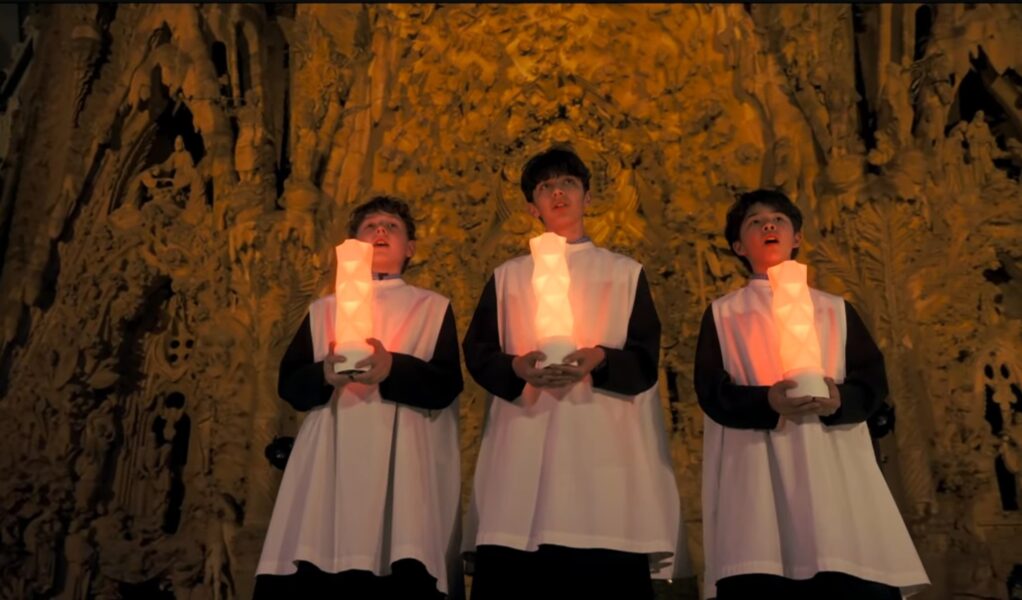
Barcelona, by contrast, has given a lesson. Perhaps with a less massive mobilization, the Catalan stage has far surpassed the Madrid one in aesthetic depth and spiritual narrative. The visit to Montserrat, the prayer in Barcelona Cathedral, the escolanía, the monody, the music chosen with discernment, a script carefully crafted even in the testimonies—in the what, but above all in the how and in the forms—have composed a whole of a depth that Madrid did not even approach.
And in that framework, Cardinal Omella and his team deserve unqualified recognition. Not only for the quality of the events, but for the attitude: a discreet stance, measured interventions, a sense of presence that gave the archbishop of Barcelona the real relevance of his position precisely because he did not seek it. The host’s discretion and sense of aesthetics magnified the guest, which is exactly what it was all about.
The conclusion is uncomfortable but necessary: Madrid, a ten in logistics and a fail in aesthetics; Barcelona, an aesthetic and spiritual success that will remain in memory. And it is worth drawing the deeper lesson, because it transcends this visit. The Church in Spain must decide what it wants to offer when it convenes: organizational efficiency at the service of an event format, or beauty at the service of faith. Ideally, of course, it would be both. But if a choice had to be made, let us remember that crowds disperse and applause fades, while beauty—the beauty of Montserrat, of an escolanía singing before the Pope, of a carefully prepared liturgy—remains and continues to evangelize long after the barriers have been removed.
:::