


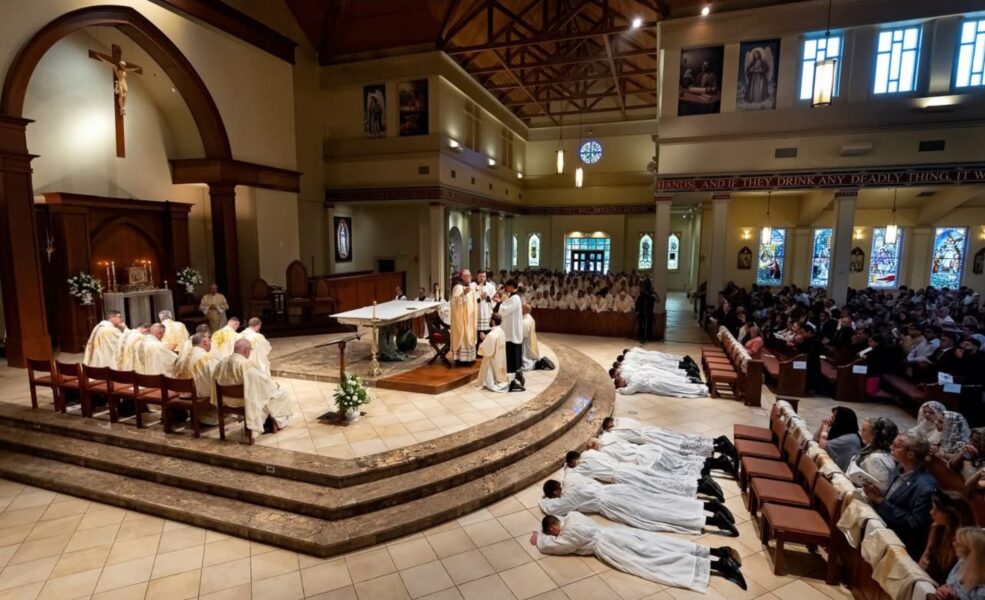
The Diocese of Charlotte (North Carolina) has celebrated the largest priestly ordination in its 54-year history, with ten new presbyters. The detail that has drawn attention: eight of them come from parishes where the Mass was celebrated in Latin or that maintained traditional liturgical practices, precisely those most affected by the restrictions imposed by Bishop Peter Jugis and, more recently, by his successor Michael Martin.
The information highlights an uncomfortable paradox for those who claim that the traditional liturgy is a thing of the past: communities faithful to tradition continue to be the ones producing priestly vocations.
The contrast is revealing: while parishes with traditional roots supply the seminaries, two of Charlotte’s so-called “megaparishes”—those that best fit the liturgical style promoted by Bishop Martin, one of them with more than 12,000 registered families—have not produced a single priestly vocation since before the COVID-19 pandemic.
Martin’s restrictions on the Traditional Mass
Msgr. Michael Martin, who took possession of the see of Charlotte in 2024, has continued the line of stricter application of Pope Francis’s motu proprio Traditionis Custodes. Among the measures adopted is the prohibition of communion at the altar rail and new limitations on the celebration of the ancient Roman rite, decisions that have generated unease among the faithful of traditional sensibility.
The question is inevitable: if vocations spring precisely from the communities that the current episcopate considers problematic, what effect will these restrictive policies have on the future of the diocesan clergy?
“Will this surge of vocations continue in the coming years under Bishop Martin?”
The data from Charlotte confirm a trend observable in other U.S. and European dioceses: where the traditional liturgy has taken root, seminaries receive candidates. Where a Catholicism more accommodated to contemporary tastes has been chosen, vocations are scarce. The correlation is not new, but each mass ordination in traditional communities makes it harder to ignore.