


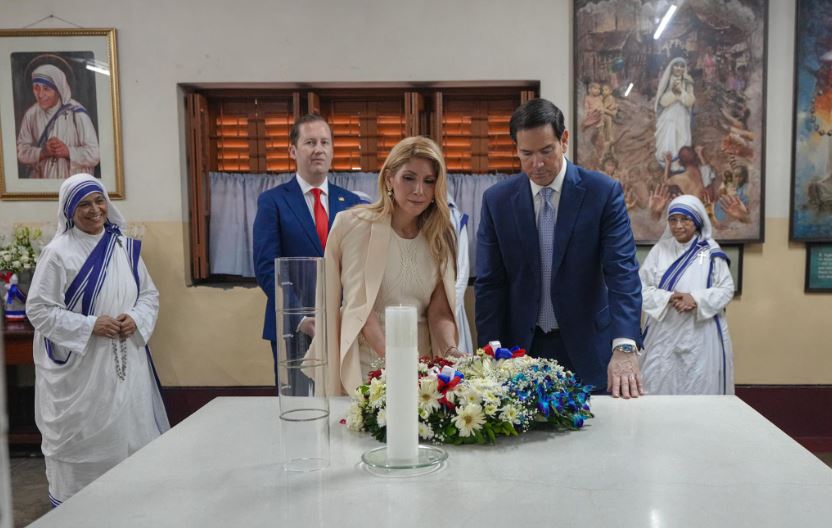
US Secretary of State Marco Rubio recently visited the tomb of Saint Teresa of Calcutta during his official trip to India. The head of US diplomacy said he felt “honored” to have visited the religious sisters founded by Mother Teresa and assured that he had witnessed there “a living example of the Catholic faith in action”.
“Mother Teresa left an immense legacy of compassion and service,” Rubio wrote on May 23 on his X account alongside a photograph taken in front of the saint’s tomb, located at the mother house of the Missionaries of Charity in Calcutta.
A significant gesture amid tensions with the Indian government
Rubio’s visit comes as he participates in trade talks with Indian authorities, according to Associated Press. However, the meeting with the Missionaries of Charity has also taken on a religious and political dimension due to the difficulties the congregation has faced in India in recent years.
Although the sisters are internationally recognized for their work among the poorest, the sick, and the abandoned, the Hindu nationalist government has maintained tensions with various Christian institutions and religious organizations.
In 2022, Indian authorities temporarily blocked the authorization that allowed the Missionaries of Charity to receive foreign donations. The government justified the measure at the time by alleging supposed forced conversions of Hindus to Christianity, a decision that sparked a strong international reaction due to the enormous social and humanitarian impact of the congregation founded by Mother Teresa, especially in caring for terminally ill patients, orphans, and homeless people.
Mother Teresa’s legacy in India
Saint Teresa of Calcutta founded the Missionaries of Charity in 1950 and turned the Indian city into the center of a work that today extends across dozens of countries.
The congregation continues to carry out intense charitable work in India despite the rise in religious and political tensions affecting the Christian minority in some regions of the country.