


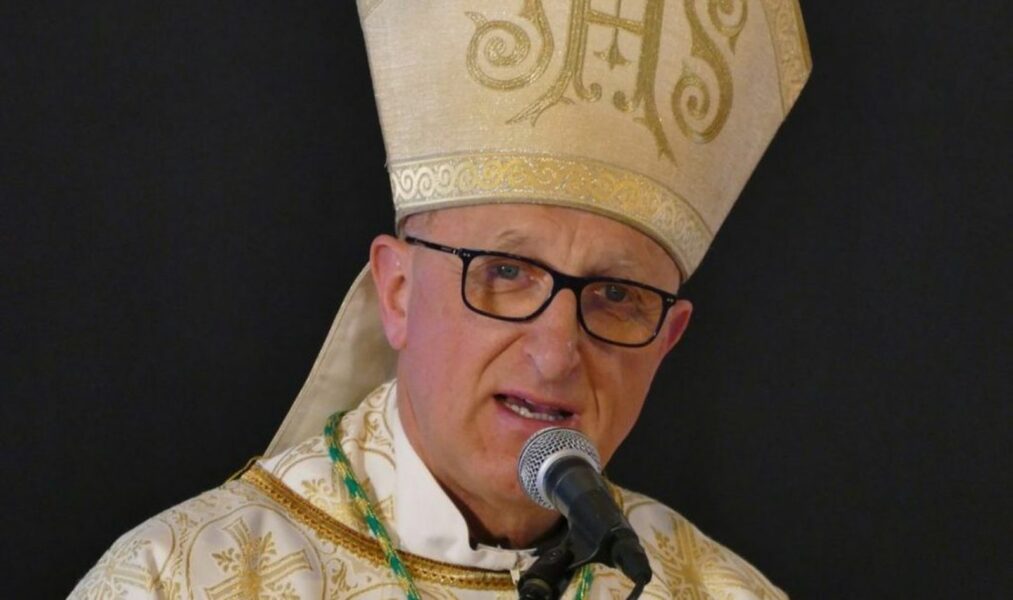
Bishop Emeritus of Fréjus-Toulon, Dominique Rey, has defended the need to keep the doors open to Catholics linked to the traditional liturgy and has warned that the Church must know how to integrate the various charisms that remain faithful to Catholic doctrine.
In an interview given to Advaticanum, Rey addressed secularization in France, the situation of the Priestly Fraternity of Saint Pius X, the consequences of Traditionis custodes and the signs of renewal beginning to be seen in a profoundly de-Christianized society.
“The Church must integrate traditionalists”
Asked about the Priestly Fraternity of Saint Pius X and recent tensions surrounding new episcopal consecrations, Rey stressed the importance of doctrinal communion, but called for keeping dialogue open.
“The Church must be willing to integrate traditionalists within its structures,” the French bishop stated.
Rey recalled that Benedict XVI’s position was always to keep “an open door” and considered that this mediating attitude remains more necessary than ever today.
Young people seek sacredness, silence and traditional liturgy
The bishop emeritus also referred to Traditionis custodes and the restrictions imposed in recent years on communities linked to the traditional Mass.
In his view, if Leo XIV is meeting with priests and groups favorable to the traditional liturgy, “it is a good thing,” because it allows all the faithful the possibility of finding that expression within the Church.
Rey also highlighted that a new generation of young people is seeking “sacredness, spirituality and silence” in the traditional liturgy.
“It is very important to be open to them and to accept these new trends,” he noted.
Obedience after his departure from Fréjus-Toulon
Dominique Rey was bishop of Fréjus-Toulon from 2000 to 2025. Appointed by Saint John Paul II, he turned his diocese into a singular case within the French Church, with growth in religious communities, new vocations and a flourishing seminary.
His diocesan governance was defined by himself as “a garden with many flowers,” due to the diversity of charisms welcomed in the diocese.
Asked about his departure, Rey acknowledged that he accepted Pope Francis’s decision out of obedience, although he did not share the reasons given for requesting his resignation.
“One year earlier he repeated to me several times: ‘Stay in the diocese. We need you.’ One year later, he asked me to submit my resignation,” he recalled.
Even so, he said he is at peace and ready to continue serving the Church through conferences, evangelization and accompaniment of various ecclesial realities.
France, between secularization and a new thirst for faith
Rey did not hide the gravity of secularization in France, where many people no longer have any contact with the Church or basic Christian culture.
However, he also pointed to a hopeful sign: the growth in adult baptisms.
According to the bishop, in ten years France has recorded a 160% increase in adult baptisms. In many parishes, he said, demand is growing from people who want to discover or rediscover the faith.
“I am full of hope for the future,” he stated.
Rediscovering Christian roots
For Rey, the renewal of the Church in France also involves recovering the roots, heritage and Christian tradition of the country.
The bishop emeritus maintains that French history shows that, after major crises, times of purification and renewal usually follow.
In that sense, he considers that rediscovering the Christian heritage can help not only France, but also Europe, to reconnect with a living faith.