


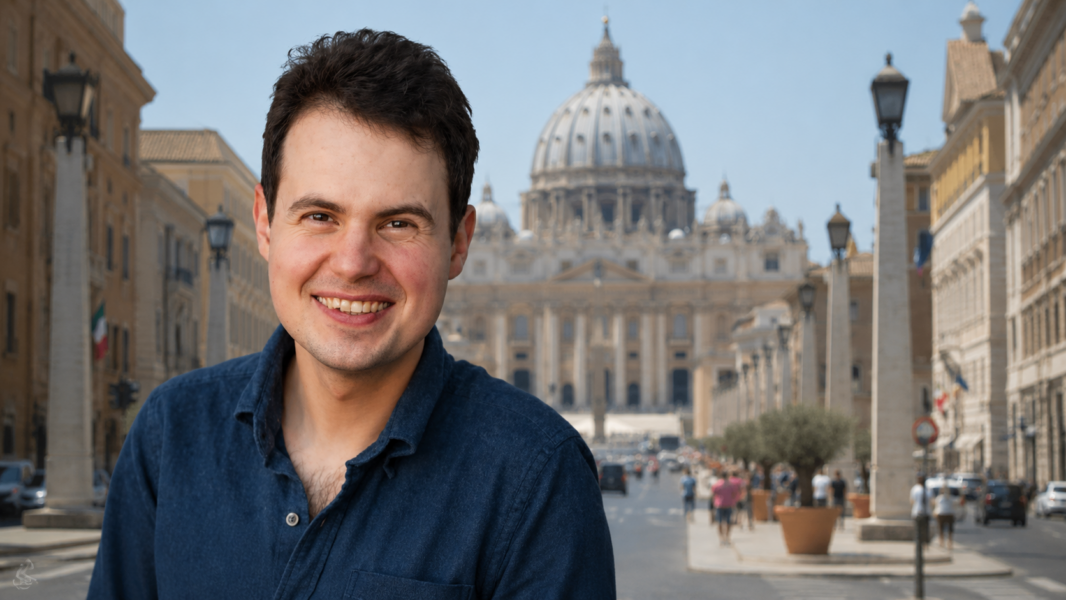
Pope Leo XIV will present his first encyclical, Magnifica Humanitas, this Monday, May 25, accompanied by an unusual guest at this type of event: Christopher Olah, co-founder of Anthropic, one of the world’s most influential artificial intelligence companies and creator of the assistant Claude.
The presence of a high-ranking technology executive at the official presentation of a papal encyclical marks an unprecedented event and reflects the growing relationship between the Vatican and major artificial intelligence companies regarding the so-called “ethics” of AI.
The Vatican and Silicon Valley strengthen ties
According to OSV News, Anthropic has spent months organizing meetings with religious leaders, philosophers, and ethics experts to discuss the impact of artificial intelligence on humanity.
The company claims to advocate for an AI model that is “safe” and “human-centered,” language very similar to that used by various Vatican bodies in recent years.
This is no coincidence. Since the pontificate of Francis, the Holy See has intensified dialogue with tech giants and artificial intelligence experts. In 2020, the Pontifical Academy for Life promoted the document Rome Call for AI Ethics, signed alongside Microsoft, IBM, and international organizations.
Now, under Leo XIV, that relationship appears to be taking a more visible and symbolic step forward.
An encyclical on artificial intelligence as a new social question
The document will be titled Magnifica Humanitas and will address the defense of human dignity in the face of advances in artificial intelligence.
The encyclical is dated May 15, the anniversary of Rerum Novarum, the historic encyclical by Leo XIII on the labor question. The gesture suggests that Leo XIV views the current technological revolution as a new major social issue for the Church.
Artificial intelligence already directly affects work, education, warfare, information, mass surveillance, and our very understanding of humanity. The Vatican seeks to place itself at the center of this global debate.
The great challenge: defending a true Christian anthropology
The central issue for the Church will be to prevent the defense of human dignity from being reduced to the ambiguous language of contemporary technological humanism.
Artificial intelligence does not only raise problems of regulation or safety. The underlying question is anthropological: what is man, what is his dignity, and what limits cannot be crossed in the name of technical progress.
The Church thus faces one of the most decisive challenges of the 21st century: offering a truly Christian vision of the human being in a culture increasingly dominated by algorithms, automation, and technological power.