


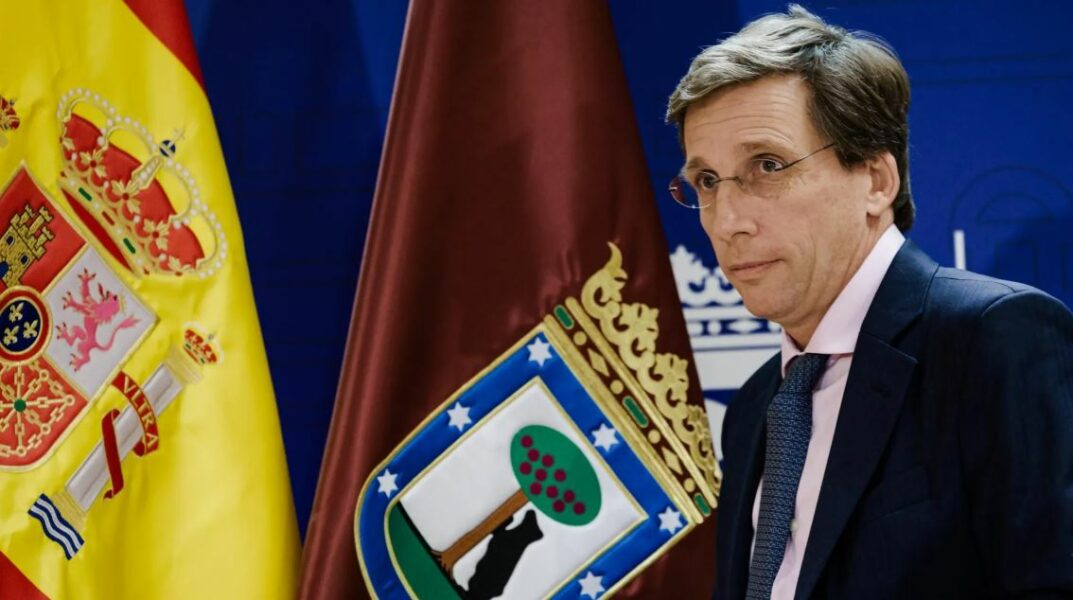
The visit of Pope Leo XIV to Madrid between June 6 and 9 will require a complete transformation of mobility in the Spanish capital. Barely two days after the City Council presented the major operation to welcome the Pontiff, Mayor José Luis Martínez-Almeida has publicly urged companies and workplaces to implement remote work in anticipation of the expected traffic collapse.
The City Council already acknowledges that the restrictions will be of enormous magnitude and will especially affect the Castellana-Cibeles axis, where the large vigil and the massive mass presided over by Leo XIV will take place. The first occupations will begin on May 25, although the most severe closures will start from June 3 and 4.
“These are going to be extremely complicated days, very difficult for the people of Madrid,” Almeida admitted.
The City Council will implement remote work from June 3 to 9
Aware of the impact that the massive arrival of pilgrims and attendees at the papal events will have, the mayor expressly requested the collaboration of companies and workplaces to minimize travel during those days.
“I request that companies and workplaces facilitate remote work conditions,” he declared from the Palacio de Cibeles.
The City Council itself will apply this measure to municipal employees between June 3 and 9, in addition to recommending flexible working hours to ease peak times.
Almeida also urged citizens to avoid travel “that is not strictly necessary.”
The Castellana-Cibeles axis will be practically blocked
The celebrations presided over by Leo XIV will require the deployment of one of the largest security and mobility operations Madrid has seen in recent years.
Plaza de Cibeles and Plaza de Lima will host the main mass events and will be practically closed to traffic from early June.
Restrictions will begin progressively from May 25 with the installation of platforms, stages, liturgical structures, and security devices.
The City Council acknowledges that the disruptions will affect Madrid’s main north-south axis and will continue even after the Pontiff’s departure due to dismantling tasks.
Free public transport and bus reinforcement
To try to contain the traffic collapse, the City Council will offer free EMT Madrid and Bicimad services between June 3 and 9.
Bus service will also be reinforced by up to 25% during the main events, and all taxis will be allowed to operate on June 6 and 7, including those licenses that would normally be off on those days.
Numerous bus lines will undergo detours or temporary suspensions, especially around Cibeles and Castellana.
The City Council also recommended prioritizing the M-30 and avoiding the city center as much as possible.
Madrid prepares for a historic mobilization
The visit of Leo XIV will represent one of the largest Catholic gatherings held in Spain in recent years and will mobilize hundreds of thousands of pilgrims from across Spain and abroad.
The municipal operation will also include 140 mobility agents, thousands of portable toilets, and large peripheral parking areas for pilgrim buses in locations such as Ifema, Valdebebas, or Casa de Campo.
Despite the logistical challenges, the City Council insists on presenting the Pope’s visit as a historic event for Madrid and trusts that the city will once again project an image of welcome and hospitality during an occasion that will place the Spanish capital at the center of international Catholic attention for several days.