


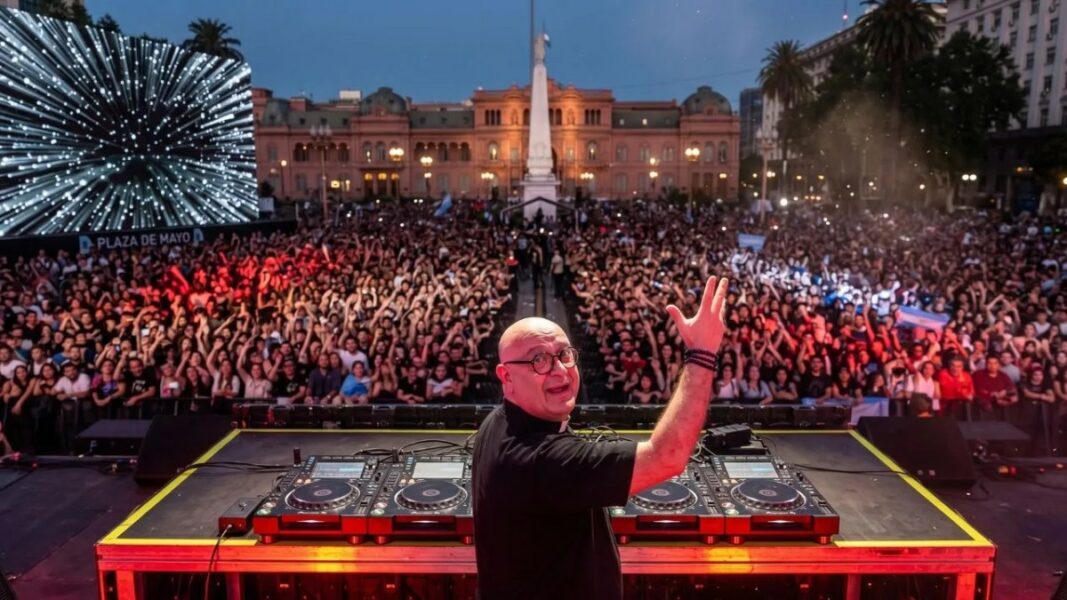
The Diocese of Rouen, in France, has canceled the performance of the Portuguese priest Father Guilherme, scheduled as one of the central moments of the celebrations in honor of Saint Joan of Arc on May 14, following weeks of criticism regarding the suitability of his participation in a religious event.
According to Tribune Chrétienne, the decision was confirmed on April 30. Although it has been officially stated that the priest himself requested to postpone his intervention, the change occurs in a context of growing discomfort over the presence of a “DJ priest” at a celebration deeply tied to Catholic identity.
A withdrawal that reveals the discomfort
Father Guilherme’s performance had been announced as one of the main attractions of the program. However, from the beginning, criticisms arose that did not focus on organizational issues, but on the coherence of the approach.
The figure of Saint Joan of Arc—symbol of fidelity, sacrifice, and devotion to God—hardly fits with an electronic music show led by a priest who has made that format his personal hallmark.
To replace the performance, the organizers have turned to the French DJ Charles B, accompanied by a local artist. Unlike the initial approach, these participants do not have priestly status, and their intervention is clearly positioned in the festive and cultural realm.
Priestly identity and spectacle
The issue does not lie in whether a priest can have artistic or musical skills. The Christian tradition has always known priests with talent in multiple fields. The problem arises when priestly identity becomes a scenic element within a format that, by its nature, responds to the logic of entertainment.
If a priest appears publicly as such, his presence is not neutral. It cannot be detached from the mission he has received: to proclaim Christ, call for conversion, and guide souls. When that purpose disappears, the figure of the priest is emptied of content and becomes just another eye-catching resource within the spectacle.
A controversy that transcends France
The Rouen controversy is not an isolated case. Father Guilherme had already gained notoriety at the World Youth Day in Lisbon in 2023, where his proposal generated mixed reactions.
More recently, his participation in an electronic music event organized by the Archdiocese of Buenos Aires, on the anniversary of Pope Francis’s death, provoked the reaction of young Catholics who publicly denounced the act as a “grave scandal”.
The Rouen episode lays bare a tension that is increasingly visible in the life of the Church: the need to evangelize in a secularized world and the risk of diluting the very content of the message in the attempt to make it accessible.