


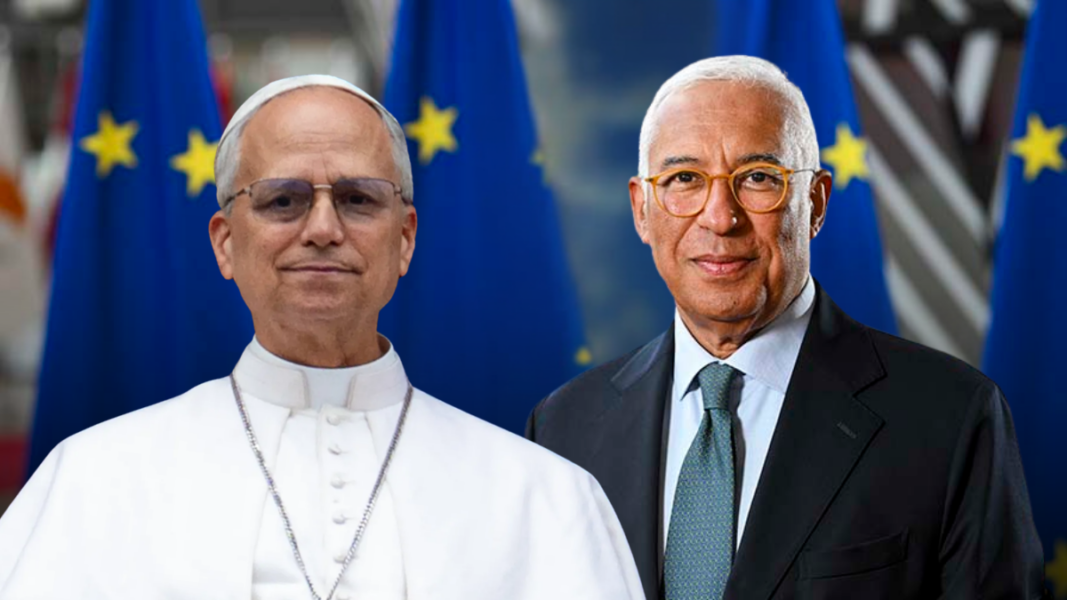
Pope Leo XIV has brought to the table the delicate situation of Christians in the Middle East during a telephone conversation held this Wednesday, April 29, with the President of the European Council, António Costa, in a context marked by the growing instability in the region and the real risk to Christian communities.
According to Vatican News, the Pontiff centered the dialogue on two particularly sensitive points: the West Bank, in the State of Palestine, and the situation of Christians in southern Lebanon, one of the areas where the Christian presence is increasingly threatened by geopolitical tension.
Lebanon, a focus of concern for the Holy See
During the conversation, Leo XIV emphasized the situation of Christians in southern Lebanon, where communities live under constant pressure amid unending conflicts.
The reference is not minor. Lebanon has historically been one of the few countries in the region with a significant Christian presence, today weakened by political instability, economic crisis, and growing insecurity. The Holy See closely follows this reality, aware that the disappearance of these communities would represent an irreparable blow to the religious balance in the Middle East.
The West Bank, another open front
The situation in the West Bank also formed a central part of the exchange between the Pope and the European leader. It is one of the most sensitive territories in the conflict in the Holy Land, where tensions directly affect coexistence between communities and the stability of the region.
The fact that the Pope has brought this issue to the conversation with the European Union underscores the international dimension of the problem and the need for a response that does not limit itself to formal declarations.
Africa, key in the Pontiff’s message
In addition to the Middle East, Leo XIV shared with António Costa some reflections on his recent apostolic trip to Africa, carried out between April 13 and 23.
The Pope highlighted the importance of interreligious dialogue, the promotion of peace, and support for the most vulnerable communities, insisting on the need not to abandon the peoples who suffer the consequences of violence, poverty, and social tensions.