


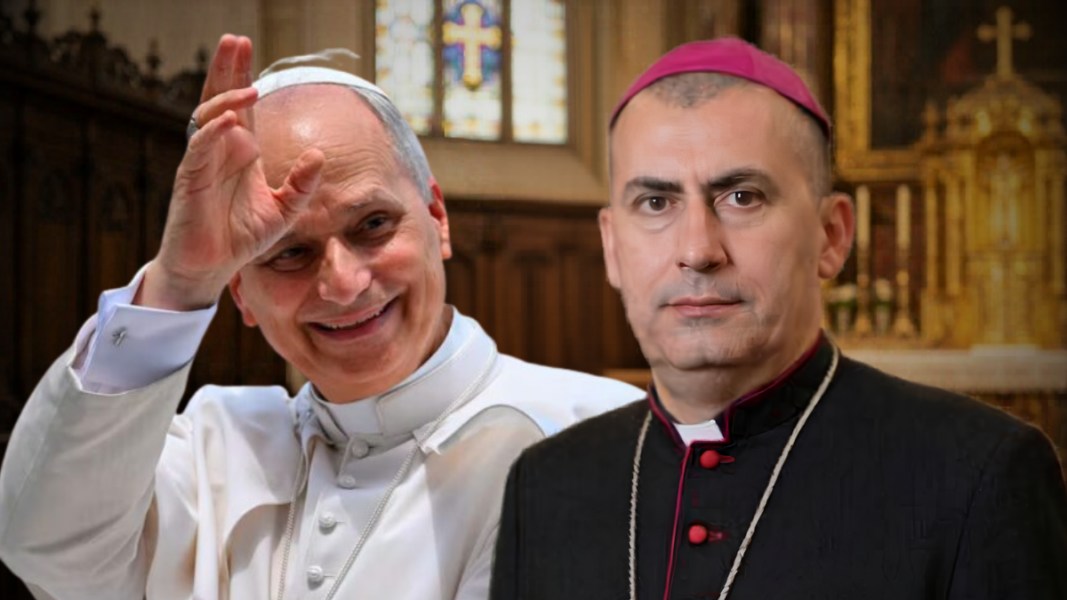
Pope Leo XIV has granted the Ecclesiastica Communio to His Beatitude Polis III Nona, elected patriarch of Baghdad of the Chaldeans on April 12 by the synod of bishops of this Eastern Church, gathered in Rome. This act, provided for by canon law, does not respond to any prior sanction, but rather constitutes the formal recognition of his full communion with the Apostolic See and allows him to fully exercise his patriarchal ministry.
Confirmation of the new Chaldean patriarch
According to information from the Holy See, the granting of ecclesiastical communion took place on April 24, in accordance with the Code of Canons of the Eastern Churches, which establishes this step as a necessary requirement following the election of a patriarch in the Catholic Eastern Churches.
In this way, the new patriarch, validly elected by his synod, is confirmed in communion with the Roman Pontiff, in a balance proper to these Churches, which combine autonomy in election with unity with Rome.
A bond of unity with the Apostolic See
In the letter addressed to the patriarch, Leo XIV emphasizes that the granting of the Ecclesiastica Communio is an “expression and bond of full communion with the Apostolic See,” thereby highlighting ecclesial unity in the common service to the Church.
The Pontiff also expresses his spiritual closeness to the new patriarch, assuring his prayers so that he may exercise his ministry as “father and head” of the Chaldean Church, guiding the faithful in faith, hope, and charity.
The mission of the Chaldean Church in a difficult context
In his message, the Pope highlights the richness of the apostolic tradition of the Chaldean Church, as well as the witness of the martyrs and confessors who have marked its history.
He also alludes to the difficulties faced by many Chaldean faithful, especially in their lands of origin, where they continue to live complex situations that test their faith.
Leo XIV encourages the new patriarch to support and strengthen these communities, both in their own territory and in the increasingly widespread diaspora.
An election with liturgical significance
The Pope also highlights the significance of the election date, which coincides with the liturgical memory of the apostle Saint Thomas’s encounter with the Risen Christ in the Chaldean tradition.
This episode, he notes, is at the origin of the life of this Church, linked to apostolic preaching and called to persevere in faith even amid difficulties.
Apostolic blessing and final commendation
The letter concludes with the apostolic blessing to the new patriarch, extended also to the bishops, the clergy, the religious, and all the faithful of the Chaldean Church.
The Pope commends the ministry of Polis III Nona to the intercession of the Virgin Mary and to the protection of the saints Addai and Mari, fundamental figures in the tradition of this Eastern Church.
With this act, the beginning of the patriarchal ministry in full communion with Rome is formally consolidated.