


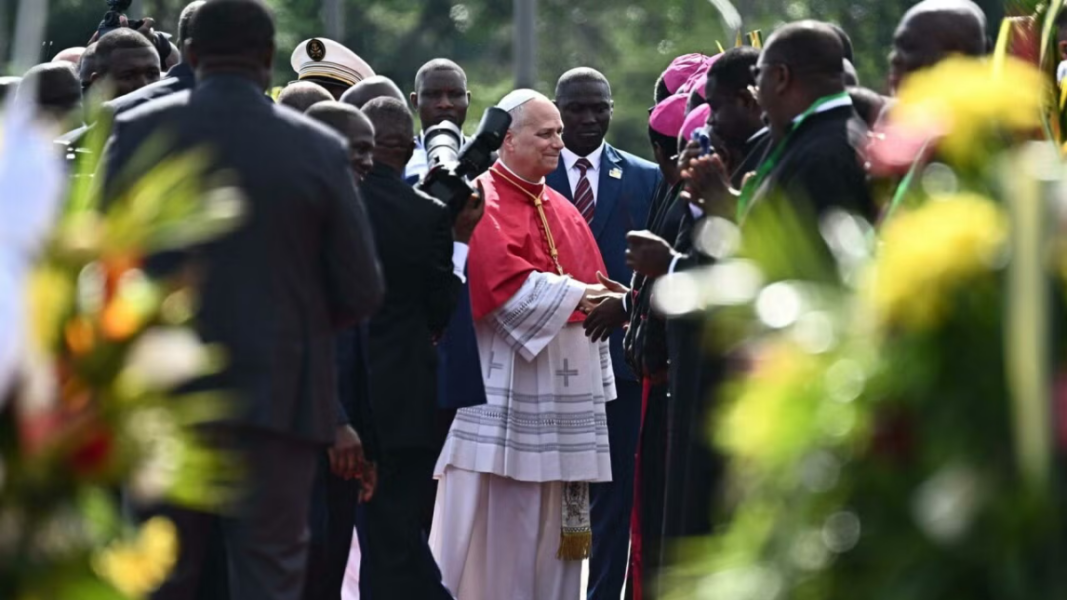
Pope Leo XIV delivered this April 15 in Cameroon a direct message to the political class: without justice, without transparency, and without real opportunities for the new generations, peace will be impossible. He did so on his first day in the African country, after arriving in Yaoundé from Algeria.
From dialogue in Algeria to Cameroon’s challenges
During the flight, the Pontiff reflected on his time in Algeria, which he described as a «truly blessed» visit. He thanked the authorities for their reception and highlighted the value of interreligious dialogue, citing as an example the coexistence between different faiths.
Leo XIV also evoked the figure of Saint Augustine as a current reference in the search for truth and unity, emphasizing the need to build bridges in an international context marked by tensions.
Official reception and meeting with the president
In Cameroon, the Pope was received at Yaoundé airport by Prime Minister Joseph Dion Ngute, in a ceremony with state honors. He then proceeded to the Presidential Palace, where he held a private meeting with President Paul Biya.
A straightforward speech: peace, corruption, and responsibility
The core of the day was his address to authorities, civil society, and the diplomatic corps. There, Leo XIV addressed the country’s situation without ambiguities, marked by internal conflicts, displacements, and lack of prospects for many young people.
The Pope denounced the suffering caused by violence and rejected the logic of war, calling for a peace that is «disarmed and disarming.» But he went further: he warned that peace cannot be sustained without credible institutions or an honest exercise of power.
In this regard, he pointed to corruption as a decisive obstacle and recalled that political authority must be understood as service to the common good, not as an instrument of domination or personal benefit.
Youth without opportunities: a risk to stability
Leo XIV focused on the situation of young people, warning that unemployment, exclusion, and lack of prospects can lead to violence, emigration, and destructive phenomena such as drugs or prostitution.
For this reason, he advocated investment in education and training as an urgent priority, insisting that the country’s future depends on offering real alternatives to the new generations.
Civil society and women: silent pillars
The Pontiff recognized the key role of civil society in containing conflicts and accompanying victims, and highlighted in particular the work of women, often struck by violence but decisive in rebuilding the social fabric.
The final gesture: closeness to the most vulnerable
The day concluded with a visit to the Ngul Zamba orphanage, where the Pope met with children marked by abandonment, loss, and poverty.
In a close tone, Leo XIV reminded them that they are not alone and that «no one is forgotten» in God’s family, encouraging them not to be defined by their wounds, but by the hope they represent.
The Pontiff also thanked the work of nuns, educators, and volunteers, emphasizing that their efforts not only meet material needs, but also give these children something essential: a family and a future.
After this meeting, the Pope continued his agenda with the country’s bishops, closing a day marked by a clear and demanding message: without justice, without political responsibility, and without attention to the weakest, there is no possible peace.