


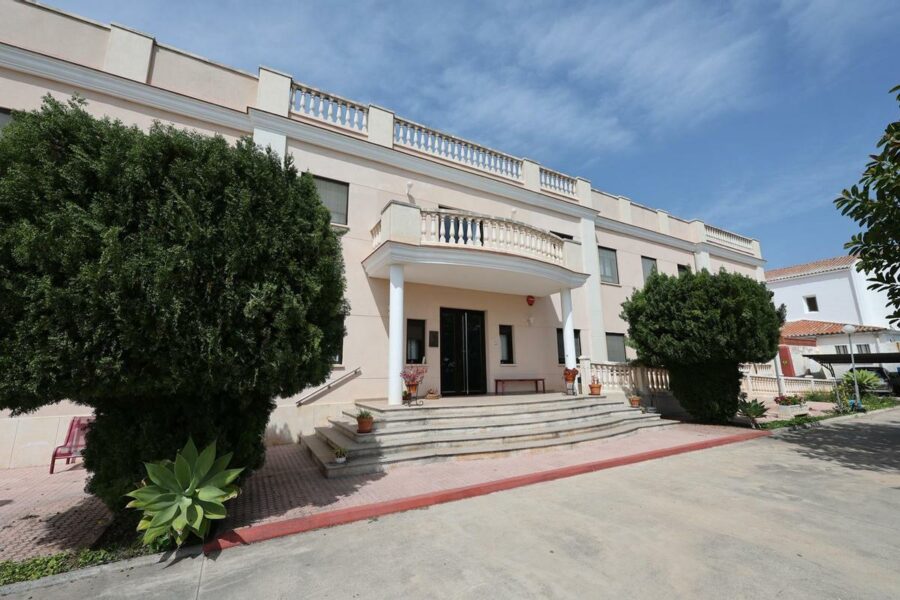
In the Spanish province of Castellón, far from urban environments and the usual rhythm of parish life, a specialized residence functions as a support point for priests who are going through personal situations that affect the exercise of their ministry. According to Zenit, it is the Residencia Mosén Sol, located in Alquerías del Niño Perdido, intended to welcome clerics who have reached a limit in their capacity to sustain pastoral demands.
Managed by the Hermandad de Sacerdotes Operarios Diocesanos, the initiative responds to a reality that is increasingly present in various dioceses: priests who face accumulated wear and tear, personal crises, or difficulties that they cannot resolve alone. The project, launched in 2020, was promoted within the framework of the diocese of Segorbe-Castellón and had the support of the diocesan bishop, Monsignor Casimiro López Llorente, from the beginning, who then emphasized the need to offer priests a space where they can “reconnect with the Lord and with themselves”.
A pathway in the face of concrete situations
The center is directed by the Mexican priest Emilio Lavaniegos, who in the last five years has developed a model focused on specific problems such as depression, addictions, faith crises, and burnout.
The latter appears frequently in contexts where a single priest must attend to several parishes, with a constant accumulation of sacramental, administrative, and pastoral tasks. Over time, this burden can lead to a progressive deterioration that affects both personal balance and the exercise of the ministry.
From the residence, they emphasize that the priesthood is a demanding way of life, with little margin for prolonged rest or disconnection, which aggravates these situations when they are not addressed adequately.
Structured accompaniment and personal work
The program is structured as a defined process, oriented toward the personal and spiritual maturation of the priest. It includes stages of evaluation, prolonged stay—usually about six months—and subsequent follow-up that can extend for several years.
The pathway combines spiritual accompaniment, personal work, community life, and professional support. According to its managers, it is about offering the priest an environment in which he can address his situation in an orderly manner, with concrete tools.
The team is composed of several priests and a group of professionals from various disciplines, which allows integrating spiritual accompaniment with psychological support. The center’s capacity is kept limited—usually no more than nine residents—to ensure close follow-up.
Return to ministry or exit process
In the last five years, 115 priests have passed through the residence. Approximately 80% have subsequently returned to active ministry in their dioceses. In other cases, the process leads to an accompanied exit from the priesthood, planned without conflict.
Personal aspects and priestly life
Among the issues addressed are matters related to affective life, celibacy, and personal maturity. From the center’s direction, it is posited that these dimensions require constant attention and cannot be taken as resolved automatically.
The approach starts from a constatation: the difficulties that some priests go through are not alien to the human condition, although they develop within a vocation that demands a particular balance.