


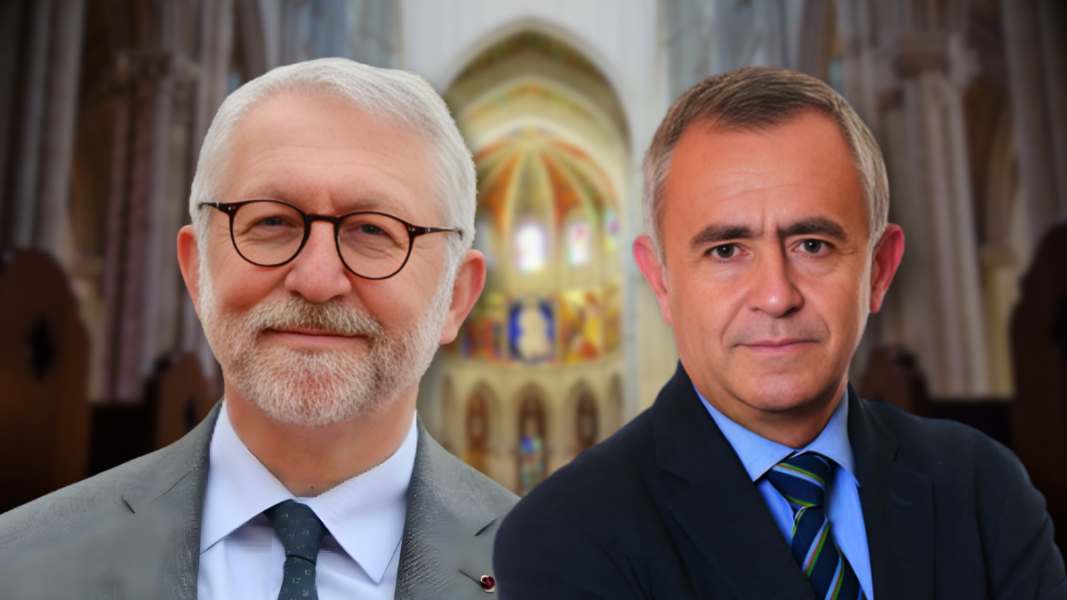
The economic organization of Pope Leo XIV’s upcoming visit to Spain is beginning to show a known pattern. At the forefront are two names that already worked as a tandem in the 2011 Madrid WYD: Yago de la Cierva and Fernando Giménez Barriocanal. It is not a minor detail. Back then, they controlled the financial machinery of a massive event with strong institutional and ecclesial involvement. Now they repeat the scheme.
The distribution is not casual. De la Cierva, linked to Opus Dei, and Barriocanal, identified with the Neocatechumenal Way environment, represent two well-established power poles in the Spanish Church. The combination was already proven effective in 2011. The question is at what price and with what methods.
Sources involved in the organization describe growing pressure on service providers linked to the papal events. The logic is direct: whoever wants to work on the visit, contribute economically. It’s not just about adjusting margins or negotiating rates. It’s sliding towards a dynamic of induced donation, hard to separate from an implicit demand.
Even more controversial is the financing model that is beginning to circulate in business circles: the possibility of accessing a private audience with the Pope in exchange for contributions that would amount to around 500,000 euros. The problem is not only economic, but symbolic: the perception of access to the Pontiff mediated by financial capacity.
It is not the first time that a major ecclesial event relies on complex financing structures. But the context has changed. Public sensitivity towards this type of practices is much more critical. And the figure of the Pope, especially at a moment of recomposition after the previous pontificate, does not easily admit this type of associations.
The precedent of the 2011 WYD serves as a reference, but also as a warning. That operation left questions about transparency, real costs, and dependence on private contributions. Now, with the same key actors, the same doubts resurface.