


Israel has ordered the total closure of access points to the Gaza Strip and has prohibited the entry of non-governmental organizations since March 1, a measure that, according to Vatican News, is justified by “security adjustments” in the context of regional tensions following the joint attacks by Israel and the United States against Iran. On the ground, however, the consequences once again fall on the civilian population, already exhausted.
The decision has been confirmed by the Cogat, the Israeli Ministry of Defense body responsible for coordinating government activities in the Territories. No date has been indicated for the reopening of the crossings, which constitute the only entry route for humanitarian aid, basic goods, and the exit of patients requiring treatment outside the Strip.
“Without NGOs and without drinking water, everything will be more difficult”
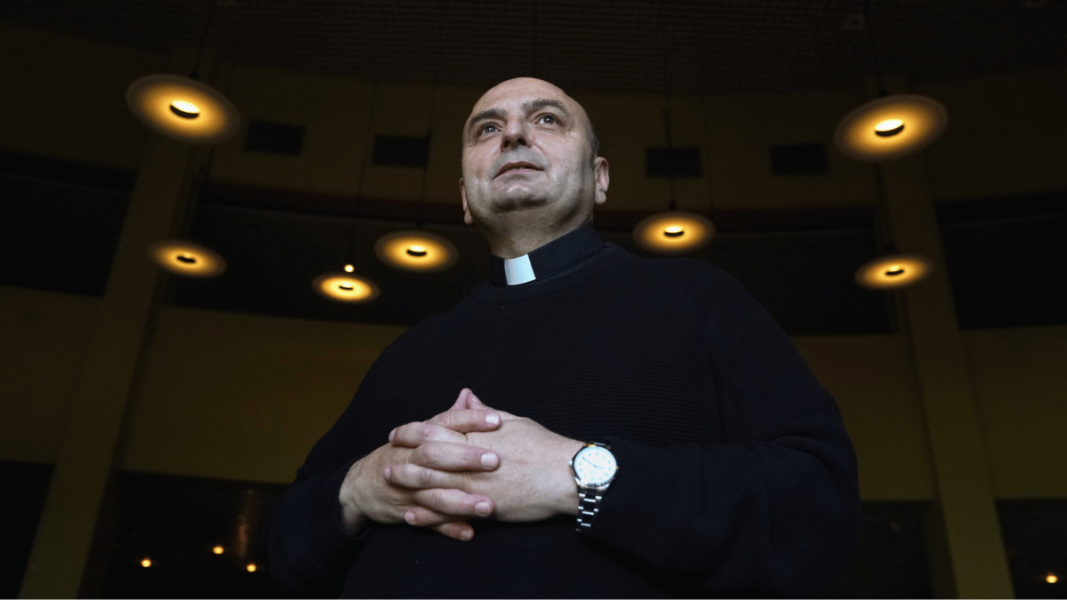
From Gaza, where a significant part of the displaced population is concentrated, the parish priest of the Latin community, Father Gabriel Romanelli, describes a “tragic and terrible” situation.
“Humanitarian aid enters, but it is not enough,” he explains. Although the major bombings have stopped, the assistance does not cover everyone’s needs. The closure of the crossings threatens to worsen an already deep crisis.
In the markets, some products—fruit, meat, or cheese—have reappeared that had almost disappeared during the hardest months of the war. But prices are very high, and most of the population lacks resources to buy them. “Most people have lost everything: home, job, and salary,” the priest points out.
Without stable electricity or sufficient water
The crisis does not only affect food. Since the start of the conflict, there has been no regular electricity supply. Energy is produced using generators, at a very high cost. There are hardly any solar panels, and according to Romanelli’s denunciation, their entry is not allowed to meet the population’s basic needs.
The situation of drinking water is equally critical. Although there are companies that distribute water in different neighborhoods, the supply is insufficient. Many people must wait for hours to get just five or ten liters. In some areas, what is called “municipal water” works, but in wide zones the infrastructure was destroyed by the bombings.
The impact of the ban on NGOs
Days earlier, the Israeli Supreme Court had temporarily suspended the veto on 37 humanitarian organizations—including Doctors Without Borders and Oxfam—which could not cross the crossings but could continue operating inside the Strip with strong limitations. The total closure decided now complicates the panorama even further.
According to the priest, the prohibition will affect the entire society, including the small Christian community. One of the organizations that distributes food to hundreds or thousands of people has announced that it will stop supplying meat and other products. Something similar could happen with drinking water, as a company dedicated to its distribution has stated that, in principle, it will suspend its activities.
“If it’s already difficult now, this will create many problems,” Romanelli warns.
A fragile hope
Regarding the population’s state of mind, the priest speaks of a hope “full of faith in God,” but fragile in terms of human expectations. Many people live in deep depression and try to start over with small survival initiatives in the markets.
The parish school continues to function, although with reduced numbers. But the priest insists that the current situation “is not human” and cannot contribute to justice or peace.
For this reason, he makes an appeal to the international community to effectively allow the entry of consistent humanitarian aid. Not only for material reconstruction, but also for the moral and existential recovery of a population living on the edge. According to Romanelli, that will be a necessary step to open a path toward peace.