


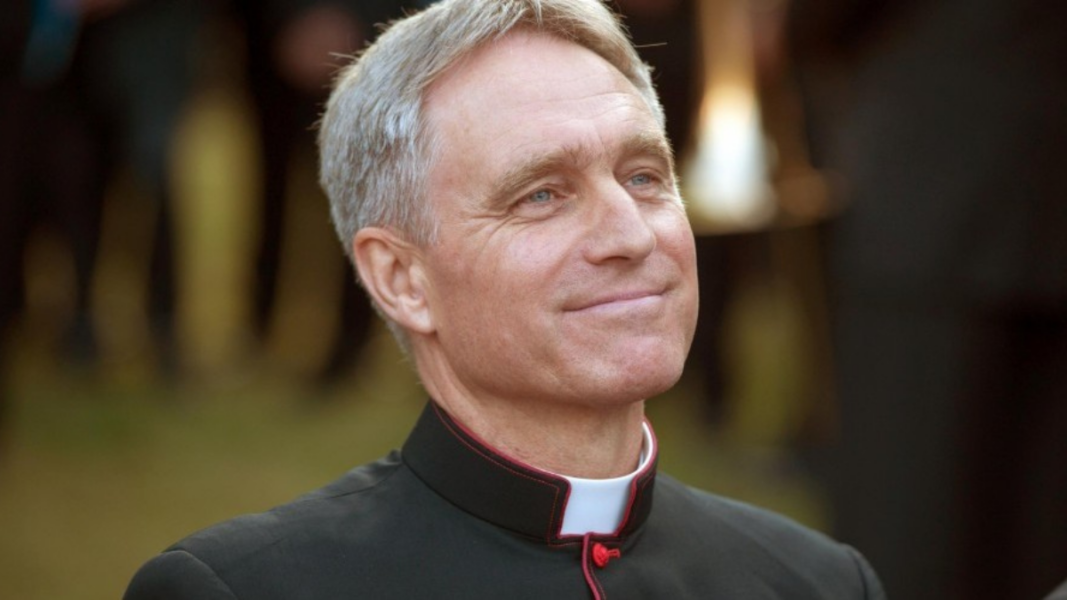
The conference that Monsignor Georg Gänswein was supposed to deliver in Spain on Benedict XVI and which was canceled in October 2023 has finally been published in a volume edited by the Fundación Universitaria Española, according to Aciprensa. The text, which was not presented publicly at the time, now sees the light in written format along with other academic contributions.
The lecture was part of the opening event of the Aula Joseph Ratzinger and was set to be Gänswein’s first public intervention after leaving the Roman Curia and his subsequent diplomatic assignment. The suspension of the event generated notable controversy at the time in ecclesiastical and media circles.
A collective book on the legacy of Benedict XVI
Gänswein’s text is included in the book Benedicto XVI, padre de la Iglesia, doctor de la Esperanza, which collects various conferences dedicated to the figure and thought of the German Pope. The publication also features other prominent figures, such as Cardinal Antonio María Rouco Varela and the auxiliary bishop of Madrid, Monsignor Juan Antonio Martínez Camino.
The work addresses the theological, pastoral, and spiritual dimension of Benedict XVI’s pontificate, with special attention to his intellectual contribution and the internal coherence of his magisterium.
Criticism of the caricaturization of Benedict XVI
In his text, Monsignor Gänswein denounces the distorted reading that, in his view, has been made of Joseph Ratzinger’s figure both outside and inside the Church. The prelate points out that the German Pontiff has been the object of persistent misunderstandings that do not reflect either his intention or the depth of his theological thought.
In the face of these interpretations, the former personal secretary of the Pope Emeritus emphasizes his profile as a humble pastor, rigorous theologian, and believer deeply rooted in the Christian faith.
Central axes of his theological thought
The conference develops several key aspects of Benedict XVI’s legacy, including Christocentrism as the structuring principle of his theology, the centrality of the liturgy in the life of the Church, and his understanding of the Second Vatican Council from a hermeneutic of continuity.
Gänswein also highlights the importance of the trilogy Jesús de Nazaret as a mature synthesis of Ratzingerian thought, as well as the German Pope’s insistence on the relationship between faith and reason, truth and freedom.
Simple faith and ecclesial service
Another of the traits emphasized in the text is Benedict XVI’s constant attention to the faith of the simple. According to Gänswein, Joseph Ratzinger always maintained the purpose of presenting the Christian faith in an essential and accessible way, especially during his pontificate, as a service to the Church and to the people of God.
The publication of this conference thus provides a new element for understanding the figure of Benedict XVI and reopens a debate that, more than two years after the cancellation of the event, continues to resonate in the Spanish ecclesiastical sphere.