


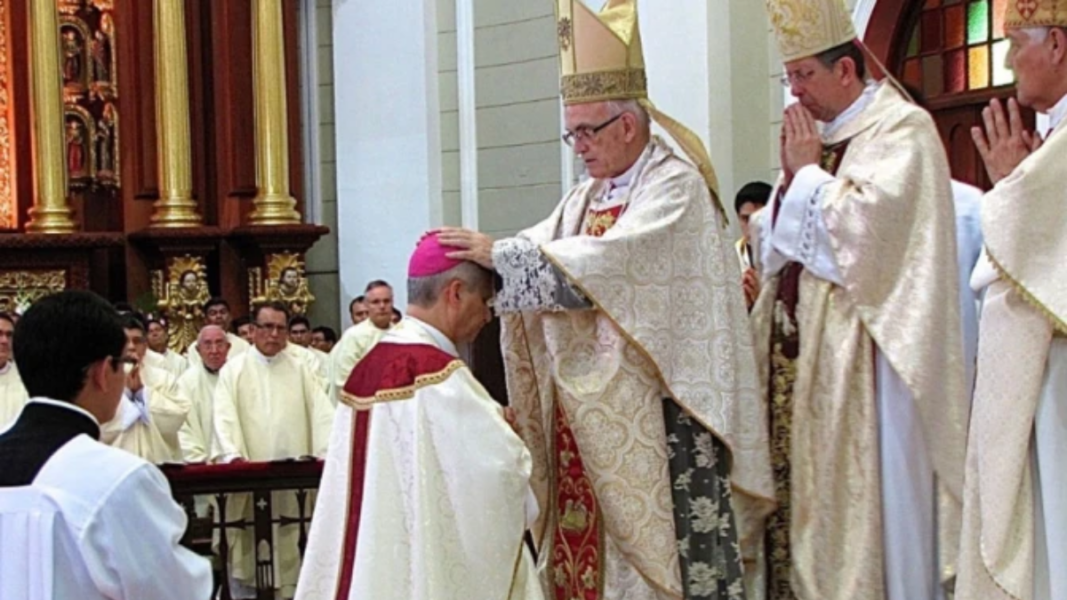
On December 12, 2014, the feast of Our Lady of Guadalupe, the then-priest Robert Francis Prevost received episcopal ordination in the Cathedral of Saint Mary of Chiclayo, in northern Peru. That day, presided over by the apostolic nuncio James Patrick Green, marked the beginning of a decisive stage in the ecclesial trajectory of who today is Pope Leo XIV.
Prevost’s appointment had occurred weeks earlier. Pope Francis named him apostolic administrator of the Diocese of Chiclayo on November 3, 2014, taking canonical possession on the 7th of the same month. The episcopal ordination on December 12 formally confirmed his mission as pastor of a diocese marked by strong social, cultural, and ecclesial challenges.
Eight years of episcopal governance in northern Peru
Prevost’s episcopate in Chiclayo lasted almost eight years. His governance was perceived as discreet, with an Augustinian imprint and a close relationship with part of the local clergy. During that time, he actively participated in the life of the Peruvian Episcopal Conference and consolidated a profile that, later on, would lead him to assume top-level responsibilities in the Roman Curia.
In January 2023, Pope Francis called him to Rome to appoint him prefect of the Dicastery for Bishops and president of the Pontifical Commission for Latin America. With that appointment, his stage of ordinary governance in Chiclayo concluded, a diocese that decisively marked his pastoral trajectory.
The Lute case, a wound still open in the diocese
However, his time in Peru cannot be detached from an issue that continues to generate pain, controversy, and unanswered questions: the Lute case —referring to the priest Eleuterio Vásquez González, denounced for sexual abuses committed when the victims were minors— remains as an open wound that reminds Prevost of a management that has been harshly criticized and still pursues him in his pontificate.
Infovaticana has addressed this case on various occasions, providing information about the facts and emphasizing two inseparable dimensions. On one hand, the objective gravity of the denunciation and the moral and pastoral obligation of the Church to offer truth, justice, and reparation. On the other, the criticism of an institutional management lacking transparency during Prevost’s episcopate.
It is documented that Prevost maintained personal contact with the victims—including Ana María Quispe, the main spokesperson and complainant—and at the time expressed words of forgiveness, a gesture that, while relevant, cannot substitute for clear institutional accompaniment or ecclesial procedures communicated with transparency. The slowness, lack of information, and absence of a clear framework for action have contributed to the case continuing to be experienced as an open wound in the diocese and among the victims.
Read also: Prevost never suspended Lute from public ministry as a priest
At the same time, Infovaticana has warned against the media and political instrumentalization of the case, especially when the victim’s suffering becomes a weapon in ecclesial or ideological disputes. Denouncing that improper use does not equate to minimizing the accusation, but rather to protecting the truth and the dignity of those who have suffered the abuses.
Lute’s departure from the clerical state has not closed the debate. On the contrary, it leaves—and with more force than before—the need to conclude a case that has kept the victims in suspense for the last 5 years due to the decisions taken and the lack of institutional responsibility. Accepting a clerical dispensation cannot become a shortcut to avoid the full clarification of the facts or the due reparation.
Eleven years later
Eleven years after his episcopal ordination in Chiclayo, Robert Francis Prevost is today Leo XIV. And it is precisely for that reason that his stage as diocesan bishop acquires new relevance. December 12—the feast of Our Lady of Guadalupe, empress of America—is not only a biographical memory, but also an invitation to address with responsibility the pending issues.
Properly closing the Lute case—with transparency, guarantees, and genuine accompaniment to the victim—would not only be an act of justice, but also a sign coherent with the universal responsibility that he exercises today as Successor of Peter.