


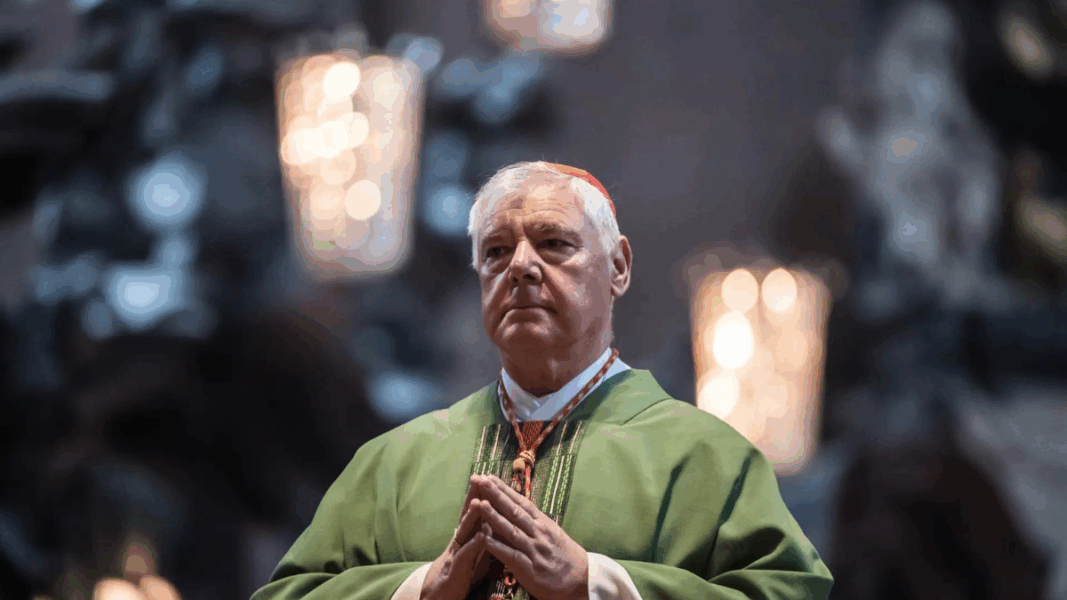
Cardinal Gerhard Ludwig Müller, emeritus prefect of the Congregation for the Doctrine of the Faith, granted an extensive interview a few months ago to the program La Sacristía de la Vendée —which could now be published after the restrictions the channel faced—, in which he analyzed the first steps of the pontificate of Leo XIV and the great doctrinal, cultural, and moral challenges facing the Church in the current world.
The German cardinal highlighted the Christocentrism of the new Pope as an encouraging sign: “Pope Leo XIV has begun very well, with Christocentrism, which is the foundation of our faith: Jesus Christ, the only Savior of the world.”
According to Müller, the main challenges of this pontificate are not new, but the same ones that have affected the Church for decades: secularism in Europe, globalism, and the vision of man without God. These ideologies—he warned—lead to the spiritual and social self-destruction of the human being: “The Gospel is what can free man from self-destructive ideologies that threaten a new war or an inner implosion of the human being.”
Ideologies Inside and Outside the Church
Asked about the internal situation of the Church, Müller acknowledged that ideologies have also penetrated within it, causing division and confusion: “From the earliest times, heresies and schisms have existed. Today we must distinguish what comes from Christ from what arises from ideologies that present themselves as science, but are not.”
The cardinal insisted that the Church cannot be defined with political categories: “It makes no sense to say ‘I am conservative,’ ‘I am progressive,’ or ‘I am traditionalist.’ Those categories come from the French Revolution, not from the Gospel. We are one unity in Christ, head of the Church.”
In the face of internal divisions, Müller defended the need to recover ecclesial communion around the revealed truth, without being swept away by ideological or sociological labels: “The Church is not an NGO or an ideology, but the Body of Christ, one faith, one baptism, one Eucharist.”
Justice, Law, and Defense of Priests
The cardinal also addressed the delicate issue of sexual abuses committed by clerics and the canonical processes arising from them. While he affirmed that victims have a right to full justice, he warned that it cannot be done at the expense of the presumption of innocence: “Justice cannot be achieved by sacrificing the innocent. Fair processes are part of the great legal culture that Europe has developed from Roman law to modern states.”
He also criticized the tendency to generalize accusations against the priesthood as a whole: “Every case of abuse is a catastrophe, but it cannot be turned into a systematic accusation against the priesthood. The crime arises from personal immorality, not from the grace of the sacrament.”
Manipulated Studies and Ideological Ends
The former Vatican prefect referred to studies and commissions on abuses promoted by governments or episcopal conferences in various countries, some of which—he stated—have been used for political or doctrinal purposes: “When a government conducts investigations of that type, it is acting against the principles of a rule of law state. Only justice can instruct criminal cases; the state cannot intervene in the internal affairs of the Church.”
Müller also warned about the ideological use of the abuse issue within the Church itself, especially in Germany: “There are ecclesial groups interested in destroying the priesthood, saying that abuses have ‘systemic’ causes. But that is absurd: the guilt is not in priestly grace, but in the moral failure of some individuals.”
Memory of the Martyrs and True Reconciliation
In the final part of the interview, conducted in the setting of the Valley of the Fallen and El Escorial, the cardinal reflected on historical memory and the witness of the martyrs: “There can be no authentic reconciliation if one seeks to forget the facts of the past. The martyrs are the crown of the Church and witnesses to the victory of the risen Christ.”
Müller recalled that faith demands forgiveness, but not amnesia: “The Church must give the world a real example of reconciliation, not perpetuate divisions or ideological wars. The state must withdraw from the realm of conscience: the state is not God.”
Finally, the cardinal evoked the witness of those who gave their lives for Christ during the persecutions of the 20th century: “If you confess Christ, you may have to die for Him, like the martyrs of the early centuries. We must obey God rather than men.”