


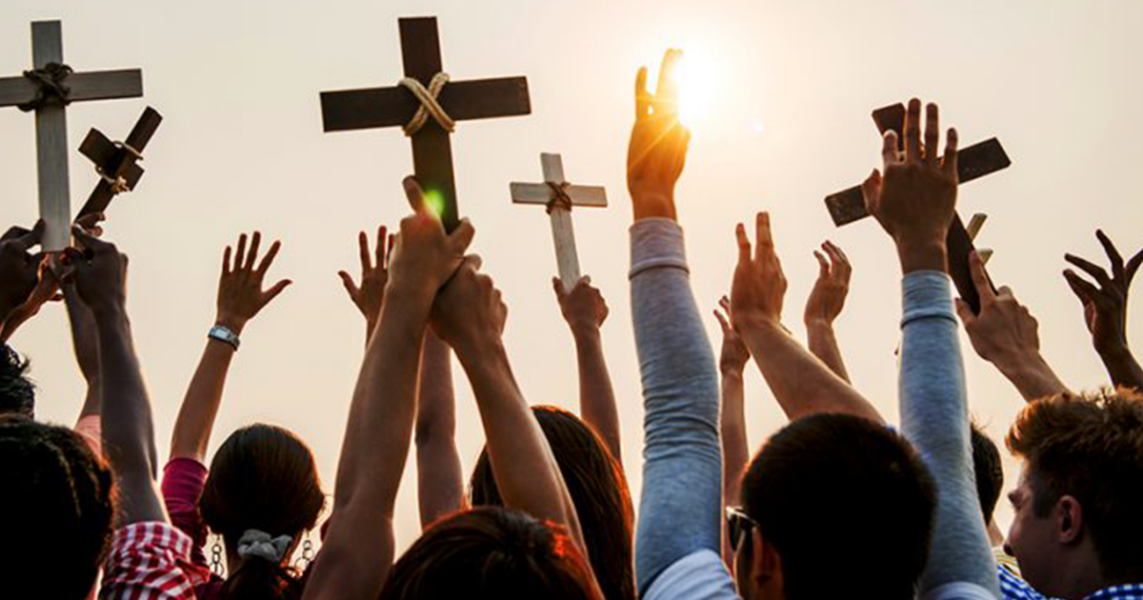
Fr. José Juan Sánchez Jácome / ACN.- God’s Providence often follows mysterious and impenetrable paths. When everything seems lost and we no longer expect anything, Providence opens new and unforeseen ways that broaden the mind and, above all, the heart, reminding us that our life is in God’s hands.
In these times of crisis and social decay, how I long for Providence to reveal its paths so that the Church may continue to fulfill its mission with the urgency demanded by these times marked by hatred, violence, suffering, and lovelessness.
From a human perspective, paths seem to close and many limitations are experienced, as if there were nothing left to do in the face of the power of evil. Yet in such an extreme situation, we are surprised to see the paths that Providence is opening, confirming at the same time that it is not we, but God, who guides His Church.
Our Lord has allowed us, through Cardinal Newman—who was canonized in 2019—to receive a reflection that encourages us to remain always open to God’s Providence in critical times like the ones we are living. Little did I imagine that a man who came from Protestantism, specifically from the Anglican Church, would lead us to love our Catholic Church more and to value it for preserving the deposit of faith intact.
Indeed, a man who came from Protestantism challenges us to love the Church more and to trust unconditionally in the Providence that manifests itself when we lose hope.
Cardinal Newman understood this clearly. He not only grasped it intellectually but also experienced it personally as he encouraged the faithful to trust in God’s Providence, which always guides His Church and never abandons it, even when it seems that Peter’s boat is about to sink.
The Edict of Milan, which decreed the end of the persecution of Christians at the beginning of the fourth century, ushered in a time of peace for the Church, which had been fiercely persecuted during the first three centuries of our history.
Yet the Church has scarcely known peace throughout its history, constantly subjected to a series of attacks—sometimes global, sometimes local—always facing various battles in which it seeks to overcome, to purify itself, to be guided by the Spirit, and to commit itself to proclaiming the Gospel.
Our generation is called to face another battle that will not be the last, as Cardinal Newman clearly understood:
“It always seems as if religion were about to perish, as if schisms were triumphant, as if the light of Truth were going out, and its defenders were being routed. The cause of Christ always seems to be in its last agony, as if it were only a question of time before it is finally defeated one of these days. The saints are always disappearing from the earth, and Christ is always coming. Thus, the Day of Judgment is literally at the door, and it is our duty to be always expecting it, without being discouraged by having so often said ‘now is the moment,’ before, at the last moment, contrary to what we expected, Truth raises its head once more.”
Despite human indicators and forecasts predicting the end of the Church—as has happened at various moments in history—the Church always rises again because it is animated by the Holy Spirit. This is confirmed, for example, by the case of the arrest and deportation of Pope Pius VI.
The French arrested the elderly and nearly paralyzed Pius VI, who was 81 years old, and took him to France. The Pope died on the way in Valence-sur-Rhône, forgiving his enemies. The prefect of the city wrote in the death register: “Citizen Braschi died, who professed to be a pontiff.” Many newspapers headlined: “Pius VI and last.” They could not imagine that six more “Pius” and many more Popes would follow.
These strange and providential recoveries led Chesterton to affirm: “Christianity has been declared dead countless times. But in the end it has always risen again because it is founded on faith in a God who knows well the way out of the tomb.”
This eminent convert and writer, also English like Newman, further reflected: “At least five times—with the Arians, the Albigensians, humanist skepticism, Voltaire, and Darwin—the Faith was apparently thrown to the dogs. But in all these cases it was the dogs that perished. And when the Christian faith seemed finished, it began again. History buried it in the past, but it suddenly appeared in the future.”
Recognizing, therefore, that this is neither the first nor the last time the Church passes through a time of crisis, trial, and persecution, I believe that Cardinal Newman’s theology encourages us to trust unconditionally in God’s Providence and to hope, as he maintained, that Truth will once again raise its head.
“The Church always seems to be dying… but it triumphs against all human calculations… its history is one of terrifying falls and strange and victorious recoveries… and in the end, the rule of God’s Providence is that we must triumph through failure.”