


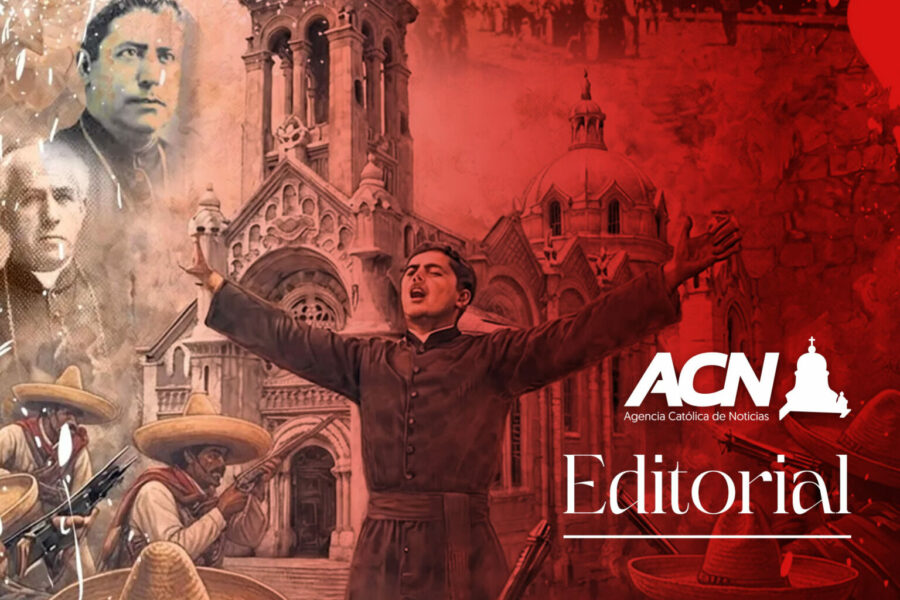
On the Solemnity of Christ, King of the Universe, and at the beginning of the Jubilee Year granted by Leo XIV on the centenary of the start of the Cristero resistance in 1926, the Mexican Episcopate has published a Pastoral Letter that calls for a rethinking of the meaning of that struggle and for recovering its memory with clarity, not with belligerent nostalgia.
The bishops state it with crystal clarity. Bringing the Cristero War into our times will serve to remember and celebrate the fidelity of a believing people who, amid fear, continued to pray in their homes, baptizing in secret, protecting their priests and keeping the faith alive when the churches were empty, the witness of the martyrs who did not kill for Christ but died for Him, forgiving their executioners, and the lesson learned at the highest price, even to the shedding of blood.
That memory is a historical inspiration for building bridges of dialogue and national reconciliation. Far from a nostalgic or confrontational outlook, it proposes a threefold exercise: historical memory, appreciation of martyrdom, and Christian commitment to life, human dignity, and peace.
The Cristero War was not simply a conflict of “good versus evil.” It was a complex episode, with lights and shadows, of defending conscience against a State that sought to decide what could be believed and where it could be expressed. The Pastoral Letter invites us to acknowledge persecution and excesses, responsibilities and errors, without allowing the truth to become a pretext for hatred. From fratricide to the building of peace, that is the vocation of a reconciling Church.
Precisely for this reason, it is unavoidable to criticize those small Catholic groups that, from particular and reductionist visions, seek to instrumentalize the centenary to incite violence or fuel polarization. Their positions are presented as “radical stances” in political-religious matters, but in reality they channel and impose their own agenda, which is not a proposal of evangelization. They confuse the cry “¡Viva Cristo Rey!” with a slogan of partisan combat or historical revenge. The Pastoral Letter is unequivocal: that cry was not a political slogan, but the public confession that Jesus Christ is the only Lord of history and of consciences. The martyrs pronounced it knowing it could be their last word, not to kill, but to die forgiving.
The Church explicitly calls for rejecting the use of armed violence as a means of vindication and for honoring memory without promoting polarization or violence, turning remembrance into an examination of conscience and a renewed commitment to life. Those who today wave flags of radicalism while confronting and polarizing others stray from the logic of the Gospel and from the very witness of the martyrs, whose true victory did not consist in defeating their persecutors, but in allowing the love of Christ to triumph over hatred; nevertheless, unfortunately, even among Catholics, there exist those unfortunate polarizations that go against what was said of Christians in antiquity: “See how they love one another”
The “¡Viva Cristo Rey!” of our time must arise from a confession of faith rooted in a witness that transforms the country. Mexico carries in its being the sap of Christianity, that genius and potential which throughout history has toppled empires and exposed tyrants not primarily by the force of arms, but by a point that seems simple yet is devastating: the witness of evangelical peace. To forgive the enemy, to serve the poor, to defend the dignity of every person, to proclaim the truth with charity, and to build, as the Virgin of Guadalupe asks, her Sacred Little House in every home. That is the seed of the martyrs that today must bear fruits of reconciliation, peace, and charity.
In this Jubilee Year, the Cristero memory challenges us to sink once again into the roots of a nation whose heart beats to the rhythm of Christ the King. The risk? To view the Cristero War only through reductionist lenses in order to repeat the past of confrontation; on the contrary, the Cristero War opens the way to write, amid the imperfect stories of men, the perfect story of God, a story of freedom, dignity, and peace.
¡Christus vincit! ¡Christus imperat! ¡Christus regnat! ¡Laudetur Iesuschristus!