


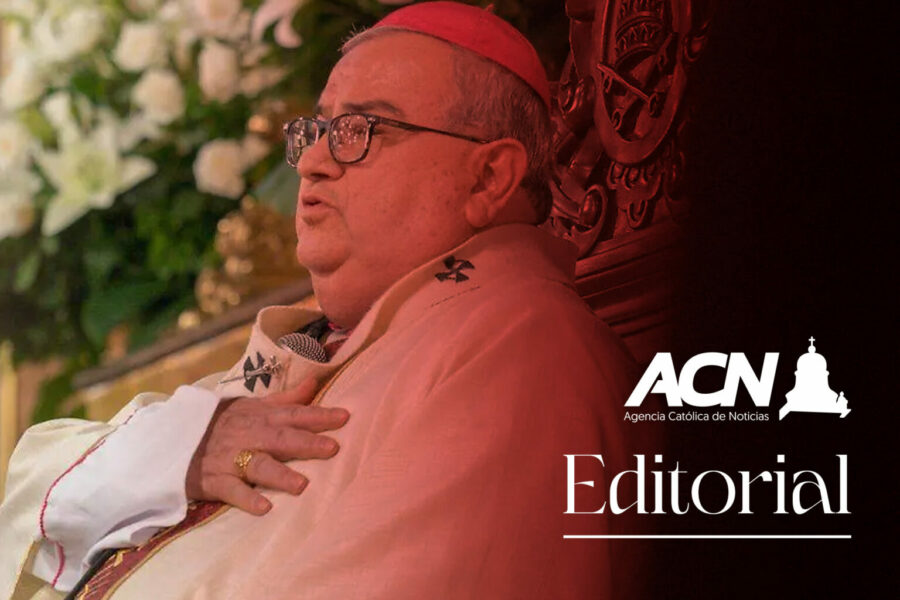
On August 6, 2026, on the feast of the Transfiguration, the Church in Mexico received the news of the death of Carlos Garfias Merlos, archbishop emeritus of Morelia. He was 75 years old. Born in Tuxpan, Michoacán, on January 1, 1951, ordained a priest in 1975 and consecrated a bishop in 1996, he spent three decades serving some of the most wounded regions of the country: Ciudad Altamirano, Nezahualcóyotl, Acapulco and, finally, Morelia. His episcopal motto, “Christ is our peace,” was not an ornamental slogan. It was the summary of a life.
Garfias Merlos understood that peace is not decreed or imposed from offices. It is built artisanally, with patience, risk and imperfect human materials. In regions ravaged by drug trafficking, the breakdown of the social fabric and structural violence, he promoted victim support centers, rehabilitation homes, municipal committees for peace and reconciliation made up of civil authorities, religious leaders of different confessions and civil society, and presided over the Michoacán Council for the Construction of Peace and Reconciliation. He multiplied spaces for listening, forgiveness workshops and community reconstruction processes. He insisted time and again that peace begins in the family, the neighborhood, the school and everyday work, and that no one can delegate that task.
He did not limit himself to denouncing. He went further. He proposed, with clarity and knowing the cost, dialogue with actors of organized crime, inspired by the experiences of the Colombian Church. He did not speak of impunity pacts, but of opening possible paths of conversion and reduction of violence, always with priority attention to victims. “Dialogue is the path of conversion for criminals,” he stated. That stance earned him internal and external criticism, pressure and defamation. He responded with transparency and did not retract. He preferred the risk of public speech to defensive silence.
He also firmly criticized the discourse of the governments in power. When official figures spoke of declines and the streets remained marked by fear, Monsignor Garfias pointed out what he considered a “game of perceptions.” A discourse that does not look reality in the face, that minimizes or denies structural violence and the dead, prevents any real change. “To change a reality we must accept it, not deny it,” he said. He called for real public policies of peace and security, for coordination between authorities, Churches and society, and for not normalizing pain. He rejected both resignation and the temptation of violence as the only response. War, he repeated, is always lost; the only way to defeat it is not to wage it—that was the simple logic.
His ministry unfolded amid concrete threats, health crises, including COVID-19 that nearly took his life, and political tensions. Even so, he maintained weekly Sunday press conferences, accompanied the most vulnerable communities and maintained that the Church must be present not only in temples, but in plazas, streets and public spaces where the future of a people is decided.
Today that his voice has fallen silent, the void is felt with greater force. In a contemporary Mexico marked by tremendous difficulties, persistent violence, polarization, erosion of trust and discourses that often prefer perception to truth, it will be difficult to find another bishop with that degree of sustained, concrete and risky commitment. Garfias Merlos believed, against all apparent evidence, that peace is possible. Not as a naïve illusion, but as a patient, costly and shared task.
His work does not end with his death. It remains in the victim centers, in the committees that still work, in the memory of those who were accompanied, in the permanent invitation to be artisans and not mere spectators. Above all, it remains the testimony of a pastor who bet on hope when it was more comfortable to resign himself. May the Lord, whom he served as a messenger of peace, receive him into his Kingdom. And may those of us who remain learn to continue, with hands and heart, the construction he never abandoned.
Rest in peace, the archbishop artisan of peace.